
PA DEP Says Shell Ethane Plant Fire May Have Released Carcinogens

Another incident happened Wednesday afternoon at the Shell ethane cracker plant facility in Beaver County, PA. This isn’t the first problem at the plant (see our cracker problem stories here). An explosion and fire (with smoke) were reported at the ethane cracker on Wednesday. A company spokesperson stated that smoke was seen coming off of a furnace unit at the plant around 2:20 p.m. She said the incident was managed by site personnel, and the smoke dissipated. However, the Pennsylvania Department of Environmental Protection (DEP) has a concern that “a possible release of an unknown amount of 1,3-butadiene and benzene” —both hazardous air pollutants and known carcinogens (cancer-causing). Read More “PA DEP Says Shell Ethane Plant Fire May Have Released Carcinogens”
 The Southwest Appalachia drilling team for Expand Energy, the newly combined company created when Chesapeake Energy merged with Southwestern Energy, claims it has drilled the U.S.’s longest on-shore well and longest on-shore lateral to date at more than five miles. The BW Edge MSH 210H was recently drilled in Marshall County, West Virginia. We say the team “claims” to have drilled the longest lateral because in March, Hart Energy reported a similar claim by Expand to have drilled an even longer lateral in Ohio County, WV (see
  A few weeks ago, MDN brought you the news that the Ohio Department of Natural Resources (ODNR) is laying the blame for a series of low-level earthquakes in southeastern Ohio on fracking at an Encino Energy shale well in Noble County (see
  On May 20, the Pennsylvania Department of Environmental Protection (DEP) issued notices of violations to XTO Energy, Inc. (a subsidiary of ExxonMobil) for failing to restore five multi-million gallon shale gas freshwater impoundments it used to support fracking operations in Butler County. The impoundments are required to be restored, which includes liners removed and the area regraded to the original contours, within nine months of their last use.
  In February, MDN brought you the rumor that Canadian pension fund CPP Investments, the majority owner of Encino Acquisition Partners (aka Encino Energy), was considering either a sale of the company or possibly an initial public offering (see
  The highly functional and responsible Susquehanna River Basin Commission (SRBC), unlike its less functional and irresponsible counterpart, the Delaware River Basin Commission (DRBC), continues to support the shale energy industry by approving water withdrawals and consumptive use for responsible and safe shale drilling. The SRBC published a notice in the May 31 Pennsylvania Bulletin that the Executive Director of the SRBC renewed 45 general water use permits in April for individual shale gas well drilling pads in Blair, Bradford, Lycoming, Potter, Sullivan, Susquehanna, and Tioga counties in Pennsylvania. The director also approved new water withdrawals for the 146-megawatt gas-fired Hunlock Creek power plant in Luzerne County.
  For the week of May 19 – 25, the number of permits issued to drill new wells in the Marcellus/Utica was down seven from the previous week. Last week, 24 new permits were issued in the M-U. In the Keystone State (PA), just four new permits were issued, all of them going to Expand Energy (Chesapeake) for a pad in Sullivan County. The Buckeye State (OH) received 13 new permits, with most (five) going to Encino Energy (EAP) in Columbiana County. EOG Resources received four permits for Carroll County, and Gulfport Energy received four permits for Belmont County. The Mountain State (WV) scored seven new permits. Six of the seven went to Antero Resources for a single pad in Tyler County. One permit was issued to Marion Natural Energy in Marion County.
  In 2021, PennEnergy Resources made a request to the Pennsylvania Department of Environmental Protection (DEP) to withdraw up to 3 million gallons of water a day from Big Sewickley Creek (Beaver County) and one of its tributaries for shale fracking (see
  One of the significant stories of 2024 in the Ohio Utica was about Austin Master Services (AMS), a radiological waste management solutions company in Martins Ferry, Ohio, that handles fracking waste by transporting it for disposal. AMS ran into trouble when it ran out of money. The Martins Ferry facility in Belmont County, where waste is temporarily stored, had exceeded its permitted maximum of 600 tons of stored waste, resulting in a violation of its permit. The Ohio Attorney General’s office filed a lawsuit against the company in March 2024 to force compliance and to force the cleanup of the facility. The Ohio Department of Natural Resources (ODNR) stepped in to do the cleanup work. As of today, cleaning and testing are done.
  Epsilon Energy issued its first quarter 2025 update last week. Epsilon, a relatively small company, used to concentrate most of its effort on developing Marcellus Shale wells. However, over the past few years, the company has expanded into other plays and now owns assets in the Anadarko (Oklahoma and Texas), the Permian (Texas and New Mexico), and most recently, the Western Canadian Sedimentary Basin (in Alberta, Canada). Epsilon typically does not do its own drilling. The company joint venture partners with (gives money to) other companies, like Expand Energy in the Marcellus, and the other company does the drilling. As for 1Q25, according to Jason Stabell, Epsilon’s CEO, “Our Marcellus business performed very well during the quarter, with all delayed turn-in-line wells now on production.” As a result, natural gas production was up over 50% from the previous quarter, resulting in a 200% increase in cash flow.
 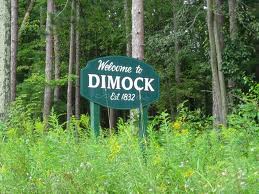 In December 2022, MDN brought you the great news that Coterra Energy (formerly Cabot Oil & Gas) would be allowed to restart drilling in a nine-square-mile area in Dimock, PA (Susquehanna County) following a “no contest” plea deal with PA’s then-Attorney General, Josh Shapiro, on a misdemeanor charge (see
  EOG Resources, one of the largest oil and gas drillers in the U.S. (with international operations in Trinidad and China), owns nearly half a million acres of leases in the Ohio Utica (~460,000 acres). EOG calls its position the “Ohio Utica combo play” and considers it one of the company’s “premium” and “emerging” plays. EOG concentrates on oil drilling in the Utica. During the company’s first quarter 2025 update in early May, we learned that EOG is cutting $200 million from its 2025 spending plan, believing Trump’s tariffs will lead to a slowdown in oil demand. However, the company is not cutting spending or work in the Utica.
  In January, MDN brought you the news that TECfusions, based in Tampa, Florida, had purchased 1,395 acres in Upper Burrell (Westmoreland County), PA, for a groundbreaking data center project called TECfusions Keystone Connect (see
  The data center high tide is lifting all gas drilling boats. That’s according to a new study from S&P Global Commodity Insights that finds the expectations of a coming boom in demand for electricity for data centers, which will create a boom in demand for natural gas to produce the electricity, is causing gas drilling companies to increase in value. It’s hard to accurately quantify the value for private companies, but for public companies (those with stock that trade on the open market), we can confirm that over the past year, the value for drillers with significant operations in the Marcellus/Utica has, on average, risen dramatically.
  Ascent Resources, founded as American Energy Partners by gas legend Aubrey McClendon, is a privately held company focusing 100% on the Ohio Utica Shale. Ascent, headquartered in Oklahoma City, OK, is Ohio’s largest natural gas producer and the 8th largest natural gas producer in the U.S. The company issued its first quarter 2025 update on May 7. 1Q25 net production averaged 2,002 MMcfe/d (2.0 Bcfe/d), consisting of 1,680 MMcf/d of natural gas, 13,833 bbls/d of oil, and 39,789 bbls/d of natural gas liquids (NGLs), putting liquids at 16% of the overall production mix for the quarter.