
Westmoreland Zoning Challenge Heads to Court, Delays H&H Drilling
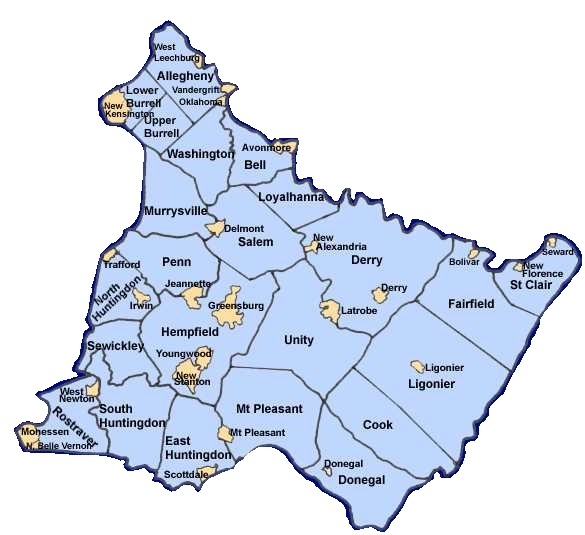
In May MDN told you that Huntley & Huntley was conducting seismic surveys in Lower Burrell, in Westmoreland County, PA (see Huntley & Huntley Targets New Drilling in Westmoreland County, PA). When a company begins to conduct seismic surveys, you know that applications for drilling permits are not far behind. Next door to Lower Burrell is Upper Burrell. H&H plans to drill there too. A landowner in Upper Burrell filed an appeal against Upper Burrell’s zoning ordinance that allows drilling in rural, agricultural districts. H&H plans to drill a well near where this woman lives, and she’s arguing such drilling will violate the state’s environmental rights clause and (more importantly), “devalue her property.” Of course nothing of the kind has happened in areas where there is drilling. Quite the opposite, in fact. Still, the lawsuit is stopping H&H from sinking any new holes in the ground. The case was supposed to go to township’s Zoning Hearing Board, but all of the (many) lawyers involved agreed to instead move it to county court, making the process faster and less expensive. The only problem with that is the judge may decide to hold off on a decision until two similar cases are heard and decided by the PA Supreme Court. No telling how long that will take…
Read More “Westmoreland Zoning Challenge Heads to Court, Delays H&H Drilling”
 We just knew getting a “virtual pipeline” facility built in ultra-liberal Broome County, NY was proceeding a little too easy. MDN recently told you about a proposed virtual pipeline (i.e. natgas trucking system) coming to MDN’s neighborhood. NG Advantage wants to build a new compressor station and tap into the Millennium Pipeline where it crosses the Chenango River near Port Dickinson, a suburb of Binghamton, in Broome County (see
  We’re going to take a stab at this, and we are not confident we will get it 100% right. With that as a warning, we recently reported that a case brought by landowners in northeastern PA against Chesapeake Energy over unwarranted royalty deductions suffered a bit of a setback (see
  A group of profoundly radical “environmental” organizations filed a lawsuit in the U.S. Court of Appeals for the Fourth Circuit last Friday against the West Virginia Dept. of Environmental Protection–for doing their job. Sierra Club, West Virginia Rivers Coalition, Indian Creek Watershed Association, Appalachian Voices and Chesapeake Climate Action Network has sued the DEP because the department had the audacity to conduct a very thorough review, and then issue a stream and water-crossing permit (demanded under federal law) for the Mountain Valley Pipeline (MVP). MVP is a $3.5 billion, 301-mile pipeline that will run from Wetzel County, WV to the Transco Pipeline in Pittsylvania County, VA. The project, which filed an official application with the Federal Energy Regulatory Commission in October 2015, is being built by EQT, NextEra Energy and several other partners. This is now SOP–standard operating procedure–for Big Green groups with deep pockets. Sue and keep suing in an attempt to slow and eventually kill off any project that remotely involves fossil fuels. Yes, they are RADICAL, they are EXTREME, waaaaaay outside the mainstream of American society. And they MUST BE STOPPED. When will someone launch weekly lawsuits against these Big Green organizations? Here’s the latest maddening development…
 On Friday, Exxon Mobil took the gloves off and went after the out-of-control New York Attorney General Eric Schneiderman. Last year Schneiderman decided he would try to shake down Exxon for billions of dollars, claiming the company wasn’t being honest with shareholders about the threat of man-made global warming, which doesn’t actually exist. He said Exxon should have done more to warn shareholders that they invest in a filthy, rotten, human-killing Big Oil company–a company whose stock will someday implode. We’ve covered Schneiderman’s witch hunt from the beginning (
 THE Delaware Riverkeeper (i.e. Maya van Rossum) and a small group of anti-drilling parents from the Mars School District (“Martians”) in Butler County, PA, have just suffered a crushing defeat in their years-long battle to prevent Rex Energy from drilling wells “near” a local school. Backed by money and legal help from Philadelphia Big Green groups Delaware Riverkeeper and Clean Air Council, the Martians filed frivolous lawsuit after frivolous lawsuit. The effort is aimed at denying landowners in Middlesex Township revenue from legally permitted drilling. The lawsuits have cost the taxpayers of Middlesex Township over $80,000 in legal fees. Even amid the back and forth lawsuits, at least two of the wells were permitted and drilled by Rex Energy, despite the bleatings of the Martians (see
  Pennsylvania’s landowners, at least many of them, continue to be angry about getting low–or no–royalty checks. That’s not what they signed up for when leasing their property. A group of 200+ landowners packed a meeting last week in Wyoming County, PA to discuss the situation, and what to do next. The meeting was organized by the Pennsylvania Chapter of the National Association of Royalty Owners (NARO). One distinct possibility raised at the meeting: force Chesapeake (and others) into arbitration. NARO’s approach is to push for legislation, specifically PA House Bill (HB) 557 (see
  A somewhat obscure court case in Pennsylvania has potentially big implications for drillers who also own pipeline subsidiaries. In Lycoming County, PA, Seneca Resources (subsidiary of National Fuel Gas Company) drilled a series of wells on a pad called Well Pad E. Another NFG subsidiary, NFG Midstream, connected gathering lines to Well Pad E. NFG Midstream operates a compressor station to push the gas through the pipeline system. Both the well pad and the pipeline/compressor station are subject to air emissions regulations by the state Dept. of Environmental Protection (DEP). Each subsidiary on its own–the well pad, and the compressor station–don’t produce enough emissions to trip a costly upgrade in technology. However, if you combine both together into a single “source,” the two together do cross the threshold and would cost NFG big bucks in emissions technology to comply. The DEP lumped both together and told NFG to upgrade their emissions technology. Thing is, if another company owned the pipeline system, say Williams, the DEP would not have tried combining the two into a single source. So NGF appealed the DEP decision to the Environmental Hearing Board (EHB), a quasi-court set up to hear appeals of DEP decisions. The EHB found in favor of the DEP, so NFG appealed it again, this time to PA Commonwealth Court. Last week the court overturned the DEP decision and said just because two subsidiaries have the same parent, you can’t just lump them together as a single source for air emissions regulations…
  Yesterday we reported on the federal Environmental Protection Agency’s wise move to begin the process of rolling back Obama-era regulations on methane, designed to regulate the oil and gas industry (see
  The federal Environmental Protection Agency (EPA), under the Obama/McCarthy reign of terror, far overstepped its charter by seizing power that didn’t belong to it. In May 2016, the EPA issued new methane rules in a back-door way to try and regulate the oil and gas industry (see
  Talk about mixed signals. In April, MDN brought you the sad (and angering) news that once again Gov. Andrew Cuomo has caved to political pressure and instructed the Dept. of Environmental Conservation (DEC) to deny stream crossing permits for National Fuel Gas Company’s (NFG) Northern Access Pipeline project (see
  Earlier this week MDN reported on the recent West Virginia Supreme Court decision to reverse it’s earlier decision and allow EQT (and by extension, other drillers) to deduct some post-production expenses from royalties paid to landowners (see
  Just yesterday we told you about an important court case that had gone to the West Virginia Supreme Court of Appeals (see
  In October 2014, the Pennsylvania Dept. of Environmental Protection (DEP) fined Marcellus driller EQT a whopping $4.53 million for a leaky wastewater impoundment in Tioga County, PA (see
  A court case from Marshall County, WV decided in April 2016 is heading to the WV Supreme Court of Appeals (the state’s highest court). The stakes in Contraguerro v Gastar Exploration could not be higher for the Marcellus industry in the Mountain State. In brief, 70 years ago a 106-acre track of property was sold. The sellers retained a one-quarter “non-participating interest” in the oil and gas rights. That means the buyer got to decide when/if to lease the property for drilling, and if so, has the right to negotiate the price, etc. The remaining one-quarter non-participating interest holders would get royalties, but nothing else. Fast forward several generations and the heirs of the original sellers didn’t even know they owned an interest in the land until contacted by Gastar, which needed a signature in order to send them checks for royalties. The heirs decided to sue to stop the deal, either in a bid to negotiate a better deal or perhaps because they don’t like fossil fuels. Who knows? The case went to the Circuit Court of Marshall County and a judge there found in favor of the heirs–giving them, and by extension any minority rights owner, the power to stop lease deals. An unmitigated mess that threatens many lease deals because divided rights ownership is common in WV. Perhaps this case was part of the motivation to pass a new law this year addressing “co-tenancy” (see
  The radical Philadelphia-based Clean Air Council (CAC) has scored a very small, but notable, victory in it’s battle to block Sunoco Logistic Partners’ from building the Mariner East 2 Pipeline project. Last Thursday a judge with the Philadelphia Court of Common Pleas allowed a case filed by CAC to proceed. The case claims that Sunoco cannot use eminent domain powers granted by the State of Pennsylvania to force its way through properties where the landowner refuses to cooperate, because (CAC claims) the pipeline is technically not an intrastate pipeline (only located in PA), but is instead an interstate pipeline (crossing the border into Ohio). The judge said the case has enough merit that it can go to trial. We call it a small victory because Common Pleas court is the lowest trial court in the state. There are several layers higher where appealed cases are decided. This is more of a statement than a serious threat. But let’s play “what if.” What if CAC wins, and on appeal, wins again?…