
Energy Services | Equitrans/EQT Midstream | Industrywide Issues | Pipelines | Regulation | Statewide VA | Statewide WV | Virginia | West Virginia
Army Corps of Engineers Holding Public Hearing on Key MVP Permit
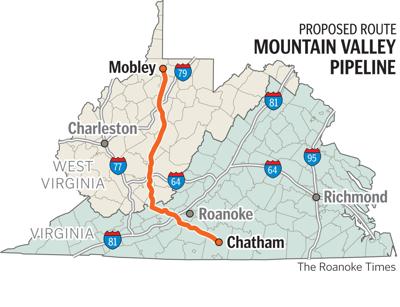 The U.S. Army Corps of Engineers is seeking public comment from West Virginians (Nov. 1) and Virginians (Nov. 4) about a plan to issue Equitrans’ Mountain Valley Pipeline (MVP) a Section 404 Clean Water Act permit that would allow the 303-mile pipeline project (now 92% complete) to finish crossing some 300+ streams and swamps in West Virginia and Virginia. The Army Corps will hold a virtual/online hearing next Monday night, Nov. 1, from 6-8 pm, and again on Thursday, Nov. 4 (details below). It’s time to step up and support this critically important project.
Read More “Army Corps of Engineers Holding Public Hearing on Key MVP Permit”
 Once again the virulent anti-fossil fuel nuts that compose the federal Delaware River Basin Commission (DRBC) are targeting the shale industry. Earlier this year the lefties that run the DRBC voted to permanently ban fracking (and therefore all oil and gas drilling) anywhere in the DRBC’s jurisdiction (see
  Earlier this month MDN exclusively broke the news that earlier this year (slipping under the radar) the Ohio Department of Natural Resources (ODNR) issued permits to Powhatan Salt Company/Mountaineer NGL Storage for three planned solution mining wells in Monroe County (see
  MDN friend, someone we highly respect, is Tom Shepstone, author and compiler over at the
  It’s splitsville for EQT and Equitrans Midstream, the midstream company that was once part of EQT. In releasing details about third quarter performance, EQT announced yesterday it has sold nearly half of its contracted capacity with Equitrans for the Mountain Valley Pipeline (MVP). MVP, when it goes online next year, will ship gas south. It seems EQT is looking West. In the same announcement yesterday, EQT said it has signed a new contract with the Rockies Express (REX) pipeline to ship even more of its gas to markets in the Midwest.
 A few weeks ago MDN tackled the question of why natural gas producers, in general, are not drilling more given the high price of natural gas right now (see
  Our new governor in New York is just as corrupt as the old one. Some things never change. The New York Dept. of Environmental Conservation (DEC), instead of being an independent, science-based organization, is nothing more than a political tool for whoever sits in the Governor’s Mansion. Current Gov. Kathy Hochul instructed the DEC to reject issuing air permits for two badly-needed natural gas-fired power plants, one in Queens and one in Newburgh. The reason for rejecting the permits? The state’s recently passed “the sky is falling because of man-made global warming” law, misnamed the Climate Community Protection Act (CCPA).
 Complete confusion continues with respect to West Virginia’s House Bill (HB) 2581, a new law passed on the last day of the annual WV legislative session in April. HB 2581 changes how the State Tax Department values producing oil and gas wells for property tax purposes (see
  A short 19-mile pipeline project called the Del-Mar Energy Pathway project, crossing both Delaware and Maryland, began its final phase of construction earlier this year after receiving approval from Maryland for traversing a wetland area (see
  Are labor unions so in-the-tank for *any* Democrat candidate that they can be lied to, to their faces, again and again, year after year, and still vote for the Democrat? Apparently yes. Pennsylvania’s Attorney General, the very corrupt Josh Shapiro, someone who has demonstrated a hatred for the Marcellus Shale industry (he’s prosecuting multiple Marcellus companies for “crimes” that are in fact accidents), is using the same tired playbook politicians always use–an outright lie-to-the-face. This time the lie is about his position on whether or not he supports Tom Wolf’s efforts to force the state to join the so-called Regional Greenhouse Gas Initiative (RGGI), a tax on carbon dioxide that’s meant to force coal and gas-fired power plants out of business.
 Equitrans Midstream, owner of the 303-mile Mountain Valley Pipeline (MVP) and a related gathering pipeline called Hammerhead designed to feed 1.6 Bcf/d (billion cubic feet per day) of Marcellus/Utica gas into MVP, says an arbitration panel ruled in its favor in a dispute with EQT Corp. over the delayed startup of Hammerhead. According to an 8-K filing, Equitrans said the three-member arbitration panel ruled that the in-service delay beyond October 1, 2020, for Hammerhead was caused by a force majeure, so EQT has no early termination right under the Hammerhead gathering agreement or related right to purchase the Hammerhead project.
 Last week MDN told you about a clever play by Republicans in the Pennsylvania House and Senate to box in Democrat Attorney General Josh Shapiro, who is running for governor next year, on the issue of whether or not it is legal for current Dem Gov. Tom Wolf to force the state to join the Regional Greenhouse Gas Initiative (RGGI), an obscene carbon tax meant to kill coal and gas-fired power plants in the state (see
  We bet you didn’t know a hunk of metal in the ground could be racist. We’re as surprised as you. Imagine that–an inanimate object can actually discriminate against people of color. Who woulda thought? Yes, we’re being sarcastic in an effort to point out the complete lunacy and fallacy of claims that a small pipeline aimed at delivering natural gas to a facility in Brooklyn so the gas can be liquefied and carted around New York City to prevent gas outages is somehow racist because the pipeline passes through communities that are predominately black or Hispanic. How on God’s green earth is a pipeline delivering fuel to keep people warm in the winter racist? Answer: It’s not.
 GM, Ford, and other Big Auto companies might want to rethink their ill-advised plans to manufacture only electric vehicles beginning a few years from now based on dementia Joe’s big plans to electrify everything, including transportation. Biden’s own U.S. Energy Information Administration (EIA) predicts the number of “light duty vehicles” or LDVs (cars and trucks) worldwide will nearly double in the next 30 years, from 1.31 billion LDVs on the planet in 2020 to 2.21 billion in 2050. But the big news is that only 31% of all those 2.21 billion LDVs in 2050 will be electric-powered vehicles. The rest will be powered by gasoline, diesel fuel, and natural gas. Tell us again (so we can have a good laugh) about the end of fossil fuels in the next 10-15 years. 🙂