
Broken Record: Wolf, Dems & RINOs Float 4% Severance Tax
 Every year it’s the same thing from “America’s most liberal governor,” PA’s Gov. Tom Wolf: propose a severance tax on natural gas production, a tax in addition to the existing impact tax (which is already the equivalent of a severance tax), and demagogue the issue in hopes of shaming/pressuring/bullying Republicans into passing such a tax. When/if such a tax is passed, give every last dime of it to teachers unions in the Philadelphia area–the people who elected Wolf to office. That’s been Wolf’s modus operandi since he assumed office. And it has just happened again, for the fourth time. Wolf, along with two liberal Democrats and two Republicans in Name Only (RINOs, from the Philly area) gathered yesterday to announce new severance bills introduced in both the PA House and Senate that will slap a Marcellus-killing 4% tax on shale production, on top of the existing ~4% impact tax. Here we go again…
Read More “Broken Record: Wolf, Dems & RINOs Float 4% Severance Tax”
 One of the ways anti-fossil fuel groups have tried to stop the Mariner East 2 Pipeline project is by tying it up in court. Various lawsuits have been filed going back years (
 As we previously reported, someone(s) stole a bunch of dynamite and the blasting caps (used to ignite the dynamite) on the weekend of April 14-15 from a locked storage trailer sitting at an Atlantic Sunrise Pipeline construction site in Lancaster County, PA (see
  Pipeline companies are known for their largess in showering local schools, towns and nonprofit agencies with money for worthy causes. Among those who engage in this civic practice is Williams’ Atlantic Sunrise Pipeline project. Atlantic Sunrise is a $3 billion, 198-mile pipeline project running through 10 Pennsylvania counties to connect Marcellus Shale natural gas from northeastern PA with the Williams’ Transco pipeline in southern Lancaster County, PA. In 2015, the Atlantic Sunrise Community Grant Program was established to benefit community organizations in communities within the Atlantic Sunrise footprint. Since 2015, the Atlantic Sunrise has doled out more than $2 million across the 10-county project area in support of noteworthy projects. And they’ve just done it again. A total of 41 PA organizations have just received a total of $264,300 in contributions–more than a quarter of a million dollars! We have the full list below, along with information about how your organization can apply for the next round…
 Last June DTE Energy filed paperwork in Michigan to build a new “state-of-the-art” natural gas-fired power plant in St. Clair County (see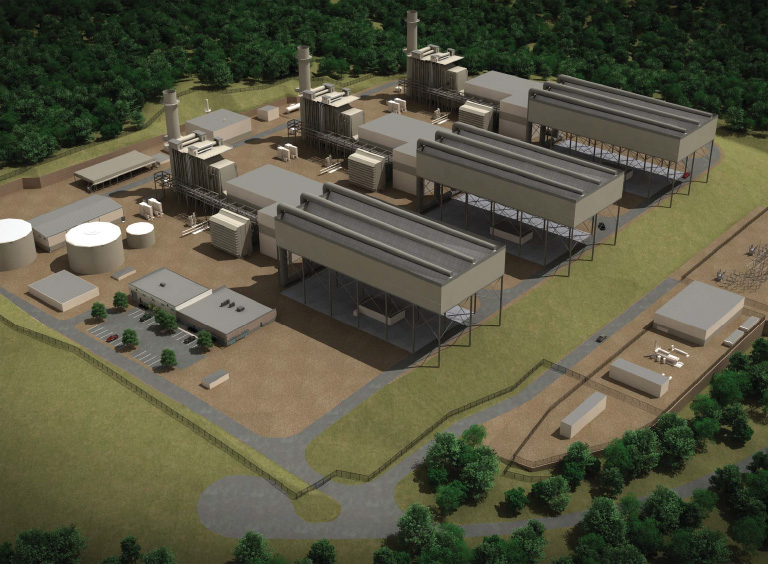


 As EQT gets ready to split the company into two companies later this year, the midstream (pipeline & processing plants) portion of the company yesterday announced a complicated “drop down” deal to streamline the midstream operation. The short version is this: EQT has midstream assets spread throughout three companies on paper–EQT Midstream Partners, EQT GP Holdings, and Rice Midstream Partners. Yesterday the company announced all three are being merged under one umbrella–EQT Midstream Partners. As you’ll read in the EQT announcement, the entire deal is complex–with various entities buying assets from the others. One of the more interesting aspects of the deal is that EQT Midstream is buying EQT’s (the driller’s) Olympus Gathering System and EQT’s 75% interest in the Strike Force Gathering System. EQT Midstream is also buying out Gulfport Energy’s 25% interest in Strike Force, meaning EQT Midstream will now own 100% of Strike Force–a gathering pipeline system in the dry gas Utica covering 98,000 acres in Belmont and Monroe counties, in Ohio. Here’s the news that EQT is getting its midstream ducks in a row…
 In February MDN told you that XTO Energy, the shale drilling arm of Exxon Mobil, has plans to begin drilling five new shale wells in Armstrong County, PA on a former golf course (see
  Unless they walk it back, the country of Canada may well have just shot its very large oil and gas industry in the head. How? By adopting new regulations that aim to cut methane emissions in the oil and gas sector in half by 2025. The problem is, Canada has no idea of how much methane the industry actually emits now. “Half of what?” is the question. But radical antis don’t let a little thing like actual measurements and real science get in the way. They already have an answer–they’ll simply make it up. They plan to “model” it, fantasizing about how much is emitted now, and then demand a cut of half that amount. All of which favors the U.S. oil and gas industry because (so far) we haven’t tipped over into lunatic methane regulations the way the Canadians just have. It was certainly tried under Obama (via the courts and the EPA), but under Trump, methane reduction edicts from the federal government have been walked back. Perhaps when Canada realizes it’s about to literally jump off a cliff and lose an entire industry, they’ll walk their regs back too. If not, oh well! We here in the U.S. will be more than happy to take over the markets previously served by the very dead Canadian oil and gas industry…
 Although Youngstown, OH voters have voted down various versions of a proposed frack ban law six previous times, on Tuesday the Ohio Supreme Court voted 5-2 to allow a seventh such ballot measure to appear before Youngstown voters on May 8. The kicker: This seventh ballot measure is even worse–far more radical–than the previous frack ban measures voted down. The new ballot measure makes the illegal, legal (see
  For more than a year, Marcellus/Utica ethane and propane have been flowing through the converted Mariner East 1 (ME1) pipeline safely, hauling the two natural gas liquids (NGLs) from southwest PA all the way to the Marcus Hook refinery near Philadelphia. The primary shipper using ME1 has been Range Resources, although other companies like CNX Resources use it too. However, ME1 was suddenly switched off on March 3 by order of the Pennsylvania Public Utility Commission (PUC) after a sinkhole opened up under the pipeline in Chester County, exposing some of the bare steel to the open air (see
  Homeowners who live near the location of a possible ethane cracker plant in Belmont County, OH are running out of time to negotiate a deal to sell their properties. Living next door to a cracker plant is not anyone’s idea of paradise. There will be noise, and smells and (yes) some air pollution coming from the plant. Best to sell now before the plant begins construction. However, representatives for PTT Global Chemical which will build the plant (IF it gets built), say they already have all the land they need for the facility (see