
Enbridge Withdraws $3B Access Northeast Pipeline Application
 Last December Spectra Energy pushed the pause button on their Access Northeast Pipeline project, a roughly $3 billion project in New England to connect four existing pipeline systems (with enhancements): Texas Eastern, Algonquin Gas Transmission, Iroquois and Maritimes & Northeast (see Spectra Energy Puts Access Northeast Pipe to New England on Hold). Spectra’s original strategy was to bring natural gas to New England by cutting deals with electric companies who need the gas to produce cheaper electricity at their natgas-fired power generation plants. However, the green environmental Nazis came out in force against the plan, (sadly) aided and abetted by Spectra’s competitors, and those plans are now in ruins with three states blocking any such plans. So Spectra changed strategies, targeting local natural gas distribution companies (LDCs) as potential customers (see Spectra Energy Changes Strategy re New England Pipeline). Spectra needs customers to sign on the dotted line–committing to long-term contracts–before they can raise the funding and build the project, so they pushed the pause button last December. Since that time, Spectra completed selling itself to Enbridge (see Spectra Energy is No More – $28B Merger with Enbridge Complete). So just to confuse things, the Access Northeast project is now an Enbridge project. Yesterday Enbridge sent a letter to the Federal Energy Regulatory Commission, the agency that oversees such projects, to officially withdraw the application. But the project is NOT dead. Enbridge says they will be back to file again–once the New England states get their energy policy crap together…
Read More “Enbridge Withdraws $3B Access Northeast Pipeline Application”
 Ohio is about to pass and adopt it’s latest biennial budget. Part of the budget bill includes language to exempt Ohio’s city and town parks from the state’s unitization (i.e. forced pooling) laws. In Ohio, if 65% of the landowners in a proposed unit have agreed to lease their land for oil or gas drilling, the other landowners in the unit can be forced to join the unit to allow drilling under (not on) their land. There are all sorts of requirements before forced pooling occurs, including a $10,000 fee paid by the driller, and a hearing to review efforts made to enroll said recalcitrant landowners. But in the end, it is possible to force landowners who don’t want drilling, to have it. The justification is that those who don’t want it are harming those who do want it by not agreeing to join the unit. Should the action of someone with a few acres deny benefits to all of his neighbors? We’re not saying we support the concept of forced pooling–just giving you our best interpretation of the arguments used to support it. We understand those arguments. We also understand the sanctity of private property. Until now, local towns and municipalities in Ohio were treated like any other landowner. But now, with the new budget, they will get a special exemption. Local municipalities cannot be forced to participate–unless they want to participate–in a drilling unit…
 In January, MDN reported on a well pad fire at Rice Energy’s Papa Bear well pad in Somerset Township (Washington County), PA (see
  Earlier this month MDN reported that extreme partisan Sen. Chuck Schumer had recommended to the White House that Richard Glick, a current a Senate staffer (i.e. swamp dweller) and former lobbyist for the wind industry, should succeed Democrat Colette Honorable as the second Democrat commissioner on the Federal Energy Regulatory Commission (see
  Pennsylvania does not have a revenue problem–it has an overspending problem. Once again the Republican-majority legislature in PA is caving to the siren song/pressure of wild-spending, liberal Democrats and will pass a budget that is $2 billion over the revenue they can reasonably expect–sprinkled with giveaways like an extra $100 million for teachers unions–and beginning next week the Republicans will face a barrage of media stories and pressure to create a severance tax to help make up the difference. Already we’re seeing stories about the need for a “fair gas tax” and that a severance tax is “long overdue.” What about passing a “fair budget” that doesn’t overspend? What about “fiscal responsibility” that’s long overdue? Where are those stories? And, when will Republicans learn to quit playing the Dem’s game?…
 This week has been “Energy Week” at the White House, and yesterday President Trump (we just love saying that, “President Trump”) announced six new initiatives not to just make America energy independent, but to make America energy dominant. We love that too! Energy DOMINANT. Throughout the world. Number one. One of the six initiatives in Trump’s plan was the announcement that Sempra Energy is in negotiations with South Korea to sell them our LNG (liquefied natural gas, see more on that below). That’s a good thing! No doubt some of the gas heading to the Korean peninsula will come from the Marcellus/Utica. Another of the six initiatives announced yesterday is approval for two applications to export LNG from Louisiana. And a yet another initiative involves more offshore drilling for oil and gas. So half of the initiatives announced somehow impact or relate to natural gas (two of which also impact Marcellus/Utica). Here’s the full list of six initiatives announced yesterday in a speech by President Trump…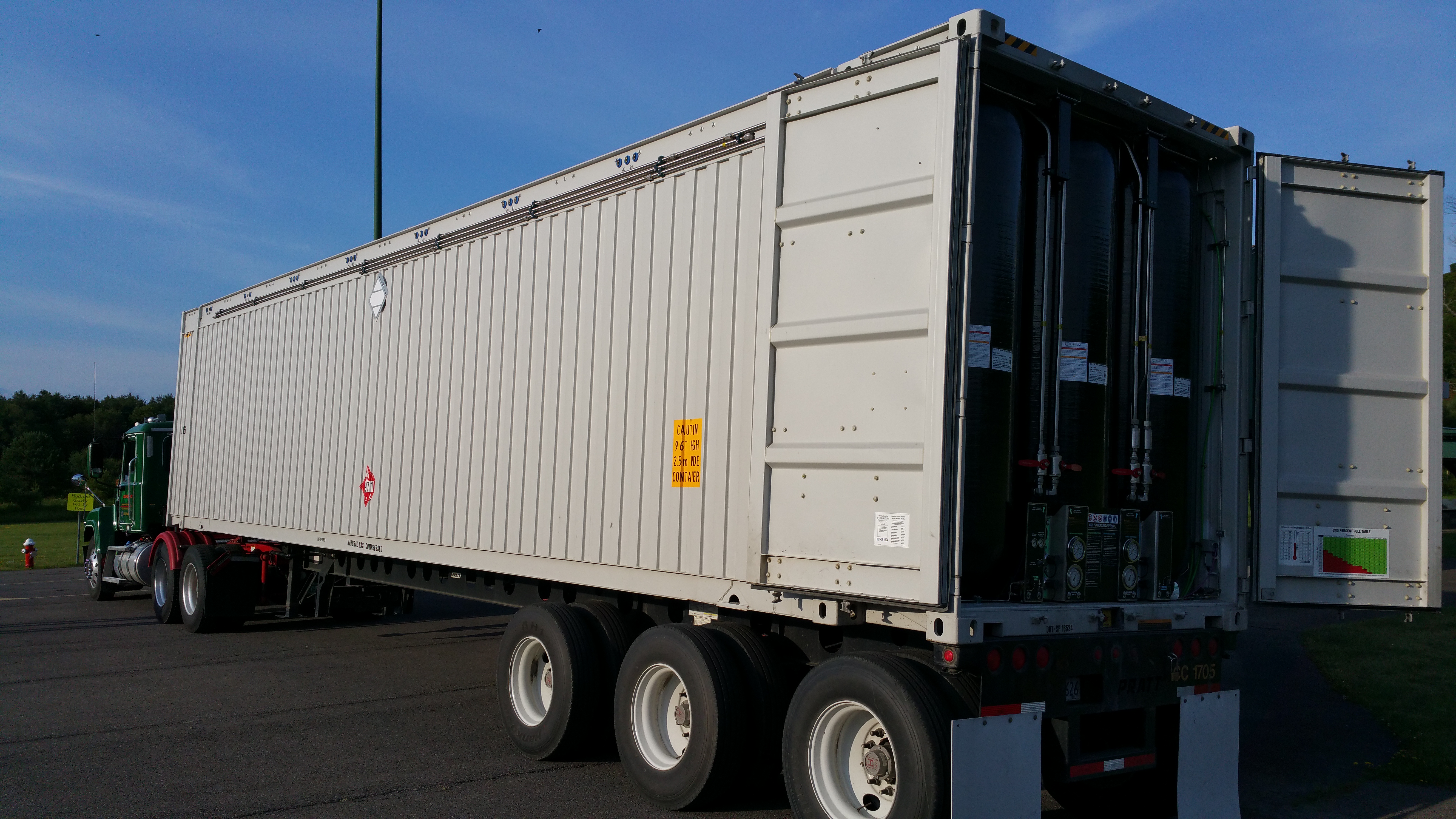
 The New Jersey Dept. of Environmental Protection (NJDEP) sent PennEast Pipeline a letter yesterday saying they have closed the application for water-crossing permits for the project–without granting those permits. In April the NJDEP temporarily rejected the permits, giving PennEast another 60 days to respond to requests for more detailed information about the project (see
  Some good news for Utica (and Marcellus) drillers: The Ohio Dept. of Natural Resources (ODNR) has just approved permits for two new frack wastewater injection wells in Trumbull County, OH. Which doesn’t make the local anti-fracking nutters with FrackFree America happy. One of them calls the approvals “immoral.” She’s calling on the company building the wells, Highland Field Resources, to “abandon its plans.” (chuckle) The wells will be built in the town of Brookfield. ODNR has attached a myriad of conditions and required testing before the wells can go live. Here’s the immoral details…
 The Fresh Water Accountability Project, an anti-fracking group based in Michigan, has filed a frivolous lawsuit against the Patriot Water Treatment facility and the City of Warren, OH, claiming they are processing frack chemicals at their plants that don’t get processed enough–and consequently get released into the Mahoning River. This is not Patriot Water’s first time in court. Patriot has had a long-running feud with the Ohio EPA and Ohio Dept. of Natural Resources (ODNR)–a feud that goes all the way back to 2011 (
 Yesterday Energy Transfer Partners, the builder of the Rover Pipeline, once again asked the Federal Energy Regulatory Commission (FERC) if they could pretty-please-with-a-cherry-on-top resume horizontal directional drilling (HDD) in a couple of key locations in Ohio, so they can finish phase one of the pipeline somewhere close to on-time. Rover is a $3.7 billion, 711-mile Marcellus/Utica natural gas pipeline that will run from PA, WV and eastern OH through OH into Michigan and eventually into Canada. It is a critical piece of sorely needed infrastructure for the Marcellus/Utica industry. As soon as ET received approval for the project in February, they began building it. But they hit a few snags along the way, including an “inadvertent return” (i.e. leak) of 2 million gallons of drilling mud in a swamp next to the Tuscarawas River (Stark County, OH). Following that leak and other leaks, FERC told Rover to stop any new underground drilling not already under way (see
  In October 2016, Dominion announced a new pipeline project called Eastern Market Access Project (see
  Pennsylvania does not have a taxing problem, as people like Gov. Tom Wolf pretend–it has a spending problem, as in they spend beyond their means. The last governor that tried to correct that problem–Tom Corbett–got handed one term in the big chair for his efforts at dealing honestly with it. Big Education and Big Labor knifed Corbett in the back, politically, after he cut the mammoth increase in their growth. (FEED ME FEED ME) If you want to know why PA is in budget trouble, look no further than it’s Secretary of the Dept. of Community and Economic Development, Dennis Davin. Every econ growth guy we’ve ever talked to knows that increasing taxes gets less of what you tax–it is an incontrovertible fact in economics. Yet Davin, who’s boss is utter failure Tom Wolf, is pushing hard for a huge tax increase on the Marcellus industry–the very industry that has singlehandedly kept PA out of an economic abyss. And yet the guy who should understand the issue the best, is pushing hardest for the tax. That tells you all you need to know about the Wolf Administration and it’s utter failure…
 NG Advantage is making a concerted effort to dispel false rumors and misunderstanding on the part of neighbors who live near a proposed “virtual pipeline” site that is a series of compressor stations grabbing gas from the Millennium Pipeline in a Binghamton suburb, compressing it and loading onto tanker trucks. As MDN reported yesterday, two different groups have now filed lawsuits to stop work at the site, one by a local elementary school (more than a half mile away) and one by residents living nearby, including a local Catholic church parish (see
  It’s clear that radical environmentalists who (irrationally) oppose the use of fossil fuels believe the recent decision by Pennsylvania Supreme Court is a gift from Gaia (Mother Earth goddess). As MDN previously reported, last week the Pennsylvania Supreme Court of Appeals, in a sharply divided 3-2 decision, sided with a virulent anti-drilling group, the Pennsylvania Environmental Defense Foundation, against the state in saying that any revenue generated from leasing and drilling on state-owned land MUST be used solely for conservation and the environment (see