
M-U Outlook Closely Tied to LNG Exports – More Pipes Needed to Gulf
 Did you know that the Appalachia Basin, made up of the Marcellus and Utica Shale, accounted for more than 40% of the natural gas produced in the US in 2020? The M-U averaged 32.19 billion cubic feet per day (Bcf/d) of natural gas production in 2020, and 33.44 Bcf/d in 2019. A new report from GlobalData says the outlook for the Marcellus and Utica plays is closely tied to the demand for LNG exports from the U.S. You might say they’re “joined at the hip.” Unfortunately, most LNG exports happen along the Gulf Coast.
Read More “M-U Outlook Closely Tied to LNG Exports – More Pipes Needed to Gulf”
 On Joe Biden’s very first day of occupying the White House, he signed an executive order revoking a permit for the $9 billion Keystone XL oil pipeline that would cross from Canada into the U.S. According to the leftists at Bloomberg (giddy with excitement), Biden’s move to cancel Keystone “is the clearest sign yet that constructing a major new pipeline in the U.S. has become an impossible task.” The CEO for pipeline giant Williams, Alan Armstrong, agrees.
 You can’t say we didn’t warn you about new Federal Energy Regulatory Commission (FERC) Commissioner Allison Clements, a radical leftist (see
  Last August we told you about the politically-motivated prosecution (by the Chester County, PA District Attorney’s office) of two men connected to a security firm providing off-duty constables to protect Mariner East 2 (ME2) pipeline construction sites (see
  Yesterday the Pennsylvania Dept. of Environmental Protection (DEP) held a virtual hearing to accept public comment on the topic of issuing water crossing and sediment/erosion permits for the PennEast Pipeline project. The hearing lasted over three hours with some 70+ people speaking (for up to 3 minutes each). Much to the consternation of anti-fossil fuelers, there was a strong showing of support for the project.
 In mid-December, the U.S. Forest Service (USFS) issued an environmental impact statement (EIS) that supports plans for Mountain Valley Pipeline (MVP) to run through 3.5 miles of woodlands, and under the Appalachian Trail, in the Jefferson National Forest in Monroe County in West Virginia, in and Giles and Montgomery counties in Virginia (see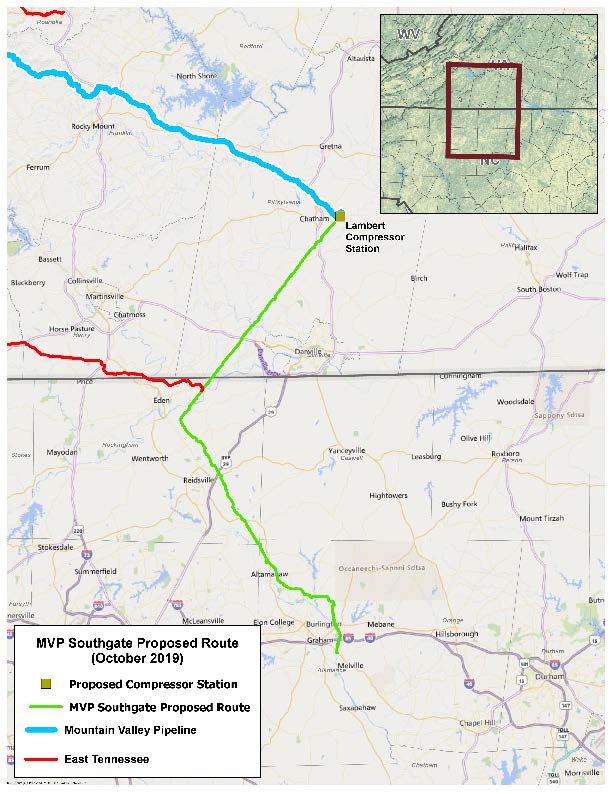
 Last June New Jersey Attorney General Gurbir Grewal filed a brief with the U.S. Supreme Court asking the court to not even consider hearing a case involving PennEast Pipeline (see
  Big Green (Democrat) organizations are feeling full of themselves following the Biden/Harris election and winning control of the Senate. They’re making some pretty big boasts of what they’ll demand from Biden and Chuck Schumer. Demands like no new pipelines, ban natural gas everywhere, force all new cars to be electric, yada yada yada. One of the worst of the worst of the Big Green groups is the radical National Resources Defense Council (NRDC). In a blog post yesterday, the New York chapter of the NRDC lays out its 2021 plans that include their intent to try and block the construction of the New Jersey LNG export facility and block construction of the PennEast Pipeline in Pennsylvania.
 Because of constant court challenges, the Trump administration just completed a redo of the U.S. Army Corps of Engineers Nationwide Permit 12 (NWP12), a general permit used in constructing pipelines. Antis believe the redo will make it easier for the incoming Biden administration to simply delete oil and gas pipelines from the permit. The cancel culture strikes again.
 Don’t you love playing a game with a child and part of the way through the game, the child simply changes the rules for how the game is played (particularly when they are losing)? That’s what comes to mind with the Virginia Dept. of Environmental Quality’s (DEQ) recent action in disallowing any pipeline bigger than 36 inches to use a U.S. Army Corps of Engineers Nationwide Permit 12 (NWP12) to cross creeks, rivers, and wetlands. The move is meant to block Mountain Valley Pipeline (MVP), a 42-inch pipeline, from finishing its installation work (the pipeline is 92% complete).
 Dominion Energy’s Atlantic Coast Pipeline (ACP) had laid 30 miles of pipeline and had cut trees for 222 miles along the 600-mile route before Dominion decided last summer it no longer wanted to be in the interstate pipeline business, canceling ACP (see
  Mountain Valley Pipeline (MVP), a 303-mile, 2 Bcf/d pipeline to move Marcellus/Utica gas from West Virginia to southern Virginia, has been hounded by radicals from Big Green groups including the Sierra Club for years. Big Green apparently has the clown judges from the U.S. Court of Appeals for the Fourth Circuit in its back pocket because the clowns keep overturning legal and legitimately issued permits by government agencies including the U.S. Army Corps of Engineers (see
  David Blackmon is an independent energy analyst/consultant based in Mansfield, TX. Blackmon is a Forbes contributor and has a 39-year career in the oil and gas industry, most of it in public policy and managing regulatory and legislative issues for various companies, including Burlington Resources, Shell, El Paso Corporation, FTI Consulting and LINN Energy. Blackmon has been around the block a few times and understands not only the technical aspects of our industry, but the politics as well. He recently peered into his crystal ball and predicted what lies ahead (i.e. challenges) for the O&G industry in 2021, including a “regulatory onslaught” from Joe Biden…