
NatGas Groups Ask Biden to Quickly Approve LNG, Pipeline Projects
 While yesterday’s news that the Federal Energy Regulatory Commission (FERC), under the thumb of the Biden administration, has made a major about-face with respect to using global warming factors when evaluating pipeline projects (at least for now) is good, there is much more than can and should happen. On Wednesday four of the largest trade groups representing natural gas–the Interstate Natural Gas Association of America, the Natural Gas Supply Association, the American Gas Association, and the Independent Petroleum Association of America–sent a letter to President Biden requesting that he push his various agencies (like FERC) to go ahead and approve more LNG export plants and more pipelines.
Read More “NatGas Groups Ask Biden to Quickly Approve LNG, Pipeline Projects”
 The Pennsylvania House Environmental Resources and Energy Committee, chaired by State Rep. Daryl Metcalfe (Republican from Butler County) is scheduled to hold a meeting on Monday, March 28 to consider two proposed bills. One is a bill that would give the legislature authority to participate in any decision about adopting the Regional Greenhouse Gas Initiative (RGGI) carbon tax scheme. The other bill is a resolution that would be sent to the leftist governors of New York and New Jersey asking them to allow new pipelines to be built into and through their states, to flow more fracked PA gas.
 If an upstream (drilling) company with a long-term pipeline contract files for bankruptcy, does that give the company the right to break its pipeline contract? A major shipper on the Rockies Express (REX) pipeline, Ultra Resources, filed for bankruptcy with the express plan to skip out on its obligations to REX (see
  Environmental radical Freeda Cathcart, who was once arrested for resisting and interfering with a U.S. Forest Service agent at the site of tree cutting for Mountain Valley Pipeline in Giles County, VA (see
  In early March MDN brought you information from the Toronto Financial Post that said the Ukrainian crisis has put East Coast Canada LNG export facilities “back on the map” (see
  Drillers have their certification schemes to prove the natural gas they extract is “responsible”–meaning most if not all of the methane doesn’t leak as it’s extracted (see
 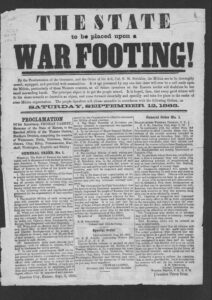 William S. Scherman worked as general counsel (the head lawyer) for the Federal Energy Regulatory Commission (FERC) from 1990-1993, during the presidency of George H.W. Bush (the elder Bush). Scherman worked in FERC when Iraq invaded Kuwait. President Bush wanted options from FERC, asap, about what the agency could do to help alleviate an energy crisis being caused by madman Saddam Hussein. Sound familiar with what’s happening today? Back then FERC went on a “wartime footing” and relaxed rules that restricted the output of traditional and alternative electric generators and granted special permission for natural gas to be produced and transported flexibly and freely nationwide. Scherman says it’s time for FERC to go on wartime footing again.
 In May 2021 MDN told you that Louisville Gas and Electric Company (LG&E) had won Kentucky state approval to build a new 12-inch, 12-mile pipeline near Louisville to supply gas to 62 homes and businesses that can’t connect to LG&E’s local natgas utility system (see
  Cancel culture strikes again. The Evil Empire has won another battle (but not the war). MDN first told you about plans to build the Chickahominy Power Station, a 1,650 megawatt state-of-the-art natural gas-fired power plant in Charles City County, VA, in June 2018 (see
  Consolidated Edison (Con Ed), the local gas and electric utility serving Manhattan Island and Westchester County in the New York City region, has proposed increasing electricity rates by 17.6% and natural gas rates by a stratospheric 28.1% beginning Jan. 1, 2023. Why so high for both? Lack of natural gas in the region. Why is there a lack of natural gas? Lack of pipelines from the Pennsylvania Marcellus Shale.
 BofA (Bank of America) Global Research recently issued a research report stating that natural gas production in both the Marcellus/Utica and the Permian Basin faces constraints in 2023 and likely will have to dial back on production. Both regions will hit capacity with existing pipelines in 2023 and there are no new pipes coming online. Also, one of the largest growing customers for our natgas supplies has been LNG exports. No new LNG facilities will come online in 2023, says BofA, which hasn’t happened since we began exporting LNG in 2016.
 Exactly three weeks ago MDN brought you the big news that Equitrans Midstream was considering an appeal of two recent rulings by the U.S. Court of Appeals for the Fourth Circuit that overturned a permit and FERC decision to allow Mountain Valley Pipeline (MVP), now 94% complete, to finish construction (see
  Our advice to landowners who own land in the path of a pipeline has always been to negotiate with the pipeline builder. It may seem as if the builder holds all the cards, especially if they have eminent domain authority (the power to condemn and “take” the land for use in constructing the pipeline). Our observation has been that most pipeline companies are reasonable and willing to accommodate requests to tweak routes. What is not reasonable is to refuse to negotiate in hopes you can block the pipeline from crossing your property. In those cases, the property is taken anyway and you then go through a protracted, years-long process of a court case to determine the value of the taking. Such a case has just begun in Roanoke, Virginia federal court over property taken for Mountain Valley Pipeline (MVP).
 It must be sad to live your life focusing all your energy on something you hate. You live in a prison of someone else’s making. You hand the keys of your happiness to someone else, rather than being the captain of your own destiny. Such must be the life of the Pennsylvania “Green” Party’s candidate for governor, Christina “PK Ditty” Digiulio, whose mission in life is to defeat new pipelines, like the now-completed Mariner East 2 pipeline.