
PA DEP Hard at Work Analyzing 42 “Studies” re Increasing Setbacks
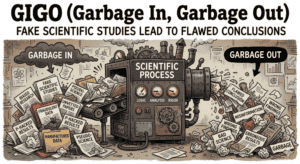 In December, the Pennsylvania Environmental Quality Board (EQB) accepted a petition by radical green groups, including the Clean Air Council and Environmental Integrity Project, to “study” the issue of increasing setbacks for shale drilling so far that it would ban ALL new Marcellus/Utica drilling in the Keystone State, which is no exaggeration (see EQB Votes to Consider Ban on Marcellus Drilling Via Crazy Setbacks). In March, the Shapiro Department of Environmental Protection (DEP) told the EQB it is actively reviewing the rulemaking petition and will have a recommendation on setbacks for the board by the end of this year (see PA DEP Signals Recommendation on Shale Drilling Setbacks by Year End). Yesterday, the DEP provided an update on its progress. Read More “PA DEP Hard at Work Analyzing 42 “Studies” re Increasing Setbacks”
 We’ve been tracking a story that we consider an ongoing tragedy for more than a decade. American Water Management Services (AWMS) owns a wastewater injection well in Trumbull County, Ohio, that supposedly caused a low-level earthquake (that nobody could feel) in 2014. Actually, there are two injection wells located at the site, both operated by AWMS. They were both “temporarily” shut down by the Ohio Department of Natural Resources (ODNR) following the quake nobody could feel (see
  New York’s electric grid faces its lowest reliability margins in recent history this summer, with only 417 MW available under baseline conditions, according to the New York Independent System Operator (NYISO). This critical situation stems from extreme weather, an aging generation fleet, and a lack of new dispatchable resources. NYISO’s annual Summer Reliability Assessment (copy below) says an extended heat wave of three days or more, with temperatures around 95 degrees, could result in a capacity deficit of -1,679 MW, increasing to -3,370 MW at 98 degrees, potentially leading to blackouts. NYISO can implement emergency measures like purchasing energy or voluntary curtailment to mitigate shortfalls, but the overall margin for error is extremely narrow.
  Quick, send in the clowns. Don’t bother, they’re here.
 In March, Hull Street Energy (HSE) entered an agreement to acquire two peaking power plants from Rockland Capital, LP, significantly expanding its Milepost Power portfolio (see
  Once again, Pennsylvania Governor Josh Shapiro is attacking the energy industry, this time setting his sights on utility companies that he falsely claims are “unfairly increasing their rates and needlessly raising costs for Pennsylvanians.” Shapiro has hired a radical National Resources Defense Council (NRDC) attorney to serve as his lapdog (Special Counsel for Energy Affordability) to attack utility companies, forcing them into bankruptcy, particularly by pressuring them to use unreliable renewables instead of cheaper fossil fuels.
  Twenty-three state attorneys general are demanding explanations from the top ratings agencies, Fitch, Moody’s, and S&P, regarding “ESG-driven” downgrades of fossil-fuel companies. They allege the agencies promote a radical climate agenda, weaponizing credit ratings with flawed methodologies to push woke ideology and UN-backed net-zero goals, rather than providing objective financial analysis. The AGs contend these downgrades contradict stated methodologies, reveal conflicts of interest arising from pledges to integrate ESG, and penalize American energy while potentially favoring entities such as Chinese-owned companies.
  The Pennsylvania Department of Environmental Protection (DEP) has extended three temporary air permits for the Shell ethane cracker plant in Monaca, PA, which would have expired on April 28, 2026. The DEP did the same thing in May 2024 (see
  The highly functional and responsible Susquehanna River Basin Commission (SRBC), unlike its dysfunctional and irresponsible counterpart, the Delaware River Basin Commission (DRBC), continues to support the shale energy industry by approving water withdrawals and consumptive use requests for responsible, safe shale drilling. The SRBC published a notice in the April 25th Pennsylvania Bulletin that the Executive Director of the SRBC approved and/or renewed 46 general water use permits in March for individual shale gas well drilling pads in Bradford, Clinton, Elk, Lycoming, Sullivan, Susquehanna, Tioga, and Wyoming counties.
  The Pennsylvania Department of Environmental Protection (DEP) is seeking public comment on an Individual Stormwater Permit for a 5.8-mile natural gas pipeline in Indiana County. Serving the proposed Homer City Generation LP 4.5 GW power plant and data center, the 30-inch pipeline will traverse Black Lick, Burrell, and Center Townships, involving several stream and wetland crossings. The DEP will host a public hearing on May 12 from 5 to 7 PM at the Indiana Theater regarding Homer City Generation’s proposed 5.8-mile natural gas pipeline in Center Township. In response to this new project, local anti-fossil fuel groups are actively mobilizing. So-called “Concerned Residents of Western PA” (CROW) is holding a preparation meeting this afternoon to help “citizens” draft their public comments and build speaking confidence.
  Earlier this year, the Federal Energy Regulatory Commission (FERC) approved the Williams Transco Southeast Supply Enhancement Project (see
  Yesterday, the Pennsylvania Department of Environmental Protection (DEP) informed the House Environmental and Natural Resource Protection Committee that it remains uncertain about the final contents of its plan to reduce methane emissions from oil and gas operations, which is due to the EPA in January 2027. That is, they don’t have a clue. This cluelessness follows an extensive public comment period on a proposed plan for onerous regulations (developed during the dark Biden years) that aims to satisfy federal obligations primarily through general permits and references to federal standards.
  It’s fun to watch mainstream media begin to wake up to the lawsuit we told you about last week, filed by a father and son against New York State over its fracking ban (see
  Olympus Energy (now owned by EQT) drills in the Greater Pittsburgh region, in Allegheny and Westmoreland counties. In 2021, Olympus applied to build a new well pad in a rural part of Allegheny County, in West Deer Township. So-called Concerned Residents of West Deer (CROWD) got amped up to oppose the project. They succeeded when town supervisors rejected the Dionysus well pad (see
  Here we go again with SSDD (same stuff, different day). We’re referring to the bullying talk coming from Pennsylvania Governor Josh Shapiro and his threats to pull the Keystone State out of the PJM grid, the largest electric grid in the U.S., covering all or parts of 13 states plus the D.C. swamp. Shapiro first made this same threat more than a year ago, in January 2025 (see
  On Monday, President Donald Trump invoked the Defense Production Act (DPA) to channel federal funding toward domestic energy projects, specifically targeting liquefied natural gas (LNG), petroleum, coal power, and grid infrastructure. Empowering the Energy Department to bypass regulatory and financial hurdles, the move aims to curb rising electricity and gasoline costs ahead of the midterm elections while meeting surging power demands from the AI industry.