
Non-Taxpaying Students Tell Oberlin to Block Gas Pipe to Biz Park
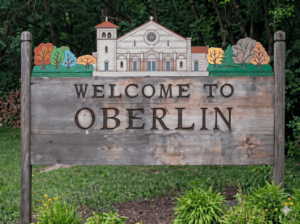 Oberlin, Ohio, officials are weighing a proposal to amend the city’s Community Bill of Rights to allow Dominion Energy Ohio to build a gas pipeline connection to a planned eco-industrial park, unlocking possible state support. Environmental groups and students at Oberlin College (neither of which pay any property or income taxes in Ohio, meaning they don’t have a say) argue the change would weaken Oberlin’s anti-fossil-fuel commitments and revive ties to Enbridge, whose NEXUS pipeline previously “divided” the city. City officials and utility experts counter that renewables alone are not yet feasible, citing constraints on electric capacity and on wind, solar, and geothermal options. Read More “Non-Taxpaying Students Tell Oberlin to Block Gas Pipe to Biz Park”
 Last week, U.S. Sen. Ted Cruz (R-TX) introduced S.4340. This bill would bar frivolous lawsuits from green activist groups seeking damages, injunctions, or other relief for so-called harms allegedly caused by the end use of energy products, including oil and gas. Senators Ted Budd (R-NC), Tom Cotton (R-AR), and Mike Lee (R-UT) are cosponsoring the legislation. The House’s companion bill, H.R. 8330, was also introduced by Representative Harriet Hageman (R-WY). The bill is being called the “Stop Climate Shakedowns Act of 2026.” An appropriate title.
  Wow! We haven’t been this excited about the long-dead issue of fracking in New York State in a LONG time. Geologist Madison Woodward III and his son Thomas (from Texas) purchased property in New York State in 2011, hoping to develop its natural gas reserves based on geological assessments and successful fracking operations in nearby Pennsylvania. However, New York’s statewide ban on hydraulic fracking, later expanded to include all alternative extraction methods, rendered the Woodwards’ mineral rights worthless. Represented by Pacific Legal Foundation, the Woodwards filed a federal lawsuit yesterday, arguing that the ban constitutes an unconstitutional “taking” of their property under the Fifth Amendment, for which they are owed just compensation, challenging New York’s energy policy and defending property owners’ rights.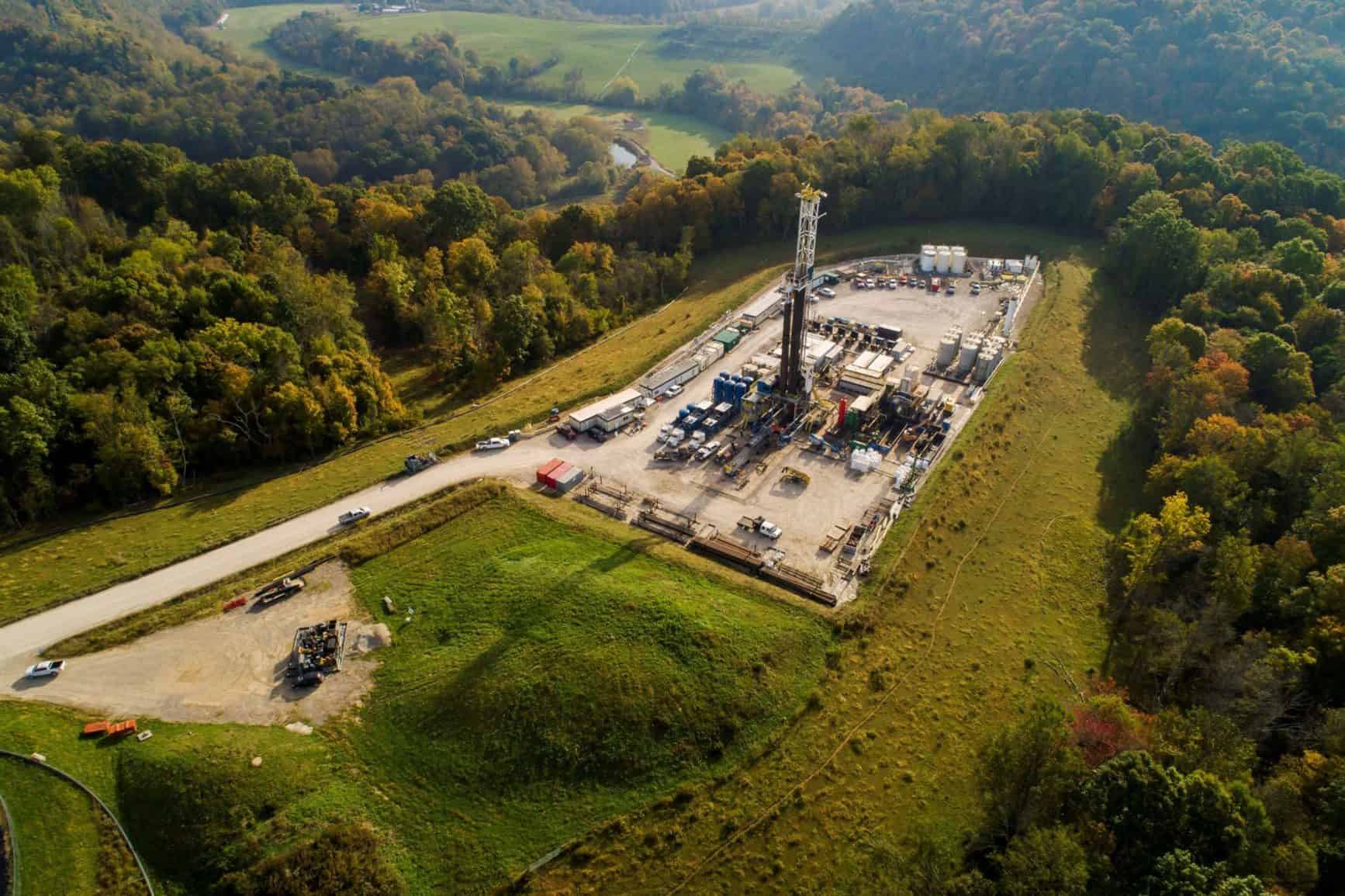
 As we report in today’s lead story, Williams held a groundbreaking ceremony for the Transco Northeast Supply Enhancement (NESE) project in New York City yesterday (see Groundbreaking Ceremony for NESE Pipe in NYC an All-Star Event). One of the speakers at the event, the master of ceremonies, was Williams CEO Chad Zamarin. One of the comments he made at the event that deserves its own post here on MDN was news about the Constitution Pipeline project, a 124-mile greenfield pipeline from the Marcellus gas fields of Susquehanna County, PA, to Schoharie County, NY, to move Marcellus gas into New York State and New England.
  The highly functional and responsible Susquehanna River Basin Commission (SRBC), unlike its highly dysfunctional and irresponsible counterpart, the Delaware River Basin Commission (DRBC), continues to support the shale energy industry by approving water withdrawals and consumptive use for responsible and safe shale drilling. The SRBC also tells shale drillers when to stop withdrawing if low water flow (i.e., drought) conditions exist. That’s what the SRBC did yesterday. The agency, via its Hydrologic Conditions Monitor, warned shale drillers that, at 15 listed locations (all in Pennsylvania), they must stop water withdrawals until streamflow reaches a specific “trigger flow” target (different for each location). Another 9 locations are approaching restrictions.
  The U.S. Department of Energy (DOE) Hydrocarbons and Geothermal Energy Office (HGEO) announced a $14 million project to test enhanced geothermal systems (EGS) in Pennsylvania. Led by the Pennsylvania Department of Environmental Protection (DEP), the initiative will leverage existing oil and gas infrastructure, specifically the Appalachian Utica Shale, to explore the efficacy and scalability of EGS in the eastern U.S. This project aims to convert a horizontal shale gas well for geothermal use, assessing optimal well placements and fracturing techniques. If successful, it could provide a replicable model for expanding reliable, cost-effective geothermal electricity nationwide, utilizing abundant underground heat resources.
  The Philadelphia Gas Commission postponed a vote on Philadelphia Gas Works’ (PGW) $182 million proposal to replace and expand its natural gas liquefier (LNG plant) in Port Richmond. The commission’s staff and the Public Advocate recommended rejecting the project, arguing it was oversized and could burden customers with unnecessary debt. They also cited incomplete plant and project designs. PGW argued the upgrade is crucial for safety and affordability, preventing potential harm to customers during cold winters and avoiding the need to truck in liquefied natural gas.
  As we reported last week, anti-fossil fuel fanatics haven’t given up on trying to block construction of the Williams Northeast Supply Enhancement (NESE) pipeline, a $1 billion+ project designed to increase Transco pipeline capacity and flows of Marcellus gas heading into New York City and other northeastern markets (see
  In March, South Carolina regulators approved Duke Energy’s proposal to build a 1.4-gigawatt (GW) natural gas-fired power plant in Anderson County, marking the utility’s first new generation project in the state in a decade (see
  PJM Interconnection, the nation’s largest electric grid system serving 65 million people across 13 states and Washington, D.C., is pursuing an emergency plan to secure 15 gigawatts (GW) of new power supply to avert electricity shortages driven by surging data center demand tied to artificial intelligence (AI). The grid operator looks to pair proposed data centers with new generation through bilateral negotiations running from September to March 2027. Let’s make a deal!
 Here’s something you don’t hear about often: A Democrat who supports fossil energy and pipelines. It’s especially noteworthy when the Democrat is the former head of the Democratic Party in Pennsylvania. In an eloquent guest editorial published in the Harrisburg Patriot-News, T.J. Rooney, former Chairman of the PA Democratic Party and a former member of the PA House, discusses (bemoans the fact) that it’s next to impossible to build a new natural gas pipeline in the Keystone State. He makes a full-throated plea for permitting reform to change that.

 The Mountain Valley Pipeline (MVP), which began operations in 2024 through West Virginia and Virginia, is now slated for an extension, the MVP Southgate, into North Carolina. This expansion faces opposition from some residents and environmental groups who raise concerns about safety, environmental impact, eminent domain issues, and the need for increased natural gas infrastructure (they believe cataclysmic global warming comes from burning natural gas). Despite court challenges and past environmental violations, the project has received government approvals and is forging ahead. On March 23, the Federal Energy Regulatory Commission (FERC) issued a notice to proceed with construction in Virginia.