
PA EHB Denies CNX Motion to Dismiss Fracking Well Water Case
 On February 3, 2026, Pennsylvania’s Environmental Hearing Board (EHB) denied a motion by CNX to dismiss an appeal from James and Barbara Ullom regarding significant water loss on their Washington County property. The Ulloms allege that fracking operations at CNX’s NV110 well pad, located approximately 890 feet from their well, caused their water supply to fail (loss of water). Although the Department of Environmental Protection (DEP) initially found no link, the EHB, a special court that hears appeals of DEP decisions, ruled that the Ulloms had established a prima facie case. A central legal issue remains: whether the Oil and Gas Act’s “rebuttable presumption” of liability applies to water loss or strictly to contamination. Read More “PA EHB Denies CNX Motion to Dismiss Fracking Well Water Case”
 Pennsylvania Governor Josh Shapiro (far-left Democrat) has a plan to address rising electricity costs by “increasing oversight” of investor-owned utilities, which he claims generate “excessive profits” at the expense of Pennsylvania ratepayers. That’s code for take them over and have the government (liberal Dems) run them. Last time we checked, we still live in the USA, land of the free and home of the brave. We don’t live in the USSR.
 The Pennsylvania Senate (controlled by Republicans) recently approved Senate Bill (SB) 712, sponsored by Senators Gene Yaw and Camera Bartolotta, to streamline the plugging of abandoned and orphaned oil and gas wells. By clearly defining “reasonable effort” and “attainable bottom,” the legislation eliminates regulatory ambiguity that has previously caused costly delays and inconsistent inspections from the Department of Environmental Protection. This clarity ensures Pennsylvania can efficiently utilize nearly $400 million in federal funding to address legacy wells, many of which are located near residential areas and schools.
  Despite claims by anti-fossil fuelers that the Tenaska Westmoreland Generating Station in southwestern PA would spread disease and death if built, it’s been up and running since 2018, producing power and generating revenue for both its builders and the community. Oh, and everyone is in good health. However, the plant has been operating under a state permit since it opened. It needs a federal Title V permit for long-term operation. The state Department of Environmental Protection (DEP) is the agency that issues such a permit and is proposing to do so, which (of course) has antis’ knickers in a twist. In particular, antis complained that no public complaint sessions were scheduled. They got their wish yesterday.
  In January 2023, New York Gov. Kathy Hochul, a leftist Democrat, floated a plan to ban natural gas hookups in every single new home and business across the “Empire” State (see
  Two pipeline kingpins are engaged in a deathmatch with the Federal Energy Regulatory Commission (FERC) to get their competing pipeline projects approved. One is Williams’ Transco Southeast Supply Enhancement Project (SESE), the other is EQT’s MVP Southgate project (see
 Last September, MDN told you that two major Kinder Morgan pipeline projects that will flow Marcellus/Utica molecules in the southeastern U.S. took a big step forward at the Federal Energy Regulatory Commission (FERC) with FERC actively working on an environmental impact statement (EIS) for both projects (see
  Industrial Energy Consumers of America (IECA), a trade group representing some of the largest energy consumers in the U.S. (i.e., manufacturers), on Wednesday sent a letter to Energy Secretary Chris Wright urging the immediate suspension of spot LNG exports to reduce natural gas and electricity prices and ensure reliability. This raises many questions, such as how much of our LNG exports are spot/cash and how much are under long-term contracts. Would suspending spot LNG exports be beneficial for consumers? Is this anti-free market?
  Reverting back to true form by obsequiously bowing to environmental extremists, New York Governor Kathy Hochul ordered her lapdogs at the state Department of Environmental Conservation (DEC) to log an objection with the Federal Energy Regulatory Commission (FERC) to a request by Williams to resurrect the Constitution Pipeline project. Even though Hochul bartered a deal with President Trump to allow this pipeline (see
  In 2025, the Pennsylvania Department of Environmental Protection (DEP) achieved “historic success” by eliminating a longstanding permit backlog of over 2,400 applications. The DEP acted on more than 40,000 permits and conducted 116,364 inspections to ensure environmental safety. Key initiatives included the launch of the Streamlining Permits for Economic Expansion and Development (SPEED) program. The DEP is celebrating its success by creating a brand new bureaucracy: the Bureau of Permitting Coordination. Kind of a bureau of coordinating bureaus. (You know, the word bureaucracy comes from bureau, meaning a government department, and cracy, meaning rule. Literally, to be ruled by government bureaucrats who are not elected.)
  To manage a historic surge in electricity demand caused by an arctic chill, PJM Interconnection has issued maximum generation alerts across 13 states. The regional grid operator anticipates record-breaking winter peaks, prompting calls for deferred maintenance and the potential deployment of backup power from data centers. While utilities in Western Pennsylvania, such as FirstEnergy and Duquesne Light, report stable operations, PJM is preparing industrial customers for demand response programs to reduce usage. In response, U.S. Steel has already increased internal power generation to reduce grid strain. These proactive steps aim to ensure regional reliability amid persistent extreme temperatures throughout the week.
 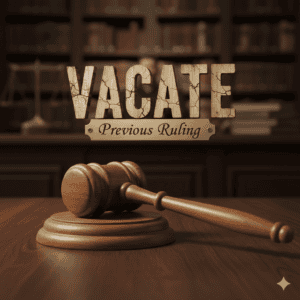 The Intermediate Court of Appeals of West Virginia vacated an order combining 58 oil and gas tracts into a Harrison County drilling unit, ruling that the state’s Oil and Gas Conservation Commission failed to provide sufficient findings of fact. The case involves the “JOsborn 213 Unit” operated by Arsenal Resources, which mineral rights owners claim failed to negotiate in good faith as required by law. The court found the Commission ignored conflicting testimony and provided only summary conclusions rather than a detailed analysis. Consequently, the case was remanded for further proceedings, requiring the Commission to properly evaluate all evidence and issue a new order.
  Last May, NRG Energy announced a deal to acquire LS Power’s portfolio of natural-gas power plants in a deal valued at roughly $12 billion, including debt, that will expand NRG’s footprint in Texas and along the East Coast (see