
FERC Upholds Eliminating Order 871 – Pipeline Challenge Rule
 One of the environmental left’s favorite tactics to defeat fossil fuel projects is to challenge every single infrastructure project (pipeline or otherwise) connected to fossil energy at the Federal Energy Regulatory Commission (FERC). As soon as a company files an application to build a new project and FERC approves it, Big Green will challenge it first at FERC and eventually in court. FERC had an internal rule, called Order No. 871, that states a company cannot begin construction (even though FERC has approved the certificate) until all such legal challenges are resolved, which can take YEARS. Which is the point—delay, and eventually, some of the projects will give up and won’t be built. Run out the clock. In October, FERC issued a new rule eliminating the Order No. 871 rule, meaning construction can now begin months and years sooner, even while appeals continue (see FERC Cuts Pipeline Challenge Rule; Result is Faster Construction). The enviro-left appealed the decision with FERC, and yesterday, FERC commissioners told the enviro-left to buzz off. Read More “FERC Upholds Eliminating Order 871 – Pipeline Challenge Rule”
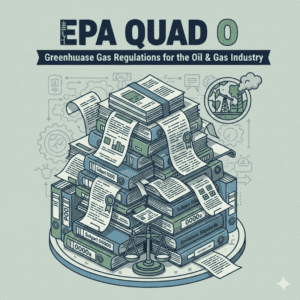 Today, we revisit a topic that (at first glance) is a bit complex: a federal EPA regulation called Subpart OOOOc (“Quad O”), which addresses methane emissions from existing sources. Under the Biden administration, Quad O was twisted and used in an attempt to force oil and gas drillers, especially small conventional drillers, out of business. The policy was set, and the individual states were instructed to bring their own regulations and policies into compliance. But then the Democrats lost the White House. No worries…the Dems running the Pennsylvania Department of Environmental Protection (DEP) eagerly developed onerous regs to comply with the Biden EPA’s Quad O standards. The DEP’s regs are ready to go and could be adopted at any time. However, the Trump EPA delayed implementation of Quad O until 2027 while it works to revise or scrap it.
  Yeah, well, you knew this was coming. Last week, President Trump and EPA Administrator Lee Zeldin announced the “largest deregulatory action in American history” by officially revoking the Obama EPA’s 2009 “endangerment finding” (see
  In June 2023, Dominion Energy announced plans to build four small “peaker” electric generating plants in Chesterfield County near Richmond (see
 Antero Resources Corporation has reached a proposed settlement with the U.S. Department of Justice (DOJ) and the state of West Virginia to resolve Clean Air Act violations at 242 oil and gas facilities in West Virginia and Ohio. To address unauthorized volatile organic compound (VOC) emissions, Antero will invest approximately $5.8 million in system improvements and monitoring, reducing annual emissions by over 1,100 tons. The company will also pay a $3.8 million civil penalty and spend $1.5 million to permanently plug and remediate abandoned wells in WV. Total price tag: $11.1 million.
  Last week, MDN told you that Maryland State Senator Kevin Harris (Democrat) had recently introduced legislation allowing Big Utilities, such as Exelon, to build and operate power-generation infrastructure using ratepayer funds. We also presented the counterargument to re-regulating what is now a deregulated power market in Maryland (see
  President Donald Trump and EPA Administrator Lee Zeldin announced the “largest deregulatory action in American history” yesterday by officially revoking the Obama EPA’s 2009 “endangerment finding.” This move eliminates the legal mandate for the federal government to regulate greenhouse gases like carbon dioxide. The administration claims the rollback will save taxpayers over $1.3 trillion and reduce vehicle prices by approximately $2,400 by stripping away emission standards for cars and trucks. More importantly, it takes away the left’s ability to block coal- and natural gas-fired power plants. While Trump hailed the decision as a victory for consumer choice and the economy, anti-fossil fuel fanatics vowed to challenge the repeal in court.
 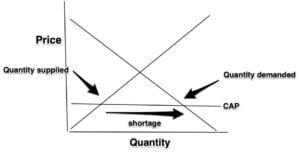 PJM Interconnection, the electrical grid operator that covers Pennsylvania (along with all or parts of 12 other states and the District of Columbia), has once again caved to the political demands of PA Gov. Josh Shapiro to artificially cap prices in its upcoming capacity auctions for the next two years. PJM caved for the July 2025 auction (see
  Virginia Senate Bill 253, introduced by State Senator Louise Lucas (D-Portsmouth), aims to shift energy infrastructure costs from residents to data centers, potentially saving households a whopping $65 annually. The legislation requires data centers—which account for 20% of Dominion Energy’s sales—to fund their own electrical substations and cover specific “capacity costs.” If the bill becomes law and the proposals in it receive approval from the State Corporation Commission (SCC), the typical monthly energy bill for data centers would rise by about 16%, while the typical bill for residential and other customers would decrease by 3% to 3.5%. Looks like Virginia, with more data centers than any other state in the union, is now closed for data center business. Too bad.
  In December, MDN told you that three anti-shale drilling groups—the PA Council of Trout Unlimited, the Keystone Trails Association, and the Responsible Drilling Alliance—requested the Pennsylvania Department of Environmental Protection (DEP) hold a hearing on the Chapter 105 permit requested for a 3.9-mile shale gas access road and staging area proposed by PA General Energy (PGE) in the Loyalsock State Forest (see
  Antis somehow got to the board of commissioners in Montour County, PA. Yesterday, the commissioners voted unanimously to reject Talen Energy’s request to rezone empty agricultural land near Talen’s Montour Power Plant (converted from coal to run on Marcellus gas in 2023) for a proposed data center. This decision followed community concerns stoked by lying groups like Food & Water Watch regarding “potential environmental impacts” on the nearby Montour Preserve.
  In 2009, during the Obamadroid administration, the federal Environmental Protection Agency (EPA) adopted a major regulatory rule called the “endangerment finding.” The finding concluded that six so-called greenhouse gases — carbon dioxide (CO2), methane (CH4), nitrous oxide (N2O), hydrofluorocarbons (HFCs), perfluorocarbons (PFCs), and sulfur hexafluoride (SF6) — constitute an endangerment to public health and welfare due to their contribution to global warming (which is a complete hoax). The finding gave the EPA the power to regulate those gases under the Clean Air Act. This week, the Trump EPA will repeal and obliterate that finding. Victory!
  The highly functional and responsible Susquehanna River Basin Commission (SRBC), unlike its highly dysfunctional and irresponsible counterpart, the Delaware River Basin Commission (DRBC), continues to support the shale energy industry by approving water withdrawals and consumptive use requests for responsible and safe shale drilling. The SRBC published a notice in the February 7 Pennsylvania Bulletin that the Executive Director of the SRBC approved and/or renewed 42 general water use permits in December and 32 general permits in January (74 combined) for individual shale gas well drilling pads in Bradford, Clearfield, Clinton, Lycoming, Sullivan, Susquehanna, Tioga, and Wyoming counties.
  The Pennsylvania Department of Environmental Protection (DEP) is seeking public comment on an Individual Stormwater Permit for a 5.8-mile natural gas pipeline in Indiana County. Serving the proposed Homer City Generation LP 4.5 GW power plant and data center, the 30-inch pipeline will traverse Black Lick, Burrell, and Center Townships, involving several stream and wetland crossings. Interested parties have 30 days to submit comments to the DEP’s Northwest Regional Office. While no public hearing is currently scheduled, one may be requested. Additional project details and permit applications are available for review through the DEP’s regional office and website.