PA DEP Issues Permits for TETCO Appalachia to Market III Pipe
 Last summer, Texas Eastern Transmission Pipeline Company (aka TETCO, owned by Enbridge) filed to build the Appalachia to Market III Project, abbreviated A2M III (see TETCO Files Appalachia to Market III, Small Pipe Tweaks in PA). A2M III is designed to provide additional natural gas supply in Pennsylvania and the broader region to meet growing demand from utilities and industrial users for Marcellus gas. The A2M III Project will provide up to 32,000 dekatherms per day (32 MMcf/d) of additional firm natural gas transportation service from the Appalachian supply basin in Southwest Pennsylvania to meet the needs of two existing local distribution company customers in Pennsylvania and Delaware. Over the weekend, the Pennsylvania Department of Environmental Protection (DEP) published a notice that it has issued requested water quality permits and approvals for the project. Read More “PA DEP Issues Permits for TETCO Appalachia to Market III Pipe”
 Last October, a seven-member, all-Democrat group of Pennsylvania House of Representatives members announced a six-bill legislative package aimed at regulating the “responsible development” of artificial intelligence (AI) data centers in the state (see
  Despite claims by anti-fossil fuelers that the Tenaska Westmoreland Generating Station in southwestern PA would spread disease and death if built, it’s been up and running since 2018, producing power and generating revenue for both its builders and the community. Oh, and everyone is in good health. However, the plant has been operating under a state permit since it opened. It needs a federal Title V permit for long-term operation. The state Department of Environmental Protection (DEP) is the agency that issues such a permit and is proposing to do so, which (of course) has antis’ knickers in a twist (see
  Duke Energy is seeking regulatory approval for a $3.2 billion, 1,400-megawatt natural gas power plant in Anderson County, South Carolina. Scheduled for a February 2026 Public Service Commission hearing, the project aims for operations by 2031 to meet surging electricity demand in the region. Unlike other regional proposals, Duke’s facility avoids new interstate pipeline construction by utilizing the existing Transcontinental Gas Pipeline (Transco). The plant will use air-cooling technology to significantly reduce water use and has already secured turbines from GE Vernova. While Duke remains the primary owner, local electric cooperatives will hold a 7% stake in the facility.
  An interesting case in Ohio deals with whether or not natural gas can be taxed, depending on how it’s used. The Ohio Board of Tax Appeals ruled on Tuesday, January 6, that MGQ Terminal, Inc. is exempt from use tax on natural gas purchases used to process asphalt to customer specifications. Although Tax Commissioner Patricia Harris had assessed use tax for the period between 2013 and 2016 based on the determination that the company was engaged in a storage business, the board reversed this decision, finding that the company’s activities qualify as tax-exempt “manufacturing operations.” The board held that MGQ’s use of natural gas to heat, agitate, and blend refinery waste into homogeneous, specification-compliant products constitutes a transformative manufacturing process rather than mere storage.
 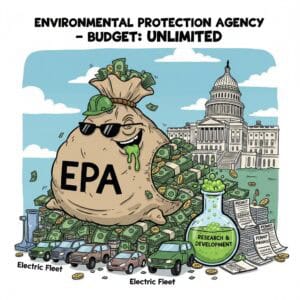 In a major disappointment, Republicans caved to Democrats in both the Senate and the House of Representatives, releasing a so-called bipartisan spending package on Monday morning that keeps the Environmental Protection Agency (EPA) budget largely intact. The spending package would fund several federal agencies and scientific bodies, including the EPA, the Departments of Interior and Energy, and the National Science Foundation, through Sept. 30, the end of the fiscal year. The “minibus” bills, which will likely move to the House floor for a vote this week, allocated more than $38 billion to Interior, Environment, and related agencies, or $9.5 billion more than the Trump administration’s budget request.
 In November, Pennsylvania finally passed a budget—four months late. As part of the deal struck between Democrats and Republicans, the Regional Greenhouse Gas Initiative (RGGI) carbon tax scheme was permanently ash-canned (see
  It’s always fun for us to discover a new pipeline project that has the potential to flow more Marcellus/Utica molecules to other markets—particularly the Southeast and Gulf Coast markets. Here is one such project that (until now) had escaped our notice. On Dec. 29, the Federal Energy Regulatory Commission (FERC) issued an Environmental Assessment (EA) for the Southeast Compression for Utility Reliability Expansion (SECURE) Project, a compressor-focused expansion project designed to enhance compression infrastructure across Mississippi and Louisiana for the Gulf South Pipeline Company. The project will expand the Gulf South Pipeline system to provide an extra 280,000 dekatherms per day (Dth/d) of firm natural gas transportation service (280 MMcf/d) to markets in the Southeast, including support for power generation customers.
  The short answer to the question posed in our headline is, “We sure hope so!” Yesterday, MDN reported that the Pennsylvania Department of Environmental Protection (DEP) has officially adopted a final version of updated Environmental Justice (EJ) regulations (see
  On December 17, 2025, a casing failure and loss of well control occurred at one of three wells during fracking operations at a Range Resources pad in Washington County, PA. After gas pressure spiked to 2,000 psi, the company stabilized the well and later installed two kill plugs. Despite Range sending an immediate email notification, the Pennsylvania Department of Environmental Protection (DEP) cited Range for failing to use the required website portal for instant alerts. Additionally, the company missed deadlines for a mandatory Area of Review report regarding potential “communication” with other O&G wells and/or water wells in the area.
  In what we consider a misguided move, a Republican State Senator in South Carolina, Shane Massey (the SC Senate Majority Leader), has introduced a bill that would eliminate the use of eminent domain by pipeline companies. The move comes in response to concerns over a 71-mile Kinder Morgan pipeline that will flow Marcellus/Utica molecules to a planned 1,020-megawatt (MW) gas-fired power plant in the state’s Lowcountry, in Colleton County.