
U.S. House Passes Two Pipeline Permit Reform Bills; FERC in Charge
 Last week, the U.S. House of Representatives passed two bills that will make it easier to build natural gas pipelines in the northeast and elsewhere. The House passed H.R. 3898, the Promoting Efficient Review for Modern Infrastructure Today (PERMIT) Act, making it more difficult for states to reject pipeline and related projects based on the Clean Water Act. No more cases of New York and other states blocking federally-approved pipelines from getting built for years on end. The House also passed H.R. 3668, the Improving Interagency Coordination for Pipeline Reviews Act, which designates the Federal Energy Regulatory Commission (FERC) as the lead agency in the interstate pipeline approval process. No more interference from the EPA, BLM, and other federal agencies attempting to stifle pipeline projects. Read More “U.S. House Passes Two Pipeline Permit Reform Bills; FERC in Charge”
 The European Union is simplifying compliance with its methane emissions law for oil and gas imports, a decision expected to aid U.S. exporters following pressure from the Trump administration. Recognizing that the commingled nature of U.S. liquefied natural gas (LNG) makes tracing difficult, the European Commission proposed two streamlined reporting options: utilizing third-party verification certificates or a digital “trace and claim” system. While the core regulation remains intact with stricter standards scheduled for 2027, these adjustments aim to prevent supply disruptions by offering more flexible monitoring solutions for the fragmented U.S. energy industry. To which we say, tell Europe to bugger off.
  The highly functional and responsible Susquehanna River Basin Commission (SRBC), unlike its highly dysfunctional and irresponsible counterpart, the Delaware River Basin Commission (DRBC), continues to support the shale energy industry by approving water withdrawals and consumptive use for responsible and safe shale drilling. The SRBC also tells shale drillers when to stop withdrawing if low water flow (i.e., drought) conditions exist. Or when a body of water is frozen or blocked by ice. That’s what the SRBC did yesterday. The agency, via its Hydrologic Conditions Monitor, warned shale drillers that, at 58 listed locations (all in Pennsylvania), they must stop water withdrawals until streamflow reaches a specific “trigger flow” target (different for each location) or until the ice thaws.
  Sometimes politics is a game of “chicken” whereby you must keep fighting and wait out the other side when you *know* you are in the right. Such was the case with Pennsylvania Democrats’ insistence that the state join the Regional Greenhouse Gas Initiative (RGGI) carbon tax scheme. RGGI aims to force coal- and gas-fired power plants to shut down by making them super expensive to operate. Tax them out of existence on the theory that unreliable renewables like wind and solar would replace them. But Republicans in the PA Senate kept fighting—for seven long years—and finally won (see
  It’s always one step forward and two steps back here in the “Empire” State of New York. Recent actions by New York Governor Kathy Hochul regarding the energy sector have been encouraging. She horse-traded with President Trump to allow two natural gas pipelines to get built in the state (see
 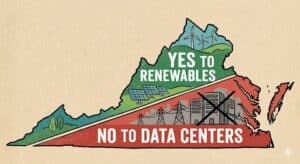 Democrats in Virginia are experiencing political ecstasy at the prospect of reversing four years of common-sense energy policies under outgoing Governor Glenn Youngkin. Gov. Youngkin removed the state from the odious Regional Greenhouse Gas Initiative (RGGI) carbon tax scheme. Incoming Gov. Abigail Spanberger has pledged to re-enroll the state in the program. Youngkin vetoed bills that would have favored unreliable renewable energy. Now, the Dems will not only have Spanberger as Governor, but hardened leftist Ghazala Hashmi as Lt. Governor, and a strong majority in both chambers of the legislature. They are already planning to reintroduce bills favoring renewables and blocking new data centers. It’s a crying shame what Virginia has done in electing these radicals to lead it.
  The Pennsylvania Environmental Quality Board (EQB) held a meeting yesterday to consider whether or not to accept a petition by radical green groups, including the Clean Air Council and Environmental Integrity Project, to “study” the issue of increasing setbacks for shale drilling so far that it would ban ALL new Marcellus/Utica drilling in the Keystone State (no exaggeration). The EQB tabled a decision on whether to accept the petition back in April (see
 The left is so amusing when it turns against one of its own. New York Governor Kathy Hochul is a card-carrying leftist. She has done her best to phase out the use of fossil fuels, including natural gas, throughout the state. She tried to force the state to abandon using natural gas and oil for heating and cooking in new construction (currently on hold in the courts). Under her direction, the Department of Environmental Conservation (DEC) rejected permits for multiple existing (and new) gas-fired power plants. She’s forcing anyone who does connect to natural gas to pay the cost of running the pipeline to the house (or business). She signed a law banning the use of CO2 for fracking. She hates oil and gas! Yet by allowing two gas pipelines and vetoing a bill last week that would have banned the use of brine on roads during winter, the left turns against her and labels her “gassy Kathy.” Hilarious!
  The highly functional and responsible Susquehanna River Basin Commission (SRBC), unlike its highly dysfunctional and irresponsible counterpart, the Delaware River Basin Commission (DRBC), continues to support the shale energy industry by approving water withdrawals and consumptive use requests for responsible and safe shale drilling. The SRBC published a notice in the December 6 Pennsylvania Bulletin that the Executive Director of the SRBC approved and/or renewed 76 general water use permits from September 1 through October 31 for individual shale gas well drilling pads in Blair, Bradford, Cameron, Centre, Clearfield, Clinton, Elk, Huntingdon, Lycoming, McKean, Sullivan, Susquehanna and Tioga counties in Pennsylvania and one permit to withdraw water in Steuben County, New York.
  In January, Constellation Energy (a huge power-generating company) announced a deal to buy out and merge with Calpine (another huge power-generating company). Calpine owns 79 energy facilities across the country, generating some 27 gigawatts (GW) of electricity, with a significant number located in the eastern U.S. Many of Calpine’s facilities use natural gas to produce electricity. The two companies combined would own almost 60 GW of nuclear, natural gas, geothermal, hydro, wind, solar, cogeneration, and battery storage. The Federal Energy Regulatory Commission (FERC) signed off on the deal in July, with conditions (see
  Here we go again. The environmental left is attacking the shale industry by accusing it of shipping drill cuttings (the leftover rock and dirt that comes out of a borehole) to local landfills in the Buckeye State (Ohio), where it will irradiate everyone and everything close to it. According to the left, drill cuttings “could be contaminated with radioactivity and other chemicals.” And, according to the same people, lack of regulations in Ohio “allows it [radioactive drill cuttings] to slip by regulators, especially in Ohio,” and end up in the same landfills as “household trash.” Is there anything to the claim that drill cuttings are radioactive and a threat to those who live near landfills?
  Three anti-shale drilling groups—the PA Council of Trout Unlimited, the Keystone Trails Association, and the Responsible Drilling Alliance—have requested the Pennsylvania Department of Environmental Protection (DEP) hold a hearing on the Chapter 105 permit requested for a 3.9-mile shale gas access road and staging area proposed by PA General Energy in Gamble and Cascade Townships, Lycoming County. The aim of their request is not to elicit information or express concerns that can be addressed to achieve a better outcome; rather, it is to flood the hearing with bombastic charges in hopes of blocking the project altogether.
 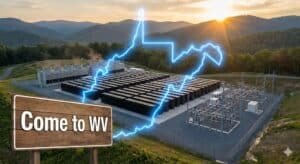 Pennsylvania and Ohio should be looking over their shoulders regarding new data centers and their decisions on where to locate them. West Virginia is making serious efforts to be THE destination for new AI data centers to locate in the Marcellus/Utica region. The West Virginia Office of Energy’s recent summit highlighted the state’s unique position to power the booming AI and data center sectors through its vast natural gas reserves. Like PA and OH, WV’s homegrown natural gas offers a reliable, cost-effective, and flexible solution for necessary baseload power. What’s beginning to set WV apart from its neighbors is legislation that explicitly targets data centers.