
New CEA Report Warns: No Shale Gas Pipelines, No Electricity

Earlier this week the Consumer Energy Alliance (CEA) released a disturbing report on the U.S. oil and gas pipeline network and its relationship to our growing domestic energy needs. The report, titled “Families, Communities and Finances: The Consequences of Denying Critical Pipeline Infrastructure” (full copy below), finds that if legislators and regulators reject proposals for new pipelines and pipeline expansions, we are in danger of losing one-third (1/3) of our electric generation capacity nationwide. The capacity at risk is 1,450 gigawatts. Put in perspective, we’ll lose the electricity it takes to power California, Florida, New York, Texas, Ohio and all of New England–COMBINED. It is a scary, nightmarish scenario–and if pipeline projects are delayed or canceled, it’s going to happen. No, we won’t necessarily be without electricity. What it means is that electric rates will soar and the people who will suffer the most are the 43 million citizens living on fixed incomes and below the poverty line. It is time to stop diddling around and get pipeline projects approved–before it’s too late…
Read More “New CEA Report Warns: No Shale Gas Pipelines, No Electricity”
 Yesterday MDN’s favorite government agency, the U.S. Energy Information Administration (EIA), issued our favorite monthly report–the Drilling Productivity Report (DPR). The DPR is the EIA’s best guess, based on expert data crunchers, as to how much each of the U.S.’s seven major shale plays will produce for both oil and natural gas in the coming month. For the past three reports, estimating production for November, December, and January, Marcellus natgas has increased. The trend continues in this latest report, which forecasts production for the coming month of February. Last month the EIA predicted natgas production in the Marcellus would zoom up by 160 million cubic feet per day (MMcf/d). This month EIA predicts in the coming month Marcellus production will go up another huge 188 MMcf/d. The #2 gas-producing basin behind the Marcellus is the Permian (in Texas). That basin will also see a big increase in natgas production–an additional 103 MMcf/d–largely because of “associated gas.” The Permian is an oil play and is, by all accounts, the hottest shale play right now because of oil. But when drillers sink holes in the ground, other hydrocarbons come out of the ground along with oil–i.e. natural gas. Ergo, the more oil you drill for and extract, the more natural gas you get along with it. Here are the latest numbers for the major shale plays in the U.S….
 One of the antis’ favorite tactics in opposing the Mariner East 2 pipeline is to claim it’s unsafe. It’s a bomb waiting to go off. Mariner East 2, as a reminder, is a $2.5 billion, 350-mile natural gas liquids (NGL) pipeline that will run from eastern Ohio through the state of Pennsylvania to the Marcus Hook refinery near Philadelphia. It will flow mostly ethane, but also propane and butane. One town near Philadelphia where the pipeline is slated to run is West Goshen Township (Chester County). The leaders of the town wanted an honest, independent assessment of the pipeline and its potential danger to residents–so they hired the independent consulting firm Accufacts to study the safety of the project. The report is in (full copy below) and shows not only does Mariner East 2 meet, but in fact exceeds federal minimum safety requirements. There goes another anti argument, disappearing into the atmosphere like burned carbon dioxide…
 A West Virginia law professor and one of his students (who went on to become a trial attorney with the U.S. Dept. of Justice), have just published a research paper on the topic of surface and mineral rights in the Mountain State. The paper, titled “Horizontal Drilling Vertical Problems: Property Law Challenges from the Marcellus Shale Boom” (full copy below) discusses property law challenges that can impede business development and negatively impact landowners and mineral owners in shale regions, with a focus on the West Virginia Marcellus. The paper explains the horizontal drilling and hydraulic fracturing process. A widespread problem in WV is that (because of coal) in many cases the owners of the mineral rights under the ground are not the same people who own the property on the surface. The paper makes the point that while courts can handle one-off cases, the WV legislature should develop better “large-scale policies” to deal with an ongoing, contentious situation…
 The Baker Hughes rig count continued to rocket skyward in December–on all levels. The international rig count (worldwide) was 929, up 4 from the 925 counted in November. However, in the U.S., the December rig count was 634, up a whopping 54 rigs from the 580 counted in November. And the Marcellus/Utica had equally good news. The combined rig counts for PA-OH-WV was 58, up by 5 rigs from November’s 53. Cool! The biggest gainer was PA, with a count of 31 (up 4 from 27 in November). OH gained 2 and now stands at 18 active rigs. WV, on the other hand, lost a single rig and the count stood at an average of 9 rigs. Something else to note, December’s M-U rig count of 58 is the highest average monthly rig count in 2016. On the chart below you will see we hit our low point in June/July when the count was 36. Since that time we have gained rigs every single month…
 Can you actually use a mathematical formula to figure out better ways to plan how to drill shale gas wells? It turns out the answer to that question is a resounding, “Yes!” A chemical engineering professor at Carnegie Mellon University, along with several Ph.D. students have, working with EQT, pioneered research that figured out how to turn 14,000 water truck trips to a well site into 1,400 trips–an “order of magnitude” difference. That is a big deal in the drilling industry. Using mathematical formulas–something called “mixed-integer optimization”–Professor Ignacio Grossmann and the other researchers tackled how to make processes in the shale gas industry more efficient. They published a paper in the AIChE Journal in 2016 titled, “Strategic Planning, Design and Development of the Shale Gas Supply Chain Network” (full copy below). The paper “presents a mixed-integer nonlinear programming (MINLP) model to optimally determine the number of wells to drill at every location, the size of gas processing plants, the section and length of pipelines for gathering raw gas and delivering processed gas and by-products, the power of gas compressors, and the amount of freshwater required from reservoirs for drilling and hydraulic fracturing so as to maximize the economics of the project.” Er, right. As you can tell, it’s complex. But it’s also very interesting and relevant for drillers and others in the industry, which is why we bring it to you. Below is a quick summary/overview of the paper, a video of Prof. Grossmann describing the research, and a copy of the paper itself…
 The United States is already on the cusp of energy independence, thanks to the shale revolution. What does that mean? It means when you consider how much energy we produce and export, and how much we consume and import, at the end of the day, we are producing as much energy as we consume. But it gets complicated. We still import a lot of oil from the Middle East and elsewhere. We import (and export) oil via pipelines to Canada. We also still import natural gas. But at some point the U.S. will export more than it imports. That is, we won’t only produce as much as we consume, we’ll produce extra energy–and sell it abroad to other countries. We will become a “net exporter.” When will that happen? According our favorite government agency, the U.S. Energy Information Administration (EIA), it will happen in the next 10 years–or less. The EIA has just released its “Annual Energy Outlook 2017” (full copy below). In the report the number crunchers at EIA look at multiple scenarios and conclude that under most scenarios we are a net exporter by 2026, and in some of those scenarios, it happens even sooner. That would be the first time since 1953 that our country has exported more energy than it uses. Not surprisingly, LNG (liquefied natural gas) plays a critical role in our country becoming a net exporter. Here’s what the EIA said in releasing the 2017 annual report…
 The American Petroleum Institute’s (API) president and CEO, Jack Gerard, delivered the keynote address at API’s Seventh Annual State of American Energy event in Washington, DC on Wednesday. At the same event the API released the “State of American Energy 2017” report (full copy below) highlighting the energy issues that will shape America’s economic and political news this year. Gerard says we have now fully debunked the insane ramblings of the environmental left in this country, proving that we can grow our energy use and our energy production, while at the same time creating a cleaner environment. According to the EIA, in the first six months of 2016, carbon emissions from electricity generation were at their lowest point in 25 years even as electricity demand rose–thanks to greater use of natural gas. Below are highlights of Gerard’s speech along with a copy of the newly released report…
 Is it April Fool’s Day? Wait, no, it’s January 4th, not April 1st. But honestly, we thought it must be a joke to read that scientists doing “research” claim that living close to a fracking site will make you sick. Not from air pollution. Not from water pollution. But from noise pollution. Yep, loud noises nearby cause things like “stress” and “annoyance” and even diabetes (!) according to Physicians, Scientists and Engineers for Healthy Energy (PSEHE) and Michael McCawley, the interim chair of the Occupational and Environmental Health Department at West Virginia University. The study, titled “Public health implications of environmental noise associated with unconventional oil and gas development,” goes for the jugular–making a case for stricter regulations and larger setbacks (i.e. less drilling). Yet, the researchers don’t do any of their own in-the-field research! They rely on out-of-date research done by others. And they show no causal link between health impacts and shale drilling in the “study”…
 A new study by researchers at the University of Chicago, Princeton University, and the Massachusetts Institute of Technology (MIT) finds that the benefits of fracking outweigh the costs. You read that right. Three big lefty schools have released a study saying fracking benefits everyone. “The Local Economic and Welfare Consequences of Hydraulic Fracturing” (full copy below) looked at nine different shale basins. The authors say fracking activity yields $1,300 to $1,900 per year on average to each household in those basins. That’s a $64 billion yearly benefit–from fracking. So says the libs. Fracking benefits include, “a 7 percent increase in average income, driven by rises in wages and royalty payments, a 10 percent increase in employment, and a 6 percent increase in housing prices.” It is the largest and most comprehensive study of its kind…
 Earlier this week so-called researchers at the University of Iowa released a tragically flawed study that purports to say Marcellus Shale drill cuttings (rock and dirt from drilling) are radioactive and if you put them in your landfill, you’ll start to glow in the dark. That’s the upshot from “research” that used just three samples FROM A SINGLE WELL as the basis of the “study.” This is anti-fossil fuel hogwash by a group of grad students who want to launch their careers by making a name for themselves. What they’ve actually done is ended their short careers with shoddy research. The paper is titled “Disequilibrium of Naturally Occurring Radioactive Materials (NORM) in Drill Cuttings from a Horizontal Drilling Operation” and appears in the journal Environmental Science & Technology Letters. Below is a summary of the “research” followed by an analysis by MDN friend and intrepid writer Nicole Jacobs, writing for Energy in Depth. Nicole rips apart this new study and exposes its tragic flaws…
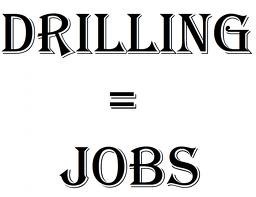 New research from the National Bureau of Economic Research (NBER) reveals a couple of astonishing facts: From 2012-2014, hydraulic fracturing was responsible for creating $3.5 trillion worth of new wealth. We can’t even get our brains around that number! Another fact: From 2012-2014, fracking create 4.6 million new jobs. Although we’ve experienced a big downturn since 2014, can you imagine how the fracking industry will come back under President Trump? Happy day are here again! More from the latest research report by NBER, titled “Fracking, Drilling, and Asset Pricing: Estimating the Economic Benefits of the Shale Revolution”…
 The London School of Economics recently released a research study that prominently features the Marcellus/Utica. In “On the Comparative Advantage of U.S. Manufacturing: Evidence from the Shale Gas Revolution” (full copy below), the authors find America’s shale revolution is revitalizing American manufacturing. If we could vastly simplify the research in just a few words, it is this: While we have enough shale gas to export plenty of it, exporting it is not as economic as exporting oil due to the elaborate processes to liquefy and regassify natural gas–therefore a lot of the gas stays right here at home, making the U.S. one of (if not the) cheapest places on the planet to establish manufacturing plants, especially for manufacturers that use natural gas and NGLs (natural gas liquids). Therefore, manufacturing, especially in the petrochemical sector, is ramping back up in the U.S. The authors cite a study that says for every two jobs created by the fracking industry, another one job is created in the manufacturing sector. The paper also concludes that the shale revolution saved Obama’s bacon by creating hundreds of thousands of jobs. Without shale drilling we would not have recovered as quickly as we did from the economic near-collapse of 2007/2008. Here’s a summary of the research, followed by a full copy of the published paper…
 Two weeks ago MDN editor Jim Willis attended the “Platts Global Energy Outlook Forum 2016” held in New York City (see
  We’ve seen signs of increased drilling in the Marcellus/Utica. Just look at the Baker Hughes rig counts month by month. Ever so gradually, the number of rigs operating in our region is creeping back up. The smart analysts at