
Whatever Happened to Illegally Dumped Frack Waste in KY Landfill?
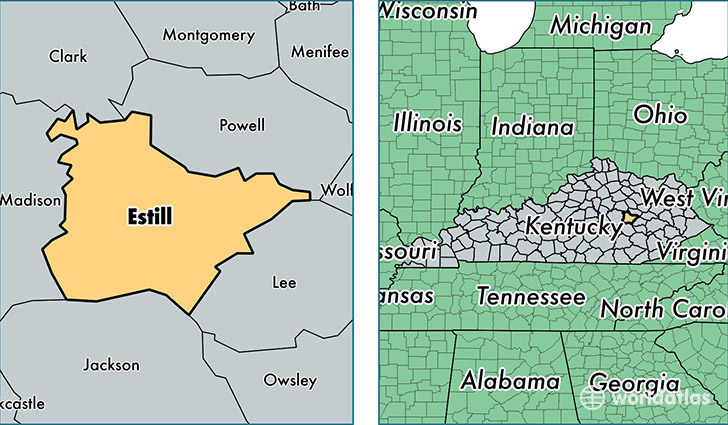
In March 2016, MDN reported that 47 dumpsters full of concentrated frack waste from OH, PA and WV was illegally dumped in a Kentucky landfill in Estill County, KY (see Marcellus/Utica Frack Waste Illegally Dumped in Kentucky Landfill). The cuttings were buried between July and November in 2015, near as anyone can tell. The landfill sits across the road from a school. Normal frack waste has extremely low (usually no) radioactivity. But when drill cuttings are further processed and concentrated, as was the case with this series of loads, the naturally occurring radiation present can become more concentrated. Fortunately there’s no indication of a problem at the landfill: no indication that it’s leaking radioactivity into the water table, etc. But parents and residents were rightly up in arms (see Local Residents Demand KY Landfill Accepting Frack Waste Close). We last provided an update on this situation in July 2017 (see Update on Illegally Dumped Frack Waste in Kentucky Landfills). What’s happened since then? Not much. The radioactive waste is still there, buried. Still no signs of any leakage or problems. The landfill owners were fined and are required to create a mitigation plan. State officials want to keep the waste right where it is–best not to disturb it. But some locals want it dug up and moved–to somewhere/anywhere else. Here’s the latest on the “hot mess” in Estill County’s landfill…
Read More “Whatever Happened to Illegally Dumped Frack Waste in KY Landfill?”
 Kentucky antis have gone to court to try and block a plan by Kinder Morgan to convert a portion of the Tennessee Gas Pipeline that flows natural gas from the Gulf Coast to the northeast, to reverse the pipeline and flow natural gas liquids from the Marcellus/Utica region to the Gulf. Part of the 964-mile project runs through Kentucky (see
  In December 2016 MDN brought you news about Kinder Morgan’s “Broad Run Expansion Project” that will expand transportation capacity of natural gas on the existing Tennessee Gas Pipeline (TGP) system. Antis tried to stop the project, but the Federal Energy Regulatory Commission rejected their pleas (see
  What’s in the water in Kentucky? Seems to be a state full of anti-drilling, anti-pipeline nutters. Kentucky has been responsible for killing at least one pipeline, the Bluegrass Pipeline that would have flowed Marcellus/Utica NGLs (natural gas liquids) all the way to the Gulf Coast (see

 Last week the Tennessee Valley Authority (TVA) held a dedication ceremony for the Paradise Combined Cycle Gas Plant in Drakesboro, Kentucky. The Paradise plant is a natural gas-fired plant that replaces two now-closed coal plants at the site. The new plant is capable of producing 1,100 megawatts of electricity (really big plant). The cool part, for us, is that Marcellus/Utica gas is either already feeding the plant, or soon will. The plant is fed by a 20-mile pipeline connecting to the Texas Eastern pipeline system (Tetco). We don’t know for sure whether Tetco is now carrying Marcellus/Utica gas south, but we do know that last December the Federal Energy Regulatory Commission (FERC) issued certificates for three Spectra Energy projects to expand Tetco to carry Marcellus/Utica gas to Ohio, Kentucky and Mississippi (see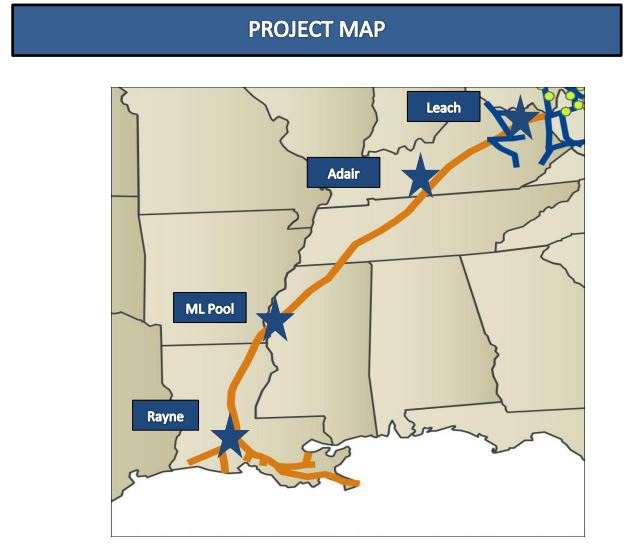
 Gas-to-Liquids (GTL) plants convert natural gas, a hydrocarbon, into other hydrocarbons, like diesel fuel, gasoline, solvents and waxes. An abundance of cheap natural gas in the Marcellus/Utica is one of the prime motivators for establishing GTL plants in the region. Although we’ve heard plenty of talk about such plants, we’ve only seen a few prototypes get built. There’s lots of talk, lots of smoke–but so far, no fire. Will that soon change? We spotted a story about a GTL plant that may locate in Somerset (Pulaski County), Kentucky. Which we find interesting since Kentucky hates new gas pipelines, yet wants to build a plant that will use gas coming from pipelines (see
  Last week MDN brought you news about Kinder Morgan’s Broad Run Expansion Project will expand transportation capacity of natural gas on the existing Tennessee Gas Pipeline system. Antis tried to stop the project, but FERC rejected their pleas (see
  The Federal Energy Regulatory Commission (FERC) has just thrown a little cold water on two important pipeline upgrades to carry more Marcellus/Utica gas to southern markets. A final environmental impact statement (EIS) was due from FERC for both the Mountaineer XPress and Gulf XPress projects no later than April 28, 2017. FERC says that deadline is going to slip by three months due to reroutes and additional environment information requested. MDN has previously reported on Mountaineer XPress, which includes 165 miles of new pipeline with approximately 2.7 billion cubic feet (Bcf) per day of transportation capacity from existing and future points of receipt along or near the Columbia pipeline system–most of it located in West Virginia (see
  Kinder Morgan’s Broad Run Expansion Project will expand transportation capacity of natural gas on the existing Tennessee Gas Pipeline system. The project includes the construction of two new compressor stations in Kanawha County, WV, one new compressor station in Davidson County, TN, and one new compressor station in Madison County, KY. Tennessee Gas also expects to increase compression capacity by modifying two of its existing compressor stations in Powell and Boyd counties in KY by replacing existing capacity with new, higher-rated horsepower compression units. The project will provide an extra 200,000 dekatherms per day (Dth/d) of transportation capacity along the same capacity path as the Broad Run Flexibility project, which was placed in service on Nov. 1, 2015. All of the additional gas will come from Antero Resources and their Marcellus/Utica program. The Federal Energy Regulatory Commission (FERC) issued a Certificate to build the project in September. However, several anti-drillers filed an appeal, asking for a stay claiming a removal of 40 acres of forest for a compressor station would irreparably harm Mom Earth. FERC has just ruled against the stay and told the antis Mom Earth will be just fine. Fire up the backhoes!…
 Chesapeake Energy, which continues to be strapped financially, embarked on a mission to lighten the debt load years ago–first under co-founder Aubrey McClendon, and then more aggressively under his successor, Doug “the ax” Lawler. Many pieces of the company have been sold off: the Oilfield Services division, all of its Haynesville Shale assets, all of its Barnett Shale assets…we could go on. Chessy loves to do land deals. In December 2014 Chesapeake sold off 413,000 Marcellus acres mostly in West Virginia (see
  In May MDN brought you the news that a researcher at West Virginia University believes an natural gas liquids (NGL) storage hub is what the Marcellus/Utica region really needs (see
  In March MDN reported that 47 dumpsters full of concentrated frack waste from OH, PA and WV was illegally dumped in a Kentucky landfill in Estill County, KY (see