Most Evacuees Return Home After XTO Well Explosion in Ohio
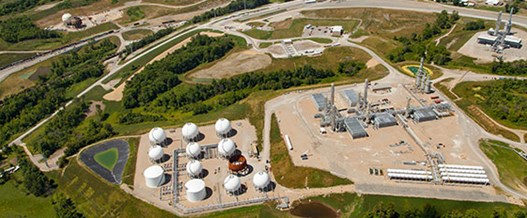
 As we reported yesterday, last Thursday XTO Energy was drilling a fourth Utica Shale well on the Schnegg well pad near Captina Creek (York Township, Belmont County, OH) when XTO “lost control” of the well and it exploded and caught fire (see XTO Energy Utica Well Explosion in Belmont County – 100 Evacuated). We have an update. Most of the evacuees have now returned to their homes (a few still have not). Also, the well is still not capped, meaning “unknown quantities” of methane are leaking into the air. Which, judging by most press accounts, is a greenhouse gas environmental catastrophe. Actually, it’s nothing of the sort. The amount of gas a single well vents into the atmosphere until it’s capped doesn’t even move the needle on the faux global warming scale. Frankly, it’s laughable. No, we’re not laughing at this accident/disaster. Far from it. We thank God nobody was hurt. It should not have happened. And yes, the well needs to be capped–quickly–which XTO and the company hired to do it (Cudd Energy Services) are working hard to do. We’re just providing balance to the “methane leaking from this uncapped well is the end of the world” narrative so prevalent–even in local news outlets. Here’s the latest update on what’s happening at the Schnegg well pad…
Read More “Most Evacuees Return Home After XTO Well Explosion in Ohio”
 The Ohio Dept. of Natural Resources (ODNR) is actively working on new regulations “regarding storage, recycling, treatment, processing, and disposal of brine and other waste substances.” That is, for wastewater treatment and disposal from the oil and gas industry. It’s taking the ODNR a while to hash out the new regs (they were instructed to do so back in 2014). However, in the meantime, ODNR issues special orders/permits on a case by case basis to allow wastewater treatment and disposal facilities to start up and operate. Hoping to shut down all drilling (in Ohio and other states that send wastewater to Ohio), the odious Food and Water Watch and misnamed FreshWater Accountability Project sued in the Tenth District Court of Appeals, arguing that because ODNR hasn’t released the new regs, they shouldn’t be allowed to keep issuing temporary/special permits. The Tenth District said the radical enviro groups didn’t have standing to file the case and dismissed it. On appeal to the State Supreme Court, the Supremes said the same thing. Therefore, ODNR’s authority to continue granting temporary/special permits for wastewater treatment remains in effect. Another huge loss for Food and Water Watch…
 Yet another “fracking may cause earthquakes” study has been published in the so-called peer reviewed journal PNAS (Proceedings of the National Academy of Sciences). Researchers from the University of Miami (in Ohio) admit the kind of earthquakes they talk about in their paper, potentially caused by Utica Shale drilling, are “rare.” But, they are also “concerning.” Yes, everyone should be concerned that in zero percent of Utica well drilling cases (statistically speaking) there have been NO earthquakes. Actually a couple of cases are thought to be related to fracking over a fault–but it’s still unproven. Statistically speaking, it’s 0%. But, there could be problems! Maybe. If the conditions are “just right.” Ya never know. We note the researchers didn’t address concerns over fans in football stadiums that, when they all stomp their feet at the same time, have caused “earthquakes” that are higher on the Richter scale than the ones they postulate “may, maybe, might” happen in Utica drilling. No mention of football fan earthquakes in this study. Below is the “news” about this latest, breathlessly urgent report that everyone should read…
 MDN told you last week that anti officials who lead the City of Green, OH (Summit County), had finally faced the reality that NEXUS Pipeline–a $2 billion, 255-mile interstate pipeline that will run from Ohio through Michigan and eventually to the Dawn Hub in Ontario, Canada–will come through their vicinity (see
 We often write about pipeline projects in the Marcellus/Utica and their mission to move our prodigious natgas production to new markets where the gas will fetch a higher price. Last fall MDN provided a list of 15 active pipeline projects in our region, aimed at moving our gas to new markets (see
 Duke Energy needs to replace an aging pipeline, built in the 1950s, near Cincinnati, OH–or some people in Cincy will have to go without natural gas. Duke has proposed a 13-mile, 20-inch pipeline along two potential routes. Both routes are opposed by antis, including a group calling themselves NOPE–Neighbors Opposing Pipeline Extension. We call them DOPEs–Dummies Opposing Pipeline Extensions. Will the DOPEs volunteer to shut off the natural gas to their homes and businesses if the pipeline doesn’t get built? Not on your life! The Ohio Power Siting Board (OPSB) held two public hearings last April, to grant anti-pipeliners the opportunity to vent (see
  Pin Oak Energy Partners has just more than doubled the leased acreage it owns in the Marcellus/Utica, adding 70,000 Utica acres in both Ohio and Pennsylvania to its portfolio. MDN previously ran several stories about this relatively new entrant to our region (
 Looks like asking “Pretty please, with a cherry on top” (along with providing requested information) works! MDN previously told you that on Friday, the Federal Energy Regulatory Commission (FERC) asked Rover Pipeline for more information before FERC would allow the project to restart drilling under the Tuscarawas River (see
  In the end, it came to down to cold, hard cash. Last May, MDN told you about antis running the City of Green, Ohio who were/are hellbent on stopping the NEXUS Pipeline (see
  “Keep It In the Ground” (KIITG) activists have launched a new, deceptive campaign in their holy mission to end the use of fossil fuels. The same people behind Food & Water Watch, Food and Water Action, the Sierra Club and other Big Green groups have/are launching fake landowner coalitions in Ohio. These fake coalitions (one of them being the Tri-County Landowners Coalition) have one aim and one aim only–to convince unsuspecting landowners to hate fossil fuels and anything (i.e. drilling, pipelines) to do with fossil fuels. It is a sleazy and disgusting tactic by the ultra-left, preying on honest, hardworking folks who join coalitions hoping to receive guidance on the best way to protect their land while at the same time profiting from it. Don’t fall for these fake coalitions! Our friends at Energy in Depth are sounding the alarm on this latest move by anti-fossil fuel radicals…