
Pennsylvania has the Energy – Needs the Power Plants to Match
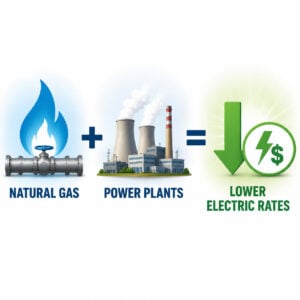 Pennsylvania families face rising electricity bills despite the state’s abundant energy resources. In an excellent op-ed, Bradford County Commissioner Doug McLinko explains that local utilities like Penelec and PECO don’t control electricity costs—they only deliver power. Prices are set by PJM Interconnection’s regional market, where costs are soaring as baseload power plants retire while demand from manufacturing, data centers, and AI surges. Pennsylvania produces massive natural gas from the Marcellus Shale but lacks sufficient modern power plants to convert it into electricity. Read More “Pennsylvania has the Energy – Needs the Power Plants to Match”
 From the very first whisper of the rumor that Devon Energy was sniffing around a buyout and merger with Coterra Energy, we wondered, speculated, and worried about what such a merger would mean for Coterra’s considerable Marcellus assets in northeast Pennsylvania. From the outset, activist investor Kimmeridge (with a stake in both Coterra and Devon) has pressured Devon to consider selling the Marcellus assets (see
  The Pennsylvania Department of Environmental Protection issued an air quality permit on May 18, 2026, to MarkWest Liberty Midstream, authorizing the expansion of its Harmon Creek Natural Gas Processing Plant in Washington County. The MarkWest name is still used, although the company is now MPLX. The DEP permit approval allows the addition of a third cryogenic plant and a second de-ethanization plant. A number of Big Green groups colluded in an attempt to block the permits, but their demands were ignored.
 Last week, the combined Marcellus/Utica Baker Hughes rig count remained at 36 active rigs for the third week in a row. The M-U’s chief competitor, the Haynesville, maintained its count of 55 active rigs, operating 19 more than the M-U. The national count added 4 rigs last week, bringing the total to 562 rigs. That’s the sixth week in a row the national count has added rigs, driven by new oil-focused rigs. Baker Hughes said oil rigs rose by four to 429 last week, their highest since June 2025, while gas rigs held steady at 125 and other miscellaneous rigs held steady at 8.
  The Marcellus/Utica region received 15 new drilling permits last week, May 18 – 24, down from 23 permits issued two weeks ago. Pennsylvania issued 7 of last week’s permits. Ohio issued no new permits. West Virginia issued 8 new permits last week. The drillers who received new permits included: Antero Resources, Clean Energy E&P, EQT, Expand Energy, and PennEnergy Resources.
  Pennsylvania Republican gubernatorial candidate Stacy Garrity (currently the State Treasurer) yesterday called for a “total pause” on Pennsylvania A.I. data center development, arguing communities need time to update zoning, protect neighborhoods and farmland, strengthen noise rules, and secure transparency on water, energy, health, infrastructure, taxpayer, and ratepayer impacts. While we have expressed similar sentiment that common-sense guidelines are needed for data centers regarding water, noise, and energy use, we strongly disagree with a total statewide (and indefinite) “pause” on new projects. It sends the exact WRONG signal to the tech industry — that both Republicans and Democrats in the state are now blocking data centers in the Keystone State. Pausing or blocking data centers jeopardizes $92 billion worth of private investment in the state.
  Pennsylvania Governor Josh Shapiro introduced new “Responsible Infrastructure Development (GRID) Standards” for data center developers yesterday. These standards aim to tie tax breaks to sustainability and transparency, addressing concerns about energy affordability, pollution, noise, and overall quality of life. Under Shapiro’s GRID plan, data center developers seeking tax exemptions would need to demonstrate that they meet requirements to protect energy affordability, promote transparency and community engagement, support workforce development, and safeguard the environment. Projects would also be required to incorporate so-called clean energy sources and adhere to strict efficiency and environmental protection measures.
  Sen. Jarrett Coleman (R-Bucks/Lehigh) and Rep. Jamie Walsh (R-Luzerne) have introduced legislation in Pennsylvania to address the rapid expansion of data centers. Their proposed bills aim to repeal a 2021 tax exemption that incentivizes data centers to locate in the state. The bills would also empower municipalities to implement an 18-month moratorium on data center development applications. With all due respect, these two Republicans have lost their way and are out of their minds.
  Calfrac Well Services Ltd.
 The highly functional and responsible Susquehanna River Basin Commission (SRBC), unlike its dysfunctional and irresponsible counterpart, the Delaware River Basin Commission (DRBC), continues to support the shale energy industry by approving water withdrawals and consumptive use requests for responsible, safe shale drilling. The SRBC published a notice in the May 23rd Pennsylvania Bulletin that the SRBC approved and/or renewed 33 general water use permits in April for individual shale gas well drilling pads in Bradford, Cameron, Lycoming, Sullivan, Susquehanna, Tioga, and Wyoming counties.
  U.S. Secretary of Energy Chris Wright issued an emergency order on May 21 directing PJM Interconnection and Constellation Energy to keep Units 3 and 4 at Pennsylvania’s Eddystone Generating Station (near Philadelphia, in Delaware County) operational through the summer. Effective from May 25, 2026, to August 22, 2026, the mandate aims to ensure grid reliability. This directive follows four previous 90-day orders that have kept the aging, dual-fuel units online to support energy security. The DOE asserts that despite planned retirements, these 380-MW units remain essential for stabilizing the regional power supply. Big Green wants to close them down.
  On May 14, the Pennsylvania Department of Environmental Protection (DEP) issued a notice of violation to Sandstone Development LLC for operating the McKay 7A conventional well as an oil and gas wastewater injection disposal site in McKean County without a state permit. Which may sound like a major, flagrant (intentional) violation. But it’s not. Sandstone holds a federal EPA permit allowing daily injections of up to 10,500 gallons. Sandstone said it was unaware that, in addition to the federal EPA permit, it is also required to seek and obtain a state DEP permit for the same thing. In other words, Sandstone didn’t ask DEP, “Mother, May I?”