
2 PA Towns Show How to Move Forward with Data Center Projects
 We are encouraged by recent developments in two Pennsylvania townships, one in northeast PA, the other in southwest PA, with respect to moving forward with data center projects. We get it. People are up in arms, some feeling as though data centers are being “forced” on them by less-than-transparent builders. Noise. Lights. Water usage. All are concerns. However, as we’ve stated many times, reasonable people can work together, sort through the issues, and move these projects along. That’s what we’re seeing in Olyphant, PA, a suburb of Scranton in Lackawanna County, and in South Strabane Township in Washington County. Read More “2 PA Towns Show How to Move Forward with Data Center Projects”
 Earlier this week, MDN told you that WhiteHawk Minerals (formerly WhiteHawk Energy), a natural gas mineral and royalty interest owner in the Marcellus and Haynesville plays, with over 3.4 million gross acres under lease for drilling, started trading its stock following a $200 million IPO (see
  Yesterday, Pennsylvania Department of Environmental Protection (DEP) Secretary Jessica Shirley visited the site of an orphaned well being plugged in Allegheny County, PA, to celebrate the plugging of the 400th orphaned well since Josh Shapiro assumed the governorship in January 2023. There’s nothing wrong with Shapiro’s bragging and chest-puffing, except that Ohio plugged 480 orphaned wells last year. Since January 2023, Ohio has plugged 1,214 orphaned wells, compared to PA’s 400 wells (3X more). Which makes us ask: Why does it take so much longer and cost so much more to plug wells in PA than in OH?
  Yesterday, Devon Energy issued its first updated outlook for 2026 after completing its Coterra Energy merger. Devon forecasts 2026 production of about 1.38 million boe/d, including roughly 500,000 bpd of oil, on $4.9 billion in capital spending. Over 60% of the money Devon will spend this year will go to the Permian Basin, where Devon is concentrating growth. The company plans to operate 31 rigs and 10 completion crews and to drill 460–480 net wells across all shale plays in which it operates. What stood out to us in reviewing planned expenditures is that Devon plans to spend the least amount of capital on drilling in the Marcellus.
  On April 29, 2026, Pennsylvania’s Department of Environmental Protection (DEP) issued six violations to CNX Resources for causing water supply problems affecting two Bell Township residences in Westmoreland County. The violations targeted three CNX facilities with 19 shale gas wells drilled between 2022 and 2026. DEP determined that CNX operations diminished water supplies after two homeowners filed complaints in December 2025 about loss of well water. CNX was ordered to provide temporary water within 24 hours and submit restoration plans within 15-45 days. CNX, which *did* offer temporary water back in December, is disputing the DEP’s findings, denying responsibility and claiming insufficient evidence of hydrogeologic pathways linking their operations to water impacts.
  Pennsylvania imposes an annual “impact fee” (the state’s version of a severance tax) on unconventional (i.e., shale) natural gas wells that were drilled or operating in the previous calendar year. The state Independent Fiscal Office (IFO) provides updates to predict how much will be collected from the fee. The IFO released its mid-year report yesterday, which typically focuses on a forecast for the current fiscal year (FY 2026). But this update is different. It spends most of its verbiage on firming up and confirming the final numbers for 2025, which will be distributed in July of 2026. Near the end, the IFOers do break out the crystal ball and venture a guess on revenues for 2026 that will be paid out next July.
  One year ago, in June 2025, MDN brought you news about a commercial lithium production facility already built and being tested in Susquehanna County, PA (see
  On June 8, 2026, a Pennsylvania Department of Environmental Protection (DEP) inspector visited Frontier Natural Resources’ Winner 1, Winner 2, Winner 4H and Winner 6 shale gas well pads, along with four multimillion-gallon water impoundments in East and West Keating Townships, Clinton County. The inspector found that Frontier had not restored the pads and impoundments within 9 months of drilling ending. But here’s the thing: the original violations were lodged by the DEP on July 14, 2017. That’s almost nine years ago! In other words, the DEP didn’t bother to re-inspect the pads/sites for nine years.
  The troubles continue to pile up for Eureka Resources and its now-closed frack wastewater treatment facilities in Pennsylvania — two in Lycoming County and one in Bradford County. In March, the PA Department of Environmental Protection (DEP) assessed two fines against Eureka for violations of cleanup deadlines at two facilities, totaling $100,000 (see
  Last week, the combined Marcellus/Utica Baker Hughes rig count remained at 36 active rigs for the fourth week in a row. The M-U’s chief competitor, the Haynesville, maintained its count of 55 active rigs, operating 19 more than the M-U. The national count added 1 rig last week, bringing the total to 563 rigs. That’s the seventh week in a row the national count has added rigs, driven by new oil-focused rigs. Baker Hughes said oil rigs rose by two to 431 last week, the highest since June 2025, while gas rigs fell by one to 124, the lowest since January 2026. Other miscellaneous rigs held at eight.
  Back in March, MDN alerted you to a potential new water pipeline coming in Lycoming County, PA, for EQT shale drilling (see
 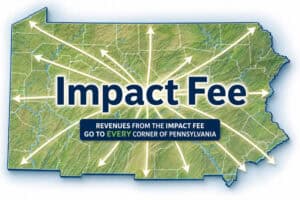 Stephanie Catarino Wissman, executive director of the American Petroleum Institute Pennsylvania, argues in a recent op-ed that Pennsylvania’s Act 13 natural gas impact fee has successfully paired shale development with local investment since 2012. Unlike a severance tax, the fee directs revenue to counties, municipalities, and environmental programs, generating nearly $3 billion overall and more than $1 billion from 2020 to 2024. Funds have supported roads, bridges, stormwater systems, emergency services, parks, watershed restoration, abandoned mine reclamation, orphan well plugging, and tax relief.
  The Marcellus/Utica region received 30 new drilling permits last week, May 25 – 31, up from 15 permits issued two weeks ago. However, not all 30 permits reported last week were issued last week. Ohio, which is occasionally tardy in updating its public reports, included permits in last week’s report that should have been included in the previous week’s report. Last week, Pennsylvania issued 8 permits. Ohio issued 17 new permits, of which 9 were from last week, and 8 were from the week before but not reported until last week. West Virginia issued 5 new permits last week. The drillers who received new permits included: Antero Resources, Ascent Resources, Clean Energy E&P, EOG Resources, Expand Energy, Grenadier Energy, and Range Resources.
  Although there are legitimate concerns over data centers locating in populated communities (noise, water use, etc.), make no mistake: The anti-data center movement is nothing more than the anti-fracking movement in new clothes (see
  Yesterday, the Pennsylvania Independent Fiscal Office (IFO) released its latest quarterly Natural Gas Production Report for January through March 2026 (full copy below). There were 101 new horizontal wells spudded (drilled) in 1Q26, an increase of 7 wells (+7%) compared to 1Q25. Natural gas production volume was 1,928 billion cubic feet (Bcf) in 1Q26, down less than 1/10th of a percent from 1,943 Bcf produced in 1Q25 (down 15 Bcf, -0.8%). The average Pennsylvania spot hub price was $5.22, a huge increase of $1.53 (+41%) from the prior year’s $3.69.
 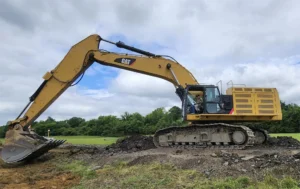 Homer City Generation announced the early completion of demolition and excavation work at its Indiana County, Pennsylvania, site, marking a major milestone in transforming the former coal-fired power plant into a gas-fired power plant and AI data center complex. Over nine months, partner Independence Excavating led 130 union workers and 65+ pieces of equipment to recycle over 112,000 tons of scrap material and excavate approximately 3 million cubic yards (comparable to the Great Pyramid’s volume), all while maintaining zero safety incidents.