M-U Projects Potentially Impacted by NextEra/Dominion Merger
 Yesterday, MDN brought you the big news that NextEra Energy and Dominion Energy will combine in an all-stock transaction, creating the world’s largest regulated electric utility business serving approximately 10 million customer accounts across Florida, Virginia, North Carolina, and South Carolina (see NextEra Energy Buying, Merging with Dominion Energy for $66 Billion). Now that the news itself has settled in, analysts are beginning to explore what it means for this constituency and that constituency. Whenever there’s a takeover with new management, existing (or planned) projects can change. We wondered, what’s the list of projects owned by Dominion and NextEra in the Marcellus/Utica region that may change when the two companies join? Read More “M-U Projects Potentially Impacted by NextEra/Dominion Merger”

 Last week, the combined Marcellus/Utica Baker Hughes rig count dropped by 1 rig in the PA Marcellus, leaving 36 active rigs across the three-state M-U region, down from 37 it had operated for 7 weeks in a row. The M-U’s chief competitor, the Haynesville, dropped 2 rigs to land at 56 active rigs, operating 20 more than the M-U. The national count added 3 rigs last week and now operates 551 rigs. That’s the fourth week in a row the national count has added rigs.
  If you live in Auburn Township in Susquehanna County, Pennsylvania, it’s a pretty safe bet that either there is or soon will be shale well drilling going on near you. The PA Department of Environmental Protection (DEP) published notice in the May 16 Pennsylvania Bulletin announcing it has issued a permit for one aboveground water pipeline for one driller and is seeking comments on a request for a second aboveground water pipeline for a second driller, both in Auburn Township.
  The Marcellus/Utica region received 22 new drilling permits last week, May 4 – 10, up from the 19 permits issued two weeks ago. Pennsylvania issued 10 of last week’s permits. Ohio issued 8 new permits. West Virginia issued 4 new permits last week. The drillers who received new permits included: Ascent Resources, EOG Resources, EQT (including subsidiary Rice Drilling), Expand Energy, and Northeast Natural Energy.
  In March, the Pennsylvania Department of Environmental Protection (DEP) released the results of a two-year study that found radium levels in landfill wastewater (leachate) from landfills with drill cuttings do NOT pose a risk to human health (see
  Last November, the Pennsylvania Public Utility Commission (PUC) approved a Tentative Order by a 3-2 vote, proposing a statewide model tariff (tax) to manage the growing impact of large-load customers, such as AI data centers, on the electric grid (see
  According to RBN Energy, the Northeast natural gas market is entering a new phase after years of stalled pipeline development and Appalachian takeaway constraints. Once a premium destination for Gulf Coast and Canadian gas, the region became a major supplier as Marcellus/Utica production surged, reversing flows toward the Southeast and Gulf Coast. Recent legal, regulatory, and cost hurdles have frozen major projects, with the Mountain Valley Pipeline serving as both a milestone and a warning. Now, under a friendlier regulatory climate, new expansions toward New York/New Jersey and New England are advancing.
  Energy Transfer LP (ET) owns and operates one of the largest and most diversified portfolios of energy assets in the U.S., with approximately 140,000 miles of pipeline and associated energy infrastructure. ET’s strategic network spans 44 states and includes assets in all major U.S. production basins, including the Marcellus/Utica. The company issued its first quarter 2026 update last week. ET sees the Marcellus/Utica region as a key source of NGL supplies for its export operations, particularly exports from the Marcus Hook terminal near Philadelphia.
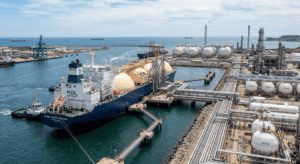
  The Philadelphia Gas Commission, for a second time, has postponed a vote on Philadelphia Gas Works’ (PGW) $182 million proposal to replace and expand its natural gas liquefier (LNG plant) in Port Richmond. The commission’s staff and the Public Advocate recommend rejecting the project, arguing it is oversized and could burden customers with unnecessary debt. They also cite incomplete plant and project designs. PGW argues the upgrade is crucial for safety and affordability, preventing potential harm to customers during cold winters and avoiding the need to truck in liquefied natural gas (LNG). Instead of approving the project, the Commission voted to spend $1 million on an environmental impact study and $4 million for an engineering study. That is, they voted to procrastinate.
  At a Pennsylvania DEP hearing in Indiana County, environmental extremists opposed a proposed 5.8-mile, 30-inch natural gas pipeline serving Homer City Redevelopment’s planned $10 billion, 4.5-GW gas-fired power plant and hyperscale data center campus. The pipeline would cross streams, wetlands, and floodways, potentially affecting Muddy Run, Blacklick Creek, and various tributaries. Reminding us of Chicken Little in The Sky is Falling, speakers warned of water pollution, setbacks to acid mine drainage restoration, drought-related water stress, and inadequate transparency around the fast-moving project.
  Last December, MDN told you that three anti-shale drilling groups—the PA Council of Trout Unlimited, the Keystone Trails Association, and the Responsible Drilling Alliance—requested the Pennsylvania Department of Environmental Protection (DEP) hold a hearing on the Chapter 105 permit requested for a 3.9-mile shale gas access road and staging area proposed by Pennsylvania General Energy (PGE) in the Loyalsock State Forest (see
  In March 2025, the Wall Street Journal reported that Shell is “exploring a potential sale of its chemicals assets in Europe and the U.S.,” which includes the Monaca (Beaver County, PA) ethane cracker complex (see