
AI | Economic Impact | Electrical Generation | Indiana County | Industrywide Issues | Jobs | Pennsylvania
Homer City Economic Boom Now Under Way from Data Center Project
 Earlier this month, Homer City Generation announced the early completion of demolition and excavation work at its Indiana County, Pennsylvania, site, marking a major milestone in transforming the former coal-fired power plant into a gas-fired power plant and AI data center complex (see PA’s Homer City Gas-Fired Project Completes Site Demolition Early). Some 1,300 skilled workers are currently on site building what will become North America’s largest energy campus of its kind. The number of workers may grow to 10,000! All of those workers in a relatively rural area like Homer City/Indiana County equals growing pains. Read More “Homer City Economic Boom Now Under Way from Data Center Project”
 We purposely waited to release the permit numbers, intending to do so last Thursday, ahead of taking off on Friday. But we waited because we thought perhaps more permits would be added to the various state databases on Thursday or Friday (or maybe even Saturday). But no. The only permits we can find for the week of June 9 – 14 are two Pennsylvania permits, both in Butler County. Ohio’s ODNR has issued no new permits for two weeks in a row (are they lazy, or were there really no new permits issued?). West Virginia issued no new permits after issuing just one the prior week.
  Last week, the combined Marcellus/Utica Baker Hughes rig count remained at 36 active rigs for the sixth week in a row. The M-U’s chief competitor, the Haynesville, maintained its count of 55 active rigs, operating 19 more than the M-U. The national count regained 1 rig last week (after losing it the week before), bringing the total back up to 563 rigs, the highest number the count has reached in a year. Baker Hughes said oil rigs held steady at 433 last week, while gas rigs rose by one to 122, their highest since early June, and other miscellaneous rigs held steady at eight.
  Last week, MDN brought you the great news that the Pennsylvania impact “fee” (tax on drilling) generated $243.8 million in fees collected from producers for the 2025 reporting year, a whopping 48% increase over 2024 (see
  Devon Energy completed its merger with Coterra Energy just over one month ago, on May 7, paying Coterra $21.4 billion in Devon stock (see
 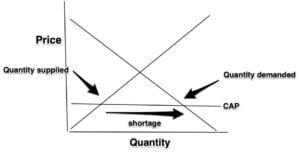 Pennsylvania’s Senate Republicans are speaking truth to power, calling out PA Democrat Governor Josh Shapiro’s policies as one of the primary reasons why PA residents pay more for electricity. And Joshie doesn’t like being called out. State Senate President Pro Tempore Kim Ward argues the state is losing out under a roughly $325-per-megawatt-day price cap on PJM Interconnection’s capacity auctions, approved by the federal government after a lawsuit by Gov. Josh Shapiro (see
  In February, MDN told you about the Kriley v. XTO Energy lawsuit (see
  Pennsylvania has become a hotspot for data center proposals, prompting community backlash, writes Penn State law professor Michael Helbing, whose hometown is Archbald, PA, a suburb of Scranton. You may recall that last week we wrote about another Scranton suburb (virtually next door to Archbald, see the map) by the name of Olyphant, and how the leaders of that borough had developed zoning regulations to protect residents yet allow data center projects to proceed (see
  Yesterday, the Pennsylvania Public Utility Commission (PUC) announced the distribution of $243,877,400 in natural gas impact fees collected from producers for the 2025 reporting year, a whopping 48% increase over 2024. The reason for the big increase was the higher price that natural gas fetched last year and a significant uptick in the number of new wells drilled. This year’s distribution brings the cumulative total of impact fees collected and distributed since 2012 to more than $3.12 billion!
  Three months ago (March 2026), MDN reported on a northeastern Pennsylvania landowner from Luzerne County who sold his farm to an AI data center project and overnight became a multimillionaire (see
 Greylock Energy hosted an open house on June 3 at its new Potter County field office in Ulysses, Pennsylvania, giving residents a chance to tour the facility, meet employees, and learn about local operations. President and CEO Kyle Mork said the office signals Greylock’s long-term commitment to Potter County and responsible community partnership. The company highlighted local support efforts, including educational partnerships, scholarships, charitable giving, sponsorships, flood recovery assistance, equipment replacement for Galeton’s water system, and sponsorships of Independence Day events. Greylock also invested nearly $1.5 million with PennDOT to repave and upgrade 3.5 miles of Loucks Mills Road.
 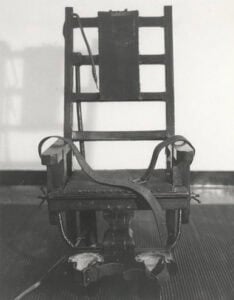 The name Philadelphia Gas Works (PGW) pretty much says it all. PGW is a natural gas utility serving the Philly region. PGW is the country’s oldest and largest municipal-owned gas company, serving 500,000 customers. It’s NOT an electric company; it’s a natural gas company. Yet PGW is now seriously considering two strategies to reduce “carbon emissions” as part of its Low Carbon Pathways project. The first option involves full electrification, shifting from natural gas to electric systems for heating, cooking, and appliances. Again, PGW has ZERO electric infrastructure in place. In Philadelphia, PECO (formerly the Philadelphia Electric Company) is the sole local utility company responsible for delivering electricity. In other words, PGW is considering committing suicide (going out of business) by giving all of its business to PECO. Bring out Old Sparky.
  Earlier this year, the board of commissioners in Montour County, PA, voted unanimously to reject Talen Energy’s request to rezone empty agricultural land near Talen’s Montour Power Plant for a proposed data center (see