
PA DEP Issues Title V Air Permit for Long-Running SWPA Power Plant
 Despite claims by anti-fossil-fuelers that the Tenaska Westmoreland Generating Station in southwestern PA would spread disease and death if it were built, it’s been up and running since 2018, producing power and generating revenue for both its builders and the community. Oh, and everyone is in good health. However, the plant has been operating under a state permit since it opened. It needs a federal Title V permit for long-term operation. The state Department of Environmental Protection (DEP) issues such a permit. Good news! The DEP recently issued the Title V permit for this power plant. Read More “PA DEP Issues Title V Air Permit for Long-Running SWPA Power Plant”
 The Marcellus/Utica region received a piddly 7 new drilling permits last week, July 6 – 12, down 21 from two weeks ago. Last week, Pennsylvania issued just 1 new permit. Ohio issued 5 new permits. And, West Virginia issued 1 new permit. The drillers who received new permits included: Antero Resources (1), Expand Energy (3), and Gulfport Energy (3).
  In June, Pennsylvania Gov. Josh Shapiro took credit for brokering a really huge deal for Amazon to invest $20 billion in three data center locations across the state (see
 There’s been a change in the Marcellus/Utica. Despite fewer visible rigs and water trucks across Pennsylvania, the Marcellus Shale isn’t declining—it’s maturing. Counting wells or permits no longer measures success, because fifteen years of learning have made modern wells dramatically more productive. Longer laterals, better geologic mapping, and refined completion techniques enable operators to produce more gas from fewer wells, reducing land disturbance, road construction, and traffic while improving economics. This shift from expansion to optimization arrives as demand surges from manufacturing, LNG exports, and AI data centers. For Appalachian communities, the takeaway is clear: the Marcellus isn’t slowing down—it’s getting better.
  What a disappointment. We don’t know why, but at yesterday’s U.S. House Committee on Transportation and Infrastructure meeting on the Water Resources Development Act (WRDA), an amendment to overturn the Delaware River Basin Commission’s (DRBC) authority to ban fracking was NOT introduced. The WRDA passed and now goes to the House for a vote — without the amendment that would have overturned the DRBC frack ban, which illegally strips landowners’ property rights in Wayne and Pike counties (in Pennsylvania). The only conclusion we can draw is that the Republican leadership, for whatever reason, didn’t want it attached to the bill. Meaning they caved. Again, what a disappointment.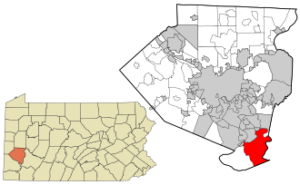
 Northeast natural gas demand could rise by up to 10 Bcf/d by the early 2030s, supported by power generation, LNG, industrial growth, and advancing pipeline projects. Tudor, Pickering, Holt & Co. (TPH) says regional operators increasingly expect 5–8 Bcf/d of growth by 2030, although the firm models only 3 Bcf/d. The interesting aspect of TPH’s prediction is *where* the increase in gas supply will come from, and which drillers will most likely provide it.
 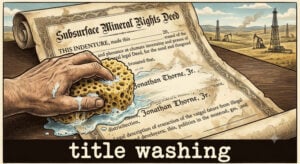 Last year, we reported on a Pennsylvania Supreme Court decision issued in the case of Commonwealth of Pennsylvania, Pennsylvania Game Commission v. Thomas E. Proctor Heirs Trust (see
  A little over two weeks ago, MDN reported that THE Delaware Riverkeeper was sounding the alarm (the perennial “sky is falling” group) that the Penn America LNG export facility had come back to life and is planning a new LNG export project near Philadelphia (see
  An important (precedential) court ruling to alert Pennsylvania surface (and mineral rights) owners to. The Pennsylvania Superior Court ruled earlier this month that an oil-and-gas mineral rights owner does not have an automatic, unrestricted right to place a well on a separately owned surface estate. When the deed or lease contains no express surface-access right, the mineral owner must establish that using that surface is “strictly necessary”—not merely reasonable—to reach and develop the underlying oil and gas. The case in question concerns land in Westmoreland County but will almost certainly apply to other locations as well.
  Energy Transfer has asked the Pennsylvania Public Utility Commission (PUC) to restructure and dissolve the Sunoco Pipeline Company, separating its pipeline assets between two new entities. Energy Transfer NE NGL Pipelines LLC would own and operate the Mariner East system and other natural gas liquids pipelines, while Energy Transfer RP Pipelines LLC would control refined petroleum product pipelines. The proposal also would transfer Sunoco’s public utility operating certificates. Formal protests and intervention petitions are due July 27, 2026.
  For the past decade, landowners in Wayne and Pike counties in northeastern Pennsylvania have unfairly been denied the ability to profit from fracking on (and under) their property, simply because they happen to live inside the imaginary boundaries of the Delaware River Basin, an area under the iron hammer control of the Delaware River Basin Commission (DRBC). The DRBC, unlike its counterpart in the Susquehanna River Basin (SRBC), is controlled by left-wingers. They falsely claim that allowing fracking anywhere in the basin would destroy the water supply of 14 million people. Congress is now on the cusp of overturning this ongoing tragedy.
  On July 12, the Pennsylvania Senate and House passed, and Governor Josh Shapiro signed into law, a $50.84 billion General Fund budget. It was only 12 days late this year. This is a net-positive budget for the Marcellus/Utica industry. It contains no new taxes or fees on production, delivers a long-sought modernization that unlocks the deep Utica play, and builds legal scaffolding favorable to gas-fired power for data centers. The only new obligations — full-cement plugging and (for midstream-adjacent projects) data-center reporting — are modest.
  Eastern Gas Transmission and Storage (EGTS), a wholly owned subsidiary of Berkshire Hathaway Energy Company (Warren Buffett’s company), filed a new project with the Federal Energy Regulatory Commission (FERC) in July 2025 (see
 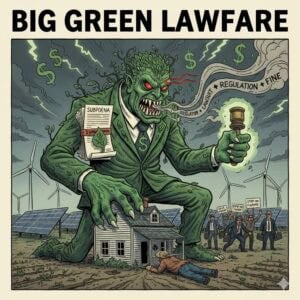 A long-running and favorite tactic of the environmental left is to use our own judicial system against us. On the federal level, foreign-backed groups like the Sierra Club, Earthworks, Food & Water Watch, and others have (in the past) challenged new pipeline or drilling projects, filing appeal after appeal up the line, blocking construction until said lawsuits were resolved. Last June (2025), the Federal Energy Regulatory Commission (FERC) took away the left’s ability to block construction while lawsuits are filed and played out (see