
New Poll: 74% of PA Voters Say “Not in My Backyard” to Data Centers
 Quinnipiac University released a new poll of Pennsylvania registered voters on July 15, and one question in it should worry everyone who makes a living from Marcellus gas. Asked whether they would support or oppose building an AI data center in their community, 74% of Pennsylvania voters said “oppose,” 16% said “support,” and 10% offered no opinion. That’s a jump from Quinnipiac’s February 25 poll, when the split was 68% opposed and 20% in favor. The opposition is bipartisan — 64% of Republicans, 82% of Democrats, and 77% of independents all said no thanks. Three-quarters of voters (76%) say they’re following data center news either very closely (26%) or somewhat closely (50%). And Gov. Josh Shapiro isn’t getting credit either: just 24% approve of how he’s handling data centers in Pennsylvania, while 34% disapprove and a whopping 42% have no opinion. The survey polled 895 registered voters July 9-13, with a margin of error of +/- 4.3 percentage points. Read More “New Poll: 74% of PA Voters Say “Not in My Backyard” to Data Centers”
 Peregrine Energy Partners, the Dallas-based royalty buyer we’ve been tracking since 2019, is back in the Marcellus/Utica with its checkbook open. Yesterday (Aug. 4), the company announced it closed five separate mineral and royalty deals — two of them right here in the M-U — totaling roughly 3,680 net royalty acres and interests in more than 1,240 producing wells. The first Appalachian deal is a cash-flowing overriding royalty portfolio in Susquehanna County, PA, covering about 936 gross acres and 86 producing horizontal Coterra Energy (now Devon Energy) wells, with more than 50 DUCs and PUDs behind them in both the Upper and Lower Marcellus.
  The long, sad saga of Eureka Resources has a new chapter — and for once, it’s not another fine or another leak. Eureka has sold the business operations at all three of its shuttered Pennsylvania frack wastewater treatment plants. Two of the three went to Select Water Solutions, one of the biggest water-management companies in the oilfield. The third went to a Washington County trucking outfit. We didn’t hear this from Eureka. We heard it from the Middle Susquehanna Riverkeeper Association, which pried the details out of the PA Department of Environmental Protection (DEP) in advance of the one-year anniversary of the Aug. 17, 2025 spill that dumped 16,000 gallons of untreated wastewater into the West Branch of the Susquehanna River (see
 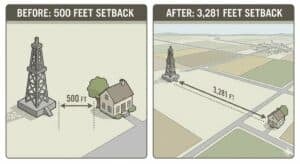 Every so often the antis tell you exactly what they’re up to, and you just have to sit back and enjoy it. On Saturday, Inside Climate News ran a story on the ongoing campaign by the Environmental Integrity Project (EIP), Clean Air Council, and their friends to jack up setbacks — the required distance between a well pad and the nearest building — from the current 500 feet to distances that would end new shale drilling in Pennsylvania. The new twist? They’ve hitched the campaign to the data center boom. More data centers means more gas, and more gas means (in their telling) more danger, so hurry up and pass the rules. It’s the same petition MDN has been tracking since 2024, dressed in a 2026 outfit.
  Something of an upset last week for rigs operating in the Marcellus/Utica region. We maintained the same cumulative count of 36 last week, which has been at that level for 12 weeks in a row. However, Ohio lost one rig in the Utica (now operating 10 rigs), while West Virginia gained that lost rig in the Marcellus (now operating 9 rigs). Pennsylvania maintained its rig count of 17. The national count increased by 1 to 588, which ties with a few weeks ago to be the highest national rig count in more than a year.
  The Marcellus/Utica region received 19 new drilling permits last week, July 20 – 26, down 7 from two weeks ago. Last week, Pennsylvania issued 10 new permits. Ohio issued 4 new permits. And West Virginia issued 5 new permits. The drillers who received new permits included: Ascent Resources (1), EOG Resources (1), EQT (7), Expand Energy (5), Infinity Natural Resources (2), Range Resources (2), and Snyder Brothers (1).
  National Fuel Gas Company (NFG) — the Williamsville, NY company that drills (Seneca Resources), pipes (NFG Supply Corporation, Empire), and sells gas at the meter (NFG Distribution Corp) — issued its fiscal third quarter update Wednesday evening and talked it over with analysts Thursday morning. NFG’s fiscal year ends September 30, so their “third quarter” is everyone else’s second quarter (April–June). There’s a lot in here for Marcellus/Utica watchers, but two items stand out: Supply Corporation more than tripled the size of its Line N System Upgrade Project, and Seneca is about to start writing big checks to landowners in Tioga County.
  Expand Energy, the largest natural gas producer in the country, reported its second-quarter 2026 numbers on Tuesday and held its analyst call Wednesday morning. Headline items: net production of 7.48 Bcfe/d (billion cubic feet equivalent per day), net income of $522 million, and a reaffirmed full-year guide of 7.4–7.6 Bcfe/d on $2.75–$2.95 billion of capital spending. But the news that matters most to MDN readers isn’t in the headline — it’s buried in the slide deck. Expand quietly paid roughly $5,000 an acre for 3,000 acres in core Bradford County, Pennsylvania, and turned in the best drilling quarter in the history of its Southwest Appalachia business. Meanwhile, interim CEO Mike Wichterich says the search for a permanent boss is in “the back third” and will land inside the promised nine months. Let’s break it down.
  Yesterday we told you about Project Oak Leaf, Eastern Gas Transmission and Storage’s (EGTS) 52.5-mile expansion that will carry Leidy gas down to Maryland and Virginia (see
  There’s a brand-new pipeline project on the board for our region, and it’s a good one. Eastern Gas Transmission and Storage (EGTS) — a BHE GT&S company, which means it ultimately belongs to Warren Buffett’s Berkshire Hathaway Energy — is proposing Project Oak Leaf, a 52.5-mile expansion of its PL-1 system that will move an extra 250,000 dekatherms per day (Dth/d) of natural gas from Clinton County, Pennsylvania down to customers in Maryland and Virginia. (A dekatherm is a heat measurement roughly equal to one thousand cubic feet of gas, so call it about 250 MMcf/d — 250 million cubic feet per day.) EGTS plans to file its application with the Federal Energy Regulatory Commission (FERC) in the fourth quarter of this year, with construction starting in early 2028 and gas flowing by the end of 2029. The Frederick (MD) News-Post picked up the story yesterday. Four public open houses are already on the calendar, the first one next week.
  The highly functional and responsible Susquehanna River Basin Commission (SRBC), unlike its dysfunctional and irresponsible counterpart, the Delaware River Basin Commission (DRBC), continues to support the shale energy industry by approving water withdrawals and consumptive use requests for responsible, safe shale drilling. The SRBC published a notice in the July 25th Pennsylvania Bulletin that the SRBC approved and/or renewed 21 general water use permits in June for individual shale gas well drilling pads in Clearfield, Lycoming, Sullivan, Susquehanna, Tioga, and Wyoming counties.
  The Federal Energy Regulatory Commission (FERC) is close to issuing an environmental assessment for the Constitution Pipeline, a 125-mile greenfield pipeline from the Marcellus gas fields of Susquehanna County, PA, to Schoharie County, NY (see
  In April 2025, Knighthead Capital Management, Homer City Redevelopment (HCR), and Kiewit Power Constructors Co. announced a plan to convert the former Homer City Generating Station, previously the largest coal-fired power plant in Pennsylvania (Indiana County, 50 miles east of Pittsburgh) into a more than 3,200-acre natural gas-powered data center campus, designed to meet the growing demand for artificial intelligence (AI) and high-performance computing (see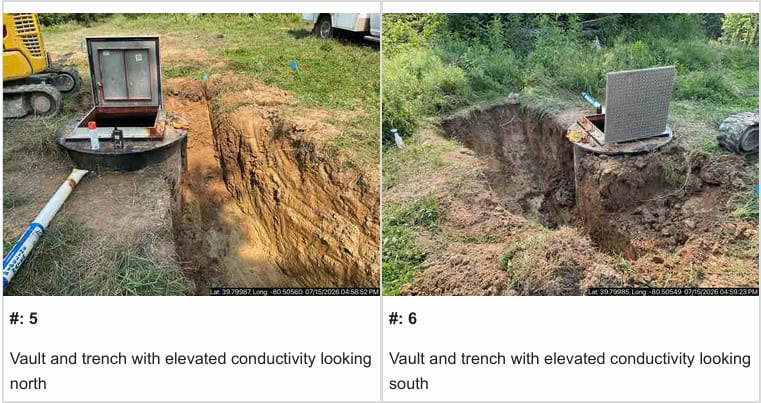
 Thanks to the work of David Hess at the PA Environment Digest Blog, which tracks Department of Environmental Protection (DEP) notices published in the Pennsylvania Bulletin, we know of two water pipeline projects (for EQT and Expand Energy) approved by the DEP related to drilling new shale wells in two different northeastern PA counties: Lycoming and Bradford. Water is used for fracking. New water pipelines mean new fracking is on the way in those locations.