
EQT Water Spill in Greene County Still a Mess 62 Days Later
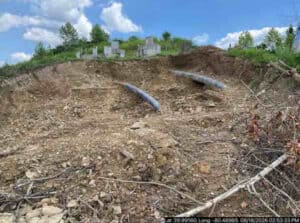
 Sixty-two days after a wastewater pipeline let go at Equitrans’ Richter impoundment in Aleppo Township, Greene County, the Pennsylvania Dept. of Environmental Protection (DEP) went back out to look at the site on August 18 — and didn’t like what it found. Contaminated water is still moving, soil is still dirty, and DEP says the cleanup has largely stalled. Quick refresher for those just tuning in. On June 17, 2026, Equitrans Water SVC (PA) LLC — the water-handling arm of EQT — reported a wastewater release from a pipeline tied to its Richter Shale Gas Water Impoundment while the site was being reclaimed. DEP issued a cleanup order on June 30 requiring the company to stop contaminated water from migrating off site and from reaching ground or surface water. Read More “EQT Water Spill in Greene County Still a Mess 62 Days Later”
 A second poll of Pennsylvania voters on data centers landed this week, and the headlines say what you’d expect: six in ten are opposed. Dig into the crosstabs — the detailed tables showing how each group answered — and you find something the coverage skipped entirely. A majority of Pennsylvania Republicans support building data centers. Fifty-one percent for, 42% against (take note, Stacy Garrity). The Philadelphia Inquirer, teaming up with the New York Times and Siena University, surveyed 760 likely Pennsylvania voters from August 17-21. The topline: 62% oppose the construction of AI data centers, 33% support them.
  Eureka Resources sold the business at all three of its shuttered Pennsylvania frack wastewater plants. What it did not sell — and legally could not sell — is the obligation to finish hauling the waste out. The Department of Environmental Protection (DEP) put that in writing last week, and added five words that ought to get somebody’s attention in Williamsport: DEP “is considering alternative enforcement measures.” The news comes, again, not from Eureka and not from a DEP press release, but from the Middle Susquehanna Riverkeeper Association, which keeps sending the agency questions and publishing the answers. DEP Northcentral communications manager Megan Lehman replied by email Aug. 20; the Riverkeeper posted the exchange Aug. 24.
 A federal appeals court has handed XTO Energy (ExxonMobil’s shale subsidiary) a win in a long-running Western Pennsylvania royalty lawsuit, ruling Monday that XTO did NOT give up its right to push some landowners into private arbitration — even though it spent 55 months litigating the case before it asked. The case is Salvatora v. XTO Energy Inc., a cousin of the Kriley case MDN has also followed. Same defendant, same Pittsburgh courthouse, same plaintiffs’ firm, same complaint: landowners say XTO shaved too much off their royalty checks for “post-production costs” — the gathering, compression, and processing charges that move gas from the wellhead to a buyer.
  A new Penn State study went looking for radium from fracking in southwestern Pennsylvania drinking water. It tested 91 private wells and springs in Washington and Greene counties and found exactly zero samples above the EPA limit — and the radium it did find carries the chemical fingerprint of the rock the water sits in, not Marcellus brine. You wouldn’t know that from Penn State’s press release headline, which falsely blares, “
 The highly functional and responsible Susquehanna River Basin Commission (SRBC), unlike its dysfunctional and irresponsible counterpart, the Delaware River Basin Commission (DRBC), continues to support the shale energy industry by approving water withdrawals and consumptive use requests for responsible, safe shale drilling. The SRBC published a notice in the August 22nd Pennsylvania Bulletin that the SRBC approved and/or renewed 35 general water use permits in July for individual shale gas well drilling pads in Bradford, Centre, Clearfield, Clinton, Lycoming, Susquehanna, Tioga, and Wyoming counties.
  The Marcellus/Utica region received 27 new drilling permits last week, August 10 – 16, up significantly from the 8 permits issued two weeks ago. In something of a reversal, Pennsylvania turned in the fewest new permits, just 4. Ohio issued the most permits, with 16, and West Virginia issued 7 permits. The drillers who received new permits were: Antero Resources (6), Ascent Resources (5), EOG Resources (8), Expand Energy (4), Jay-Bee Oil & Gas (1), LOLA Energy (1), Range Resources (1), and Seneca Resources (1).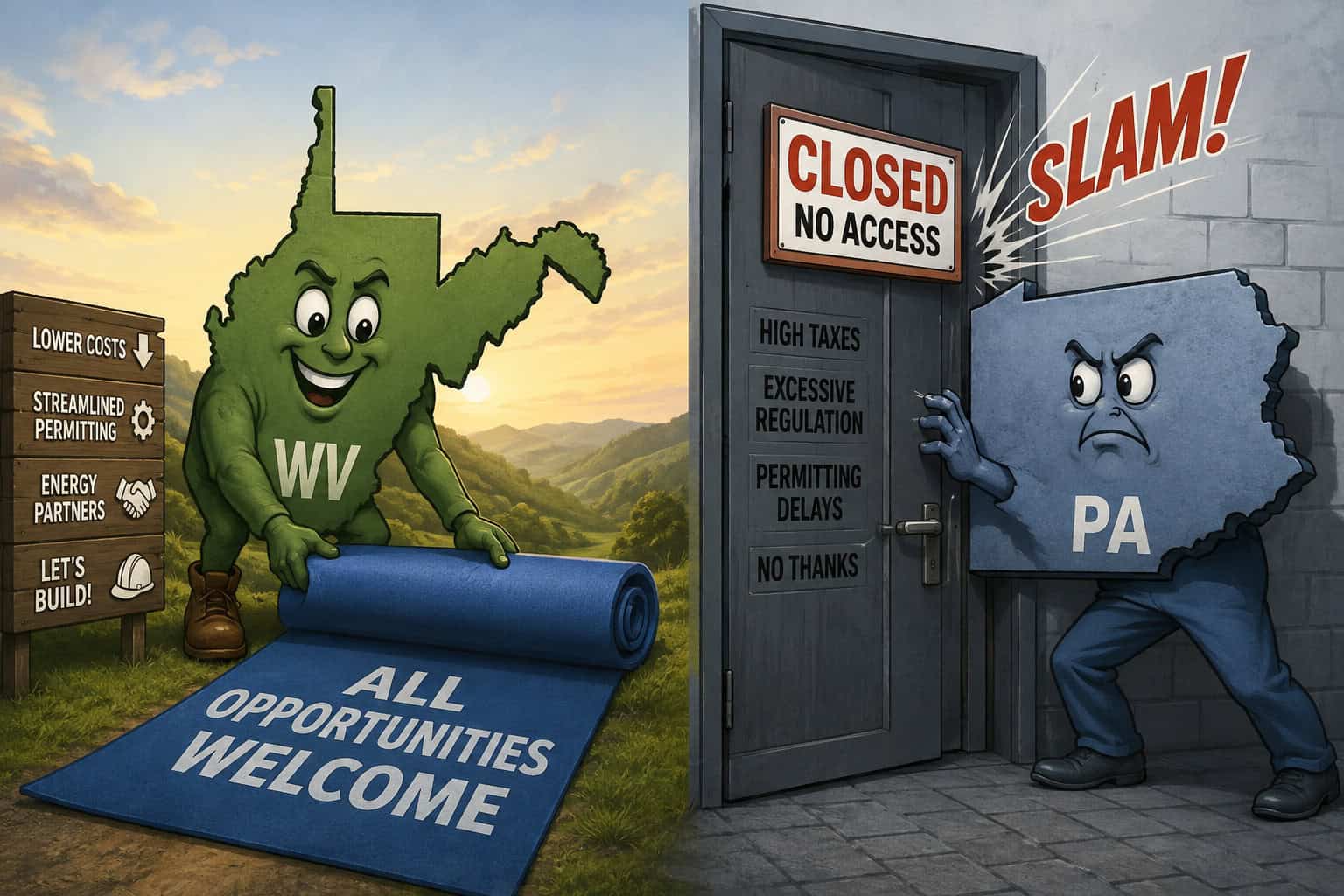
 Epsilon Energy (NASDAQ: EPSN) keeps calling its Susquehanna County, PA, acreage a “legacy” asset — and then keeps telling investors it’s sitting on up to 200 billion cubic feet of gas it hasn’t produced yet. At the EnerCom Denver energy investment conference on Tuesday, Epsilon’s VP of Finance put hard numbers on the northeast Pennsylvania position for the first time, disclosed pad-level economics that are rare to see in public, and dropped the news item that matters most to anyone with a lease inside the Auburn dedication: the company is reviewing an expansion of the Auburn Gas Gathering System to handle drilling coming in 2028 and beyond.

 Gov. Josh Shapiro signed Executive Order 2026-05 on Tuesday, imposing what he called “the strictest guardrails in the nation” on AI data centers — and, we’d argue, on the gas-fired power plants that will run them. Two western PA projects lost fast-track permitting status the same day. But the real damage is buried in a 33-page model consent order that got almost no attention. We don’t think it’s unfair or hyperbole to say Shapiro just destroyed the AI data center industry in the Keystone State.
  Norway’s Equinor — the company we all used to call Statoil — announced Monday it is buying a majority interest in the Lackawanna Energy Center (LEC), the big Marcellus-fired power plant in Jessup, PA, just outside Scranton. Equinor is paying $940 million for 87.71% of the Class A shares in the 1,483-megawatt plant, buying them from funds managed by Global Infrastructure Partners (GIP), which is now part of BlackRock. Invenergy, which built LEC and has run it since day one, stays on as operator. MDN has followed this plant since it was nothing but a proposal and a pile of angry town council meetings (see
  A Wall Street rumor landed Tuesday that most of the financial press covered as a Wall Street story. We’re going to cover it as a Susquehanna County story — because buried inside UGI Corporation, the Valley Forge-based utility holding company that private equity giant KKR reportedly wants to buy for $9 billion, sits one of the more important collections of gathering, storage and pipeline assets in the northeast Marcellus.