
Economic Impact | Industrywide Issues | Jobs | Pennsylvania | Research | Statewide PA | Statewide WV | West Virginia
PwC Report: O&G Impact on PA, WV State Economies Massive
 A new report (full copy below) commissioned by the American Petroleum Institute (API) and undertaken by PricewaterhouseCoopers (PwC) has found the oil and natural gas industries directly or indirectly supported over 188,000 jobs in Pennsylvania in 2019, or 6.1% of the total share of commonwealth employment. Furthermore, the oil and gas industries produced $14.2 billion in labor income, which was 7.9% of the state total share, and had a statewide economic impact of $31.9 billion, for 9.7% of the state total share. The percentages for the impact of oil and gas on the West Virginia economy are similar.
Read More “PwC Report: O&G Impact on PA, WV State Economies Massive”
 Some disturbing news out of Pennsylvania. You may recall that PennEast Pipeline, a 120-mile, primarily 36-inch pipeline that will cost $1 billion to build and run from Dallas, Luzerne County, in northeastern Pennsylvania, and terminate at Transco’s pipeline interconnection near Pennington, Mercer County, New Jersey, won a huge and important victory at the U.S. Supreme Court in June (see
 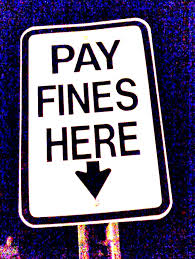 Yet another fine for Energy Transfer (ET), assessed by the Pennsylvania Dept. of Environmental Protection (DEP). This time the DEP has fined ET $140,000 for violations that occurred in 2019 and 2020 during the construction of ET’s B15 Well Connect Pipeline construction project located in Beaver County, PA. According to the consent order and agreement (COA), “sections of the pipeline project were not temporarily stabilized, areas of the site showed accelerated erosion and sedimentation, waterbars were not installed properly or not installed in the approved locations, and erosion and sedimentation best management practices (BMP) were inoperable or ineffective.”
 The so-called Pennsylvania Environmental Defense Foundation (PEDF) lost a big court case in Pennsylvania’s Commonwealth Court last Friday, but you won’t have heard about it because no one in mainstream media is talking about it or reporting on it. We couldn’t even find a whisper about the defeat from PA Environmental Digest or StateImpact Pennsylvania. Huh. One would almost think there’s some sort of collusion going on. A wall of censorship and silence. Don’t worry, we’ll tell you about it…
 Last week only Pennsylvania issued permits to drill new shale wells. Both Ohio and West Virginia issued no new drilling permits. Summer doldrums? Some 8 of the 11 permits issued in PA were to Seneca Resources, all of them in Elk County, and 7 of the 8 were for the same well pad. The other 3 permits were issued to EQT in three different counties.
 A new bill just introduced in the Pennsylvania House by State Rep. Eric Davanzo (Republican from Westmoreland County), House Bill (HB) 1763, clears up the confusion and bastardization of the term “royalty,” making it easy for everyone to know what can and cannot be deducted from royalties with respect to oil and gas leases. Davanzo got 23 of his fellow House members to co-sponsor the bill. It is a refreshingly simple bill that does not change any existing contracts. It defines the point to establish the value of gas (or oil) as that point when it is sold to an unrelated third-party purchaser. Simple!


 Last December MDN told you that a REV LNG small-scale LNG facility near Towanda (in Wyalusing, Bradford County, PA), had successfully supplied LNG to support the bunkering of a marine vessel at the Port of Hamilton in Ontario (see
  Northeast Pennsylvania high schoolers are getting a look at what a career in the shale energy field looks like. The Susquehanna County Career and Technology Center in Dimock, in cooperation with Cabot Oil & Gas, is hosting its annual week-long Energy and Oilfield Career Experience summer camp. Susquehanna County, the only county where Cabot drills, is the #1 producer of natural gas in PA. Has been for years.
 The CO2 Coalition, a nonprofit established in 2015 for the purpose of educating thought leaders, policymakers, and the general public about the important contribution made by carbon dioxide to our lives and the economy, has just published a detailed analysis of Pennsylvania’s plan to join the Regional Greenhouse Gas Initiative, or RGGI (full copy below). In the report, more than 70 top scientists conclude that PA Gov. Tom Wolf’s justifications for the RGGI carbon tax “are invalid and its claims of environmental and economic benefits are fiction.”
 Privately-owned Penn Production Group, LLC, which concentrates on exploration and production for oil and gas in western Pennsylvania, closed on the purchase of certain assets owned by Greylock Energy in Clearfield County, PA on July 30. The assets include 20 miles of pipeline (called Mid Stream) that feeds the gas-fired Shawville GenOn Generating Station and the Dominion pipeline.
 The radicals at the Pennsylvania Environmental Defense Foundation (PEDF) are not just content to block any future use of royalties from drilling on state land to fund only Big Green priorities, as they recently won the right to do (see