
PA DEP Committee Votes to Approve Onerous New Air Regs
 Yesterday the Pennsylvania Dept. of Environmental Protection’s (DEP) Air Quality Technical Advisory Committee voted to recommend the DEP move forward with a proposed new regulation to control volatile organic compound (VOC) emissions, with a side benefit of reducing methane emissions, from existing oil and gas operations. It was a split vote, but it propels the regs to the next level.
Read More “PA DEP Committee Votes to Approve Onerous New Air Regs”
 The sleazy elected commissioners of Chester County have just sued Sunoco Logistics Partners to try and stop construction of the Mariner East 2 Pipeline on two county-owned properties where the pipeline has a legitimate, legal right to build. One of the commissioners actually uses these lawsuits as fundraisers (see
  Coastal Chemical, the North American subsidiary of German company Brenntag, sells chemicals (used in fracking) to the oil and gas industry. Coastal Chemical wants to build a chemical storage facility in Montgomery (Lycoming County), PA, near Williamsport. The facility would house ten tanks, each holding 12,000 gallons of chemicals. The local volunteer fire chief and the local emergency management coordinator are both “strongly opposed” to the project.

 Pennsylvania State Senators Camera Bartolotta (Washington County) and Pat Stefano (Fayette County) have just beaten PA Gov. Tom Wolf at his own game. Wolf has been gallivanting around the state like Santa Claus promoting a plan called Restore PA, a plan that will get rid of lead paint in schools, fix flooding, repair old roads, give rural residents internet access, and just about any other goody you can think of. Wolf wants to pay for it by slapping a severance tax on the Marcellus industry. Bartolotta and Stefano are introducing two bills that would fund Wolf’s folly–but do so by allowing new shale drilling on state land. Game, set, and match!
 A joint announcement between Kendra II LLC and De Nora says a new wastewater recycling facility aimed at the shale industry will go online in late May providing drillers in the “heart of the Marcellus Shale” (in Susquehanna County, PA) a new option to recycle and reuse produced water…up to 18,000 barrels a day.
 What will Pennsylvania’s future with respect to energy look like 25 years from now? What role will shale gas play? And how will that role affect the state? A group of 35 people began to study that question in the summer of 2017 and the end result, a new study, has just been released (full copy below). According to the study’s results, there are two distinct paths PA can take, resulting in two very different outcomes.
 We’re in the unusual position of defending Pennsylvania Gov. Tom Wolf, arguably the worst governor PA has had in a generation. But defend him (and his staff) we must, because the Wolf Administration is the object of a false and disgusting smear campaign by a prominent London tabloid called The Guardian.
 Last November the Pennsylvania Supreme Court agreed to hear a case, Briggs v. Southwestern Energy, that is hands-down the most important court case to ever happen regarding the Marcellus Shale in PA. And no, we’re not exaggerating. A blizzard of briefs by Southwestern and those supporting Southwestern were filed in February (see
  One liberal Philadelphia-area Republican and two Philly Democrats (considered a “bipartisan” group) have just introduced a package of seven bills in the Pennsylvania House supposedly meant to “further regulate pipeline companies and provide greater oversight authority to state agencies.” Sounds so reasonable, doesn’t it? In reality the bills are aimed at shutting down new pipeline projects in the state. Why does it take seven bills? They’re flinging whatever crapola they can against the wall, hoping at least one or two bills will stick.
 MDN recently received a hot tip from a reader that says Shell (i.e. SWEPI) may have recently sold its Tioga County, PA assets in northcentral PA. Yesterday, Pin Oak Energy issued a press release to say they have cut a deal to buy Shell’s northwestern PA assets, some 43,000 acres in the Utica. Which all feeds into the rumor we shared with you last November that Shell is pulling out of PA drilling (see
  The Mariner East 1 pipeline sprung a small leak and spilled 20 barrels (~840 gallons) of ethane and propane in Berks County, near Philadelphia, on April 1, 2017 (see
  We spotted a story about landowners in the Philadelphia suburbs who currently have to live with construction of the Mariner East 2 pipelines (plural, there are two of them, ME2 and ME2X), literally happening in their back yards. While we are strong supporters of the ME2 project, we are not unsympathetic to landowners and the hassles they have to endure while it’s being built.
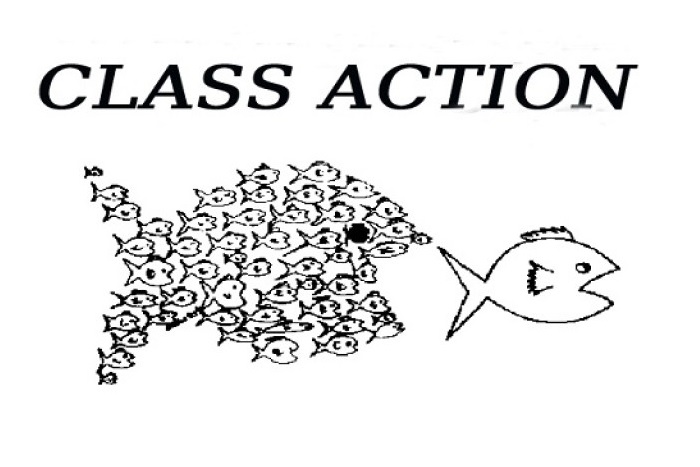 A notable development in a lawsuit that before now, we were unaware of. Several landowners in Venango County (northwest PA) filed a lawsuit against Shell’s SWEPI drilling subsidiary in 2013 claiming SWEPI had stiffed them out of lease bonus payments due under duly signed lease contracts. The landowners attempted to turn the lawsuit into a class action, claiming the same thing had happened for about 300 leases in the area. A federal judge has just ruled against converting the lawsuit into a class action.