
WV Severance Tax Higher than Projected – But Maybe Not for Long
 There’s some good news and, depending on your perspective, bad news when it comes to severance tax collections from natural gas (and coal) in West Virginia. According to West Virginia Department of Revenue in a report released last week, severance tax collections on oil, gas and coal in the Mountain State exceeded revenue projections by $13 million for the first nine months of the current 2017 fiscal year. The surplus reverses the trend from the previous year when WV lost severance tax money due to the drop in the price of oil and gas. Severance tax revenue, as we’ve pointed out before, floats up and down with the commodity price of oil and gas, unlike impact fee revenues which are much less tied to commodity prices (and one reason why PA drilling flourishes). So WV is seeing higher severance tax revenue–that’s the good news. The “bad” news is that Gov. Jim Justice and the WV Senate plan to cut the severance tax–putting the state back in the position of doing more with less…
Read More “WV Severance Tax Higher than Projected – But Maybe Not for Long”
 In what has to be a major blow to the morale of anti-pipeline crusaders in West Virginia, Virginia and North Carolina, the top elected state officials in the legislatures of all three states, both Republicans AND Democrats (16 of them in all), sent a letter on Tuesday to the Federal Energy Regulatory Commission (FERC) requesting FERC approve the Atlantic Coast Pipeline project. Dominion wants to build a $5 billion, 594-mile natural gas pipeline that will stretch from West Virginia through Virginia and into North Carolina. The leaders of all three state legislators have told FERC, we want this pipeline, we NEED this pipeline, please approve it. Today is the last day FERC will receive public comments on the project. Here’s who signed, along with a copy of the letter sent to FERC…
 We find this news somewhat surprising. The West Virginia Oil & Natural Gas Association (WVONGA) has been pushing hard to get legislation passed in WV’s short legislative session on an issue we call “forced pooling lite”–WV Senate Bill 576 which addresses the issues of co-tenancy and joint development (see
  West Virginia has become a hotbed of pipeline projects. You don’t realize it until you stand back and consider all of the proposed projects for major interstate natural gas (or gas liquids) pipelines. There are, in fact, nine such major projects on the board. Some of them either are, or soon will be, under construction. Not all of them are yet approved by their respective regulatory agencies–but most are. If we were to bet, we’d bet most of the nine will get built. Can you name all nine projects? Let us give you some help: Atlantic Coast, Mountain Valley, Western Marcellus, WB XPress, Leach XPress, Mountaineer XPress, Buckeye XPress, Rover, and Appalachian Storage Hub. Actually that last one, the storage hub, is a series of six pipelines–but we lump them all into one project. Here’s a summary of each project, most of them coming soon to the Mountain State…
 Antero Resources is one of the biggest drillers in the Marcellus/Utica. Antero can’t seem to buy enough Marcellus acreage, mostly in West Virginia. Last year the company snapped up close to 80,000 Marcellus acres, mostly in WV (see
  Earlier this week MDN reported that West Virginia Senate Bill (SB) 576, which addresses the issues of co-tenancy and joint development, was a freight train on a fast track to approval (see
  The Mountain Valley Pipeline (MVP) is a $3.5 billion, 301-mile pipeline that will run from Wetzel County, WV to the Transco Pipeline in Pittsylvania County, VA. The project, which filed an official application with the Federal Energy Regulatory Commission in October 2015, is being built by EQT, NextEra Energy and several other partners. The project has faced stiff opposition from landowners in both West Virginia and Virginia. Although the project is not yet fully approved by the Federal Energy Regulatory Commission (FERC), the project did get a favorable Draft Environmental Impact Statement from FERC last September (see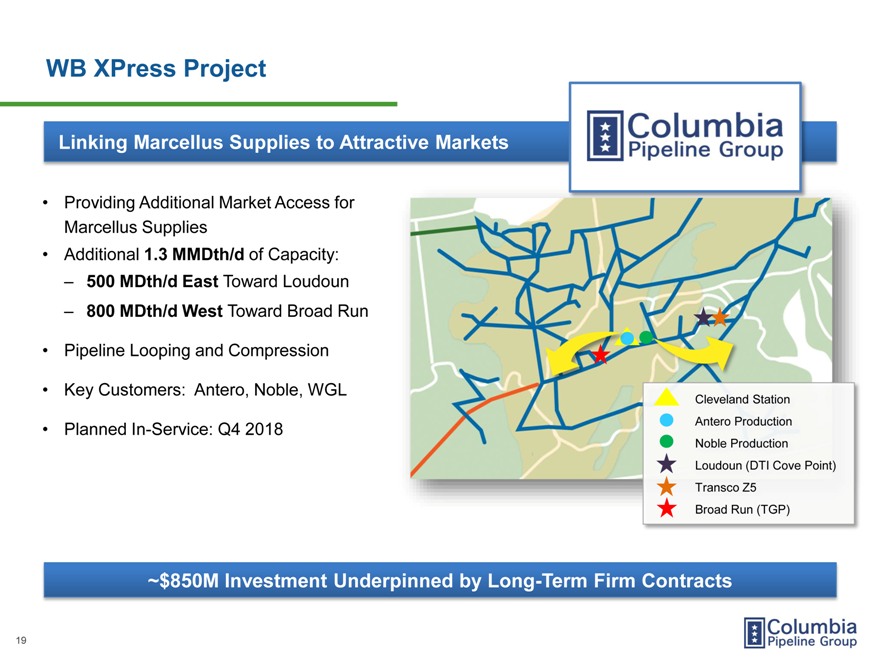
 The West Virginia Oil & Natural Gas Association (WVONGA) is pushing hard to get legislation passed that we call “forced pooling lite”–WV Senate Bill 576 which addresses the issues of co-tenancy and joint development (see
  We spotted an article on The Motley Fool website by one of our favorite authors, Matt DiLallo. The article shines a light on the states that produce the most shale oil. Surprisingly (for us), the Marcellus/Utica was in the list. Appreciable amounts of shale oil are coming from Ohio, Pennsylvania and West Virginia, from both the Marcellus and Utica formations. Of course the amount produced in our neighborhood pales in comparison to the enormous amounts of oil coming from the Texas Permian and North Dakota Bakken. But hey, the fact that we even show up in such a list is kind of exciting…
 The West Virginia Oil & Natural Gas Association (WVONGA) has just raised the stakes significantly in a bid to pass new “forced pooling lite” legislation. In the past six years, the oil and gas industry in WV has pushed for a forced pooling law five times. It’s failed every time. So this year the industry, represented by WVONGA, said it would not push forced pooling but instead would try to get a bill passed to address two of the issues that were previously part of a larger forced pooling bill–something called co-tenancy and joint development (see
  On Monday, MDN wrote about a new bill introduced in the West Virginia legislature that would exempt storage tanks used by the oil and gas industry from a 2014 law passed following a coal industry storage tank failure that temporarily polluted the drinking water for 300,000 WV residents (see
  Yesterday MDN reported on a new West Virginia bill (Senate Bill 576) that aims to bring both the drilling industry and rights owners together to support co-tenancy and joint development–which are stripped down pieces of previous forced pooling bills that failed in the past (see
  As MDN previously reported, perhaps the biggest energy-related issue for this year’s session of the West Virginia 60-day legislative session will not be a bill on forced pooling. Instead, the West Virginia Oil and Natural Gas Association (WVONGA) is pushing a legislation on co-tenancy and joint development (see
  Three years ago in the closing hours of the 2014 legislative session, WV legislature passed SB373, the “storage tank” bill (see
  The Mountain Valley Pipeline (MVP) is a $3.5 billion, 301-mile pipeline that will run from Wetzel County, WV to the Transco Pipeline in Pittsylvania County, VA. The project, which filed an official application with the Federal Energy Regulatory Commission in October 2015, is being built by EQT, NextEra Energy and several other partners. The project has faced stiff opposition from landowners in West Virginia (see