
Freeport LNG Returns to Full Output Following Another Outage
 Freeport LNG has become something of a punchline for its frequent outages. Except it’s no laughing matter. Outages at Freeport have happened so frequently that we’ve lost count (see our Freeport outage stories here). According to gas flow data, one of Freeport’s three “trains” was (once again) out of commission last Friday and Saturday, but came back online over the weekend. Freeport is fed, in part, with molecules from the Marcellus/Utica. Antero Resources sells some of its molecules to the Freeport facility (see Antero 4Q: Sending Gas for LNG Exports to Gulf Coast & Cove Point). We suspect other M-U drillers also sell molecules to Freeport. Hence, our ongoing interest in this facility and its somewhat regular outages. Read More “Freeport LNG Returns to Full Output Following Another Outage”
 Honestly, this story is likely to spike your blood pressure the way it did ours. Breathe in, breathe out. Find your calm, center space. OK. Now you’re ready to hear about it. Foreign companies and billionaires are funneling money to American NGOs and law firms that use the money to attack (in court) fossil energy companies. If a lawsuit prevails and either a settlement or a judgment is entered, the foreigners who helped finance it receive a cut of the “profits” from the settlement. And they don’t pay taxes on their so-called profits! IT IS DISGUSTING and an outright attack on our country. AND IT MUST STOP. NOW. A group of 21 energy-related organizations has sent a letter to both the U.S. House and Senate, outlining a loophole in our laws that allows this immoral practice and urging them to fix it. Pronto.
  OTHER U.S. REGIONS: Three energy plans, one very expensive problem; NATIONAL: U.S. natural gas futures advance on weather outlook; Senate Democrats ramp up oversight probes and revive flawed energy tax; Romantic science to a climate alarmist; Headlines tell us to fear plastics, but scientific research says otherwise; INTERNATIONAL: Oil drops as Iran talks advance; Analysts warn China’s oil demand may never fully recover; Indonesia taps fossil fuels.
  We purposely waited to release the permit numbers, intending to do so last Thursday, ahead of taking off on Friday. But we waited because we thought perhaps more permits would be added to the various state databases on Thursday or Friday (or maybe even Saturday). But no. The only permits we can find for the week of June 9 – 14 are two Pennsylvania permits, both in Butler County. Ohio’s ODNR has issued no new permits for two weeks in a row (are they lazy, or were there really no new permits issued?). West Virginia issued no new permits after issuing just one the prior week.
  Last week, the combined Marcellus/Utica Baker Hughes rig count remained at 36 active rigs for the sixth week in a row. The M-U’s chief competitor, the Haynesville, maintained its count of 55 active rigs, operating 19 more than the M-U. The national count regained 1 rig last week (after losing it the week before), bringing the total back up to 563 rigs, the highest number the count has reached in a year. Baker Hughes said oil rigs held steady at 433 last week, while gas rigs rose by one to 122, their highest since early June, and other miscellaneous rigs held steady at eight.
  Last week, MDN brought you the great news that the Pennsylvania impact “fee” (tax on drilling) generated $243.8 million in fees collected from producers for the 2025 reporting year, a whopping 48% increase over 2024 (see
  In March, we told you about a deal made by Maryland Eastern Shore developer TeraWulf to acquire the retired Morgantown Generating Station in Charles County (on the Potomac River), proposing to transform the site into a massive natural gas-powered data center campus (see
  A new report from UConn’s Connecticut Center for Economic Analysis, bought and paid for by the anti-fossil fuel Connecticut League of Conservation Voters (meaning it’s useless propaganda), argues that the state’s past expansion of natural gas saddled customers with costly infrastructure upgrades without lowering fuel prices. The so-called report says most of the increased gas demand went to power plants—including three new or expanded facilities—rather than heating homes. The propagandists claim that Connecticut, a net electricity exporter, supposedly “absorbed pollution costs,” while benefiting neighboring states.
  Last week, the Federal Energy Regulatory Commission (FERC) launched a sweeping investigation into how power grids and utilities divide the soaring costs of supplying electricity to data centers. FERC issued six “show-cause” orders directing regional grid operators—PJM, SPP, MISO, CAISO, ISO New England, and NYISO—to prove that data center connection rates are “just and reasonable” and shield ordinary ratepayers from cost-shifting, or face federal fixes. FERC wants regional grids to speed up data center connections while protecting residential ratepayers. And they WILL do it, or else.
  Today, June 19th, is a stock exchange and bank holiday. Juneteenth is a federal holiday in the U.S. commemorating the emancipation of enslaved African Americans. Juneteenth marks the anniversary of the announcement of General Order No. 3 by Union Army General Gordon Granger on June 19, 1865, proclaiming freedom for enslaved people in Texas. Originating in Galveston, the holiday has been celebrated annually on June 19 in various parts of the United States, often marking a broad celebration of African-American culture. The day was first recognized as a federal holiday in June 2021, when President Joe Biden signed the Juneteenth National Independence Day Act into law. As with other bank holidays, and as we have since 2022 (our fifth year), MDN will not publish today to honor and commemorate Juneteenth.
 Devon Energy completed its merger with Coterra Energy just over one month ago, on May 7, paying Coterra $21.4 billion in Devon stock (see
  This is one of those “man bites dog” (or in this case, “woman” bites dog) stories. Rebecca Tepper has, for years, worked for Maura Healey—first when Healey was Attorney General of Massachusetts, and later (now) in Healey’s role as Governor of the state. Tepper is Healey’s Secretary of Energy and Environmental Affairs. Healey is her boss and directs the policies that Tepper executes. So it was a complete shock for us to receive an email from Tepper’s office with a letter attached (see it below) that Tepper sent to Dan Dolan, President of the New England Power Generators Association. The letter encourages (we’d call it demands) New England’s power generators to sign up to receive natural gas during Enbridge’s open season for the recently announced Project Beacon.
  Norway’s Equinor (formerly Statoil) held its Capital Markets Day 2026 on Tuesday, offering investors and analysts a chance to hear directly from the company’s top management and ask questions. The event made clear that, while the Norwegian Continental Shelf (NCS) remains the company’s center of gravity, its Appalachian (Marcellus) gas position is being repositioned from a quiet, low-cost cash-flow engine into a strategic linchpin connecting upstream gas to the fast-growing U.S. power and data-center economy. Equinor is in love with the Marcellus.
  EQT Corp’s mixed-index natural gas product blends NYMEX Henry Hub futures with one or more physical basin indices (such as Dominion South) into a single sales contract, often weighted toward Henry Hub for hedging liquidity. Splitting exposure between national futures and local spot dynamics dilutes price swings, helping power generators, LNG exporters, and large industrials reduce earnings volatility while retaining some upside from favorable regional spreads.
 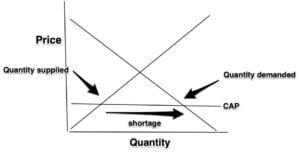 Pennsylvania’s Senate Republicans are speaking truth to power, calling out PA Democrat Governor Josh Shapiro’s policies as one of the primary reasons why PA residents pay more for electricity. And Joshie doesn’t like being called out. State Senate President Pro Tempore Kim Ward argues the state is losing out under a roughly $325-per-megawatt-day price cap on PJM Interconnection’s capacity auctions, approved by the federal government after a lawsuit by Gov. Josh Shapiro (see