
Bradford County | Energy Companies | Expand Energy | JKLM Energy | Ohio | Pennsylvania | Range Resources Corp | Tioga County (PA) | Washington County | Weekly Permits | West Virginia
7 New Shale Well Permits Issued for PA-OH-WV Oct 6 – 12
 For the week of October 6 – 12, the number of permits issued to drill new wells in the Marcellus/Utica dropped significantly from the previous week. There were only seven new permits issued across the three M-U states last week, down from 32 issued two weeks ago. The bottom fell out of the new permits issued. In fact, only one state, Pennsylvania, issued new permits last week. Both Ohio and West Virginia issued no new permits. Last week marked the third consecutive week with no new permits issued in WV. Is someone asleep at the switch in the Mountain State? Read More “7 New Shale Well Permits Issued for PA-OH-WV Oct 6 – 12”
 Yesterday, West Virginia and Diversified Energy unveiled a new public-private partnership to solve one of the most persistent environmental problems in oil- and gas-producing regions. WV Governor Patrick Morrisey and Diversified CEO Rusty Hutson, Jr., announced the creation of the Mountain State Plugging Fund, a unique, non-taxpayer-funded approach designed to retire an estimated 20,000 abandoned oil and gas wells permanently. By capping this old infrastructure, the state will significantly reduce the risk of groundwater contamination and stop the release of methane.
  Pennsylvania is aggressively positioning itself as a leader in the AI data center race with an ambitious $92 billion, state-level initiative (see
 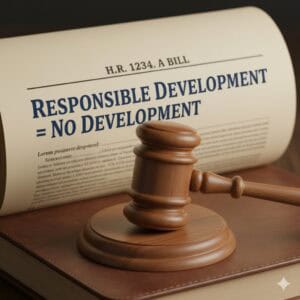 Earlier this week, a seven-member, all-Democrat group of Pennsylvania House of Representatives members announced a six-bill legislative package aimed at regulating the “responsible development” of artificial intelligence (AI) data centers in the state. “Responsible development” is code for “no development” of new AI data centers. The proposed onerous legislation focuses on environmental and community impacts related to the centers’ water and energy use, emergency preparedness, community standards, and transparency. Don’t be fooled. This is an attempt to throttle new data centers to prevent more natural gas from being used to power them.
  Venture Global’s Calcasieu Pass (CP) LNG export facility in Louisiana began operations in March 2022 (see
  If all of the announced LNG export projects in North America get built (a big “if”), our LNG exports will double between 2024’s 11.4 Bcf/d and a projected 28.7 Bcf/d in 2029. Already in 2025, U.S. exports have grown to a capacity of 15.4 Bcf/d (the largest in the world), so we’re well on our way. A small portion of the total increase will come in Canada (2.5 Bcf/d) and Mexico (0.6 Bcf/d). The vast majority will come from new facilities along the U.S. Gulf Coast. The U.S. Energy Information Administration (EIA) has the details of the coming buildout in LNG exports…
 OTHER U.S. REGIONS: Gov. Jeff Landry halts new Louisiana carbon capture applications; Maryland’s new energy rules will drive up costs for consumers; NATIONAL: U.S. natural gas falls on mild weather, ample storage; Increasing power prices are being wrongly blamed on the Trump administration; To beat China, stop wasting time and money on green fantasies; Fueling data centers – and keeping energy costs steady; In-region northeast gas demand flat, but LNG feedgas returns; President Trump is fixing FERC; INTERNATIONAL: Oil drops as potential Trump-Putin meeting eases supply fears; Oil chiefs see $60 oil as breaking point for shale growth; BofA sees oil price floor ‘likely forming at $55’; SEB expects OPEC to cut production soon; Tropical forests in Indonesia ravaged by push for EV batteries; ‘Outraged’ Trump tells nations to ‘vote no’ on UN carbon tax on shipping.
  Ohio Republican Senators have introduced Senate Bill (SB) 219, the first significant update to Ohio’s oil and gas laws since the Kasich administration more than a decade ago. SB 219, introduced by Sen. Al Landis, aims to reform Ohio’s orphaned oil and gas well program. The bill proposes establishing the Oil and Gas Resolution and Remediation Fund, funded by filing fees and penalties, to protect orphan well funds from being raided by the state legislature (as often happens now). The bill also streamlines notification procedures for abandoned wells, requiring only publication in a newspaper or on the ODNR website. Additionally, the bill accelerates drilling by eliminating the Ohio Department of Natural Resources’ (ODNR) discretion to deny expedited project reviews and by making road-use agreements with local governments voluntary and capped at three years.
  Ohio Democrat House members have introduced a bill to solve a problem that doesn’t exist. House Bill (HB) 399 would ban fracking under Lake Erie (which has NEVER been proposed or even thought of), and ban fracking under state-owned parks, which is now happening. With respect to drilling under (not on) state-owned parks, when it happens, nobody knows it’s happening (see
  Pennsylvania state Rep. Greg Vitali, a radical Democrat and the majority chairman of the state House Environmental & Natural Resource Protection Committee, introduced legislation (H.B. 1946) this week that would increase the current setback distances for unconventional oil and gas wells in Pennsylvania from 500 feet to 2,500 feet, effectively banning all new shale drilling in the state. Period. End of sentence. And Vitali (and the other radicals who have signed on to the bill) know it. The bill doesn’t stand a chance in the Republican-controlled Senate, but that’s not the point. The point is (a) fundraising, and (b) there is no other reason, except fundraising.
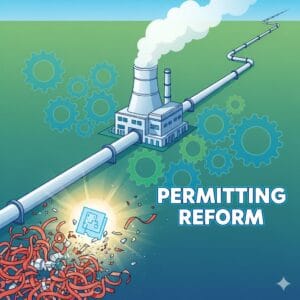 We’re not big fans of the American Petroleum Institute (API), which tends to do the bidding of the Big Oil companies that fund it. Big Oil’s aims are sometimes at odds with those of smaller, independent oil and gas producers—the innovators who discovered shale drilling. Yet there are state chapters of the API that do a good job. One of them is the Pennsylvania API chapter. The executive director of PA API, Stephanie Catarino Wissman, recently published an excellent article in Broad+Liberty that calls for fast-tracking the effort to pass federal permit reform so Pennsylvania can get back to building.
  Unintended (but entirely predictable) consequences are now happening in New York State. In January 2023, New York Gov. Kathy Hochul, a leftist Democrat, floated a plan to ban natural gas hookups in every single new home and business across the “Empire” State (see
  In August, the Federal Energy Regulatory Commission (FERC) reissued a certificate for the Northeast Supply Enhancement (NESE) project, a billion-dollar-plus project designed to increase Transco pipeline capacity and flows of Marcellus gas heading into New York City and other northeastern markets by an extra 400 MMcf/d (see