
Congress Needs to Fix State Vetoes of Federal Pipeline Projects
 As we have reported, history was made last Friday when the Federal Energy Regulatory Commission (FERC) overruled the New York Dept. of Environmental Conservation’s (DEC) denial of a water permit for Millennium Pipeline’s tiny 7.8 mile pipeline spur from the main Millennium Pipeline to a natural gas power plant under construction in Orange County, NY (see History Made! FERC Overrules NY DEC on Millennium Pipe Permit). The DEC eventually denied the water permit, but not before taking 19 months to do it. According to federal law, states have a maximum 12 months in which to make a federal Clean Water Act water permit decision. FERC said NY took too long, and therefore waived the permit, allowing Millennium to proceed with construction of the pipeline. The federal law governing all of this was written to give states a voice, but not a veto, of federal pipeline projects. Whether or not a project gets built is NOT up to the individual states–it is up to FERC and (if necessary) the U.S. Court of Appeals. The law specifically foresaw one state denying a project that another state needs and wants. However, rogue states like socialist NY are pushing the bounds of law by denying pipeline projects authorized by FERC. So what if NY rejects a pipeline, denying a water permit, but does so within the 12 month time period? What then? The legal beagles at the Blank Rome law firm address that issue on their environmental blog. Mike Krancer (former PA DEP Secretary), Fred Lowther and Margaret Anne Hill write that it’s time for Congress to act to clarify the law and ensure NY (and other states) cannot block federally approved pipeline projects…
Read More “Congress Needs to Fix State Vetoes of Federal Pipeline Projects”
 As we reported in August, a Broome County, NY judge ruled that the Town of Fenton (Binghamton area) Planning Board did not take a hard enough look at environmental and traffic issues related to their approval of NG Advantage’s plan to construct a facility in the town to compress and load natural gas onto tractor trailers for delivery to regional customers who desperately need the gas–what is called a “virtual pipeline” (see
 Rockwater Energy Solutions is a “leading provider of comprehensive water management solutions to the North American unconventional oil and gas industry” and the only company that provides complementary chemistry products and expertise in connection with its water solutions. Rockwater operates in the Marcellus/Utica region, among other shale plays. Select Energy Services is a billion dollar oilfield services company with three main divisions: water services, rentals, and wellsite completions. They operate in every major shale play in the country, including the Marcellus/Utica. In July the two companies announced they are merging in an all stock swap deal (see
 The “best of the rest” – stories that caught MDN’s eye that you may be interested in reading. In today’s lineup: Dump WV personal property tax on businesses to lure more gas power plants; PA Senate Repubs don’t like House budget, want a severance tax; OH first responders say o&g companies do good job with information; Haynesville Shale gas production hits 4-year high; lawsuit aims to block fracking on US land in Nevada; 2 new $400M power plants coming to Michigan; gas producers boost 2017 production outlook; how productive and efficient is US shale; final 2 FERC nominees due for full Senate vote; climate scientists admit their predictions on global warming are WRONG; Japan LNG imports down; India LNG imports down; and more!
 Rex Energy, a driller focused mainly on the Marcellus/Utica (headquartered in State College, PA), is a plucky company. Although it has faced its share of financial challenges, it continues to drill in the Marcellus/Utica–bringing new wells online. Rex released an announcement yesterday to tout two new wells pads with a cumulative 10 new wells between them that the company has now brought online into production. Rex always refers to their drilling program in three areas: “Bulter Legacy” and “Moraine East” are drilled on Rex’s leases in Butler County, PA; “Warrior North” refers to Rex’s drilling program on land in Carroll County, OH. The latest two pads were both drilled in Rex’s Moraine East area of Butler County. One of the pads, the “Shields” pad with six wells, produced an initial cumulative rate of 9.2 million cubic feet equivalent per day (MMcfe/d), dropping to 7.9 MMcfe/d after 30 days. The “Mackrell” pad with four wells produced an initial cumulative rate of 8.4 MMcfe/d. No 30-day rate (yet) for the Mackrell pad. Here’s the particulars of our “little driller that could”…
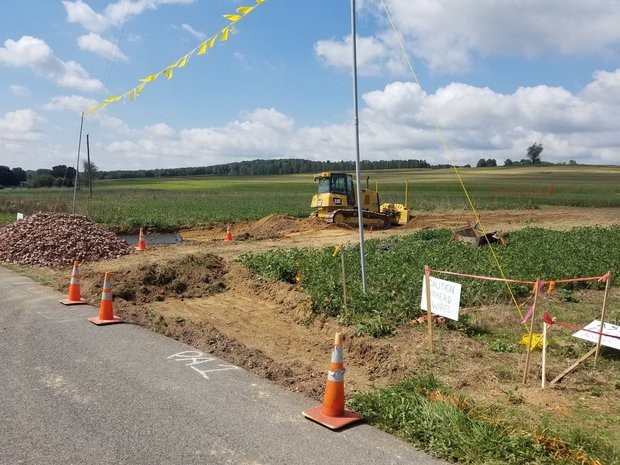
 Rover Pipeline–$3.7 billion, 711-mile natural gas pipeline that (will eventually) run from PA, WV and eastern OH through OH into Michigan and on to Canada–began flowing natural gas through a large portion of the pipeline on Sept. 1st (see
 It’s funny how mainstream media–and liberal Democrats–can turn on a dime. It was just a few days ago we read an AP story endlessly regurgitated across PA about how the PA budget fight had turned “ugly” and “personal” (see
 MDN’s favorite government agency, the U.S. Energy Information Administration (EIA), issued our favorite monthly report, the Drilling Productivity Report (DPR), yesterday. The DPR is the EIA’s best guess, based on expert data crunchers, as to how much each of the U.S.’s seven major shale plays will produce for both oil and natural gas in the coming month. Last month EIA combined the Marcellus and Utica plays into a category they call Appalachia–a big change in the report (see

 In August, the D.C. Court of Appeals ruled in a case that may have long-term, very negative consequences for the oil and gas industry related to pipeline development (see
 Ultra Petroleum, based in Houston, TX, is an independent exploration and production (E&P) company mainly focused on drilling in the Green River Basin of Wyoming. Ultra also drills for oil in the Uinta Basin/Three Rivers area in Utah. In addition, Ultra maintains a “non-operated” (someone else does the drilling) position in the Pennsylvania Marcellus shale with leases on 72,000 net acres–no small amount. One year ago, in April 2016, Ultra filed for Chapter 11 bankruptcy (see
 Last week our favorite government agency, the U.S. Energy Information Administration (EIA), released its annual “International Energy Outlook 2017” (full copy below). What does the report show? EIA predicts energy consumption is set to increase 28% from 2015 levels by 2040–in a little over the next 20 years. To meet this huge uptick in energy, EIA predicts fossil fuel use–led by natural gas and oil–will continue to account for about 77% of energy consumption through 2040. So much for the renewable nirvana future we’re always just a year or two away from (according to Al Gore). Fossil fuels will remain the #1 fuel of choice by the world for the next generation, and almost certainly the generation after that, and the one after that. Do you now see why drilling for oil and gas in shale is so vital to the future of not only our country, but the world? According to EIA, most of the growth in energy consumption (and fossil fuels) will come from China and India. Here’s the lowdown on what’s just around the corner…
 Finally the Federal Energy Regulatory Commission (FERC) has had enough shenanigans from the corrupted New York Dept. of Environmental Conservation (DEC). In a historic, precedent-setting decision, on Friday FERC overruled DEC’s denial of a water permit for Millennium Pipeline’s tiny 7.8 mile pipeline spur from the main Millennium Pipeline to a natural gas power plant under construction in Orange County, NY. On Wednesday, Aug. 30, the DEC issued a denial letter to FERC and Millennium. In it, they claim that FERC’s review of the power plant project (that the pipeline will feed) is deficient based on a recently-decided court case about a pipeline project in Florida (see
 Bad news for the Sisters of the Corn and the radicals at Lancaster Against Pipelines. On Friday the Federal Energy Regulatory Commission (FERC) granted Williams permission to begin construction on Atlantic Sunrise, a $3 billion, 198-mile pipeline project running through 10 Pennsylvania counties to connect Marcellus Shale natural gas from northeastern PA with the Williams’ Transco pipeline in southern Lancaster County. Last week the Sierra Club and a mish mash of other nutball groups begged FERC to delay issuing an order that Williams can commence with construction, claiming FERC’s delay in considering a rehearing delayed a lawsuit and the lawsuit hasn’t had enough time to work it’s way through the court system (see