
WV Supreme Court Reverses Itself, Post-Production Deductions OK
 In a decision that will thrill drillers, but anger landowners, the West Virginia Supreme Court decided last week to overturn its own previous decision (from just last December) and allow driller EQT to deduct post-production expenses from royalty payments. Last December MDN reported on the huge West Virginia Supreme Court decision against driller EQT that disallows EQT from deducting post-production expenses from royalty checks, even with signed contracts in place (see WV Supreme Court Rules EQT Can’t Deduct P-P Costs from Royalties). The justices, in their ruling, said that drillers can “not deduct from that (royalty) amount any expenses that have been incurred in gathering, transporting or treating the oil or gas after it has been initially extracted, any sums attributable to a loss or beneficial use of volume beyond that initially measured or any other costs that may be characterized as post-production.” A really big deal. Then in February, with a brand new justice on the bench, the WV Supreme Court agreed to rehear the case after an appeal filed by EQT–a rare and unusual step (see EQT Catches Big Break in WV Supreme Court re Royalty Deductions). Those who won the case say newly elected Supreme Court Justice Elizabeth D. Walker has conflicts of interest and should not have been allowed to vote to rehear the case in the first place (which she did). On that basis, they tried to avoid the rehearing altogether, but that failed, and lawyers were in court arguing the case earlier this month. As it turns out, the lawyers mainly argued over the meaning of three short words: “at the wellhead” (see WV Supreme Court Post-Production Royalty Case Hinges on 3 Words). On Friday, the justices reversed their earlier decision, voting 4-1 in favor of allowing EQT to deduct “reasonable” post-production expenses (copy of the decision below). Newly elected Justice Beth Walker, with (according to the other side) conflicts of interest, voted in favor of EQT. This has BIG implications for landowners and drillers in the Mountain State… Read More “WV Supreme Court Reverses Itself, Post-Production Deductions OK”
 It was full speed ahead for Energy Transfer’s Rover Pipeline construction project in Ohio–until a series of drilling mud spills hit, including one that dumped some 2 million gallons of bentonite mud into a wetland near the Tuscarawas River in Stark County, OH (see
  Peters Township, the most populous township in Washington County, PA, is one of the seven selfish towns that sued the state in 2012 over the zoning provisions in the then-new Act 13 law, eventually winning at the PA Supreme Court level (see
  Seems like forever we’ve been waiting for the Pennsylvania Dept. of Environmental Protection (DEP) to issue the final permits needed for the Williams Atlantic Sunrise Pipeline project to begin construction. Atlantic Sunrise is a $3 billion, 198-mile pipeline project running through 10 Pennsylvania counties to connect Marcellus Shale natural gas from northeastern PA with the Williams’ Transco pipeline in southern Lancaster County. The Federal Energy Regulatory Commission (FERC) gave its final seal of approval for the project in February (see
  [SPONSORED CONTENT]
 Sometimes we wish we had gone to law school–to better understand some of the cases involved with oil and gas. This is one of those times. When you read words like “arbitrability,” the eyes start to glaze over. We’ll do our best to summarize some important news for landowners who want to sue Chesapeake over shorted royalty checks. Starting in 2008, Chesapeake Energy, under then-CEO Aubrey McClendon, began leasing acreage in northeastern Pennsylvania for shale drilling. Said drilling happened and in 2013, Scout Petroleum purchased royalty rights from some NEPA landowners. That is, Scout took over receiving the royalty payments in return for giving those landowners an up front, lump sum. In 2014, when it became obvious Chesapeake was using aggressive deductions from royalty payments (i.e. landowners were getting hosed), Scout filed a lawsuit against Chesapeake, requesting (under the lease language) that their grievances against Chessy be arbitrated AND (not specifically under the lease language) that Scout and thousands of other landowners be lumped together into class action arbitration (see
 Election matters, and elections for governor really matter–at least with respect to shale drilling and pipelines. Here in New York State, where MDN is written, we are ruled by a corrupt autocrat by the name of Andrew Cuomo. Single-handed Cuomo has decided to ban fracking and block new shale gas pipelines (see
 Events related (or of interest) to the Marcellus and Utica Shale, primarily pro-drilling events.
 The “best of the rest” – stories that caught MDN’s eye that you may be interested in reading. In today’s lineup: Marcellus/Utica pipeline takeaway projects to the Gulf Coast; Fracking loses a friend, Edward Allees; Shell buys another 1.5 miles of leases for ethane pipe; PA legislators “demand” severance tax; Chemical Safety Board investigates Barbour County explosion at mercaptan facility; GOP Senators tell Trump to dump Paris climate deal; why consensus on energy policy IS possible; OPEC decides to extend production cuts into 2018; and more!
 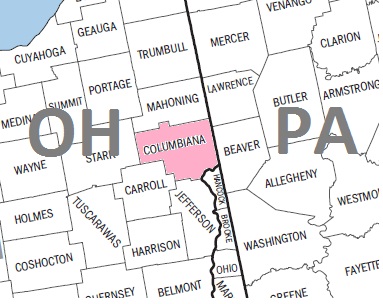 Hilcorp has woken up and come alive in the Ohio Utica Shale–for the first time this year. The company recently filed for permits to drill three new Utica wells in Columbiana County. Which is interesting. Hilcorp zigs when everyone zags. Most drilling in the Ohio Utica currently happens in southeastern Ohio–in counties like Belmont, Monroe and Guernsey. When the play first became active for shale drilling, much of the early action happened in Carroll County, and Columbiana. But lately (over the past 2-3 years) most drilling moved south. But Hilcorp, with acreage in the northern Utica in both Ohio and Pennsylvania, continues to make money staying north. In fact, Hilcorp has been called the “dominant active prospector” in the northern tier area of the Utica Shale–an area including Columbiana, Mahoning and Trumbull counties in OH and Lawrence and Mercer counties in PA. Hilcorp is strong and steady. They make money when they drill. So we take this as a good sign that drilling is heating up in the northern Utica…
 Major General James A. “Spider” Marks is the former Commanding General, U.S. Army Intelligence Center, and was the senior intelligence officer for the 2003 liberation of Iraq. Since retiring from the military, General Marks has led many business ventures in education, energy, and research, and served as the President and CEO of Global Linguist Solutions, a private company that provided linguistics services to the U.S. military in Iraq and was the largest employer of native Iraqis. He is an on-air national security, military, and intelligence contributor to CNN and an adjunct professor at Georgetown University. Spider Marks doesn’t suffer fools gladly. In an op-ed written for the Harrisburg Patriot-News, Marks takes aim at so-called protesters (paid activists) who ran up a $40 million tab of destruction in North Dakota (paid for by taxpayers) with their so-called protest camp there, and who now are attempting to invade Pennsylvania and recreate the same chaos. Marks calls a spade a spade in his deft column…
  Radical environmental groups are seeking to stop the Energy Transfer Rover Pipeline project by using recent violations as leverage. The FreshWater Accountability Project, begun in Ohio after the Muskingum Watershed Conservancy District signed agreements to sell water to the shale industry, along with Michigan Residents Against the ET Rover Pipeline, filed a complaint with the Federal Energy Regulatory Commission (FERC) on Wednesday asking the federal agency to stop all construction on Rover. The request will almost certainly go nowhere–but Rover’s own actions have opened the door to this action. We understand that accidents happen when drilling horizontally underground for pipelines and that sometimes you get an “inadvertent return” (leak) of drilling mud slipping up to the surface. But it’s tough to explain away a 2 million gallon leak (see