
MVP 2nd Big Win This Wk – 4th Circuit Lifts Stay of Water Permit
 As we reported yesterday, EQT Midstream’s Mountain Valley Pipeline (MVP) got some excellent news–that the Federal Energy Regulatory Commission had lifted a stop-work order on the project (see FERC Lifts Mountain Valley Pipe Stop-Work Order, Rehiring). However, two clouds remain over the project, both created by the Fourth District U.S. Circuit Court of Appeals in response to lawsuits from the Sierra Club. One of those clouds is from the Fourth Circuit overturning permits issued by the U.S. Forest Service and Bureau of Land Management that allows MVP to cross 3.5 miles of Jefferson National Forest in West Virginia and Virginia (see Court Cancels Permits for Mountain Valley Pipe on Fed Land). EQT is working on resolving the issue so that USFS and BLM can reissue permits that will pass muster with the court. The other cloud appeared when the Sierra Club convinced the Fourth Circuit to suspend a permit issued by the U.S. Army Corps of Engineers that allows MVP to construct the pipeline across streams and rivers in the West Virginia. The Clubbers got the court to suspend stream and river crossings based on a technicality–that MVP could not, in the case of four river crossings, get the work done within the 72 hour period stipulated by the permit. Therefore the court suspended work at all 591 stream/river crossings the pipeline traverses in WV (see Sierra Club Succeeds in Delaying MVP Project in WV via Court Order). In early July, the Army Corps reworked and reinstated the permit as it applies to the four river crossings in question (see Army Corps Engrs Reinstates MVP Permits for 4 WV River Crossings). The good news is that the Fourth Circuit has granted a motion by the Army Corps to reinstate its permits for all stream/river crossings for MVP. Sunlight is breaking through!…
Read More “MVP 2nd Big Win This Wk – 4th Circuit Lifts Stay of Water Permit”
 Sometimes counties (and local towns) try to seize power that’s not theirs constitutionally. Particularly when they’re led by liberal Democrats who like to arbitrarily make up their own oil and gas regulations. Such is the case in Fayette County, WV. Most oil and gas regulation is done at the state level–it is a state function. Unless it’s a pipeline that crosses several states. Those projects are regulated at the federal level, to protect citizens in neighboring states from arbitrary and capricious actions (like those New York is engaged in). Counties don’t get to decide whether or not to allow an injection well, or a pipeline. Yet the lib Dems in Fayette believe they can make those decisions. And now, for the second time in two years, a federal court has slapped them down. Two time losers. In August 2017, Fayette County lost a federal court case to block injection wells in the county (see
  Earlier this week CrowdOut Capital announced they have arranged a private, non-bank loan for frack sand company Shale Support to fund “the acquisition of two sand mines, spanning over 1,000 acres that contain more than 100 million tons of recoverable high-grade frac sand, which are located near the prolific shale plays in the southeastern U.S.” No details on the amount of the loan nor the names/location of the sand mines were released. However, as we reported in early July, Shale Support announced a deal to buy two sand mines in Louisiana (see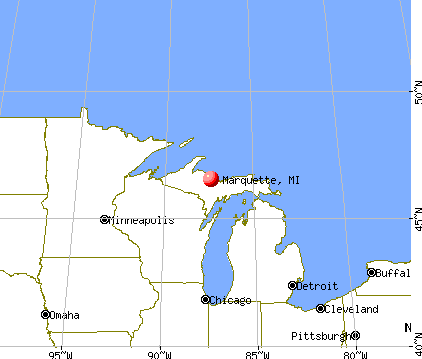
 The Gas Technology Institute (GTI) continues to offer its popular 100% free training program (worth $3,500) for those interested in a career building pipelines in the Marcellus/Utica region. Starting salaries often exceed $40,000 per year, and a six-figure income is attainable for employees with time and experience. Companies supporting the GTI program have told GTI they anticipate hiring 1,100+ workers over the next two years. There’s no excuse! If you want a high-paying job, get the 4-week training and get yourself to work. Because of ongoing construction programs within the utility and pipeline industry, and because of aging workforce retirements, the M-U pipeline industry has an acute need for reliable gas pipeline workers. The next round of free training, limited to 20 students per section, begins on Sept. 24 at Belmont College in St. Clairsville, OH…
 As we reported in March, Empire Pipeline, the midstream (pipeline) subsidiary of National Fuel Gas Company, filed an application with the Federal Energy Regulatory Commission (FERC) to build two new compressor stations along the Empire Pipeline–one in Tioga County, PA, the other in Ontario County, NY (see
  We’ve shared the following story a few times over the years: In 2012 MDN editor Jim Willis took a tour of several Cabot Oil & Gas well sites in Susquehanna County, PA. One of the sites was a completed well pad with four producing wells, located not far from Carter Road in Dimock (the infamous Carter Road memorialized in Gasland). As we stood on the pad, Jim’s tour guide, Bill desRosiers, made this statement: “Cabot has over 4,000 vertical gas wells in West Virginia. You see these four horizontal wells? These four wells produce more natural gas in one day than all 4,000 of those vertical wells in West Virginia.” Behold the power of Marcellus Shale! On June 19, MDN brought you the exclusive news that Diversified Gas & Oil had purchased EQT’s Huron Shale assets in Kentucky, Virginia and West Virginia for $575 million (see
  The “best of the rest”–stories that caught MDN’s eye that you may be interested in reading: Cabot O&G gets a new director; Dominion Energy Ohio gets top safety award; midstream conference coming to Pittsburgh; WV’s new interim House Speaker is shale-friendly; judge rules Dakota Access can’t sue Earth First radicals; US must grow oil & gas exports; Exxon tells NY AG to “put up or shut up” re climate lawsuit; Iran’s oil exports plummet 600K barrels/day as US sanctions loom; why oil & natgas prices are diverging; and more!
 Some good news to lighten your Thursday. The Federal Energy Regulatory Commission (FERC) issued an order yesterday allowing Mountain Valley Pipeline (MVP) to restart work on virtually all of the 303-mile project–everywhere but 28.5 miles in and around the pipeline’s path through Jefferson National Forest (about 9% of the total). On August 3, FERC told MVP to stop all construction, prompted by an order from the U.S. Court of Appeals for the Fourth Circuit vacating permits issued for the project as it crosses 3.5 miles of Jefferson National Forest in West Virginia and Virginia (see
  Two different townships in the Philadelphia area, amped-up by and using money from Big Green groups like THE Delaware Riverkeeper (aka Maya van Rossum), tried to stop Sunoco Logistics Partners’ Mariner East 2 (ME2) pipeline project by claiming it violated local zoning ordinances. The construction of ME2 is governed by the PA state Public Utility Commission and the state Dept. of Environmental Protection. It is not a federal (i.e. FERC) project. Because it is a state-oversight project, the issue of primacy (whose rules and regulations govern) resides at the state level and not at the local level. Two local townships–one in Chester County the other in Delware County–argued in separate cases before PA Commonwealth Court that local zoning regulations for siting the pipeline should still apply. Commonwealth Court, in a pair of decisions earlier this year, ruled against that view (see
  Did you know there are 16 major, announced pipeline projects in the northeast?! We recently happened across a handy list of those projects, a list published by the Northeast Gas Association less than a month ago. The list includes a description of what will get built, who’s doing the building, and the target in-service date. A few of the projects are in limbo (Constitution, Access Northeast), but most are either under construction or soon will be. We dig this kind of list–well laid-out, concise, and useful. And we think you will too. Here’s the name of the pipelines in the list: Access Northeast, Atlantic Bridge, Atlantic Sunrise, Constitution, Eastern System Upgrade, Empire North Expansion, Northeast Gateway, Northeast Supply Enhancement, Northern Access, PennEast, Portland XPress, Rivervale South to Market, Station 261, Wright Interconnect, Valley Lateral Project. Click to view the list, with full details…
 A pair of recent stories shows that progress is being made with respect to building an ethane (NGL) storage hub somewhere in the Marcellus/Utica region. In fact, progress is being made on two such facilities. Appalachia Development Group is leading an effort to get a $10 billion NGL (primarily ethane) storage hub established in Appalachia–most likely in West Virginia (see
  Massachusetts is throwing up more roadblocks and hoops in order to slow down (stop?) a Kinder Morgan project to expand capacity of its Tennessee Gas Pipeline (TGP) in the Springfield, Ma. area. Columbia Gas of Massachusetts and Holyoke Gas and Electric have both requested more natural gas from TGP. They need it, desperately. Kinder Morgan’s solution is to expand the delivery capability of the pipeline in the region by adding a minuscule 2.1 miles of new looping pipeline (buried next to an existing TGP pipe), upgrading a compressor station, and building a new connection, called a delivery gate. It’s a minimal project, and yet Massachusetts has just ruled Kinder will have to conduct a months (years?) long, full-blown environmental impact statement before they can do the work. Which we find strange. TGP is a federal, not state, regulated pipeline. TGP plans to file an application for the project, known as the “261 Upgrade Project” (named after Compressor Station 261), with the Federal Energy Regulatory Commission in September. Massachusetts does not have jurisdiction over the building of the project! Yet they are demanding an environmental impact study. If we were TGP, we’d tell Mass. to get lost…
 Using taxpayer’s money, the New Jersey Division of Rate Counsel, an “independent” state agency that supposedly represents the interests of consumers of electric, natural gas, water/sewer, telecommunications, cable TV service, and insurance (residential, small business, commercial and industrial customers), has sued the Federal Energy Regulatory Commission (FERC) in federal court asking the court to overturn FERC’s approval of the PennEast Pipeline, a $1 billion, 120-mile natgas pipeline that will stretch from northeast PA to the Trenton, NJ area. Most of PennEast is located in PA, but the pipeline terminates and flows gas into NJ. The Rate Counsel appears to be a rogue agency using taxpayer’s money to try and defeat a project that will benefit those very taxpayers. NJ residents pay some of the highest taxes in the country. Now we know why…
 For years we’ve had a Canadian LNG export project on our radar, bringing you news about the project, hoping that prodigious amounts of Marcellus/Utica gas would be used at the plant. The project is called the Goldboro LNG project, planned by Pieridae Energy for the coast of Nova Scotia. Two weeks ago we told you that $3 billion of German money will be used to propel the $10 billion project to begin (see