
BP Energy Outlook 2019 – US LNG Front and Center
 UK oil and gas giant BP recently released its 2019 edition of their BP Energy Outlook. As they do each year, BP predicts renewable energy sources will continue to grow. However, the inescapable conclusion you get from this latest report is that LNG (liquefied natural gas) will play a staring role in the energy picture over the next 20 years. Not only that, but LNG coming from the U.S. is will receive the best actor award.
Read More “BP Energy Outlook 2019 – US LNG Front and Center”
 It’s been a while, quite a while, since we’ve heard anything from or about EV Energy Partners, which renamed itself to Harvest Oil & Gas after exiting bankruptcy last June (see
 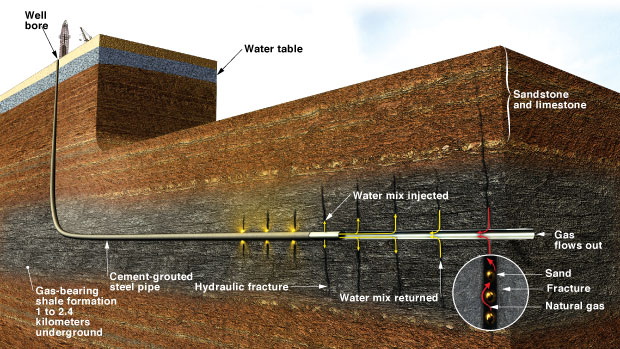 A drilling team with experience drilling more than 1,000 Marcellus shale wells in Pennsylvania with laterals from 1,500 feet to 11,000 feet recently published a research paper looking at best practices and what it will take to routinely drill wells with laterals longer than 18,000 feet.
 EQT released its fourth quarter and full year 2018 update yesterday. The numbers show the company lost, on paper, $2.2 billion–but the loss was from “impairments,” writing off the value of old assets they had sold. Not an actual $2.2B out-of-pocket loss. The company, which is the largest natural gas producer in the U.S., produced 1.49 trillion cubic feet equivalent of gas in 2018, up an incredible 68% from the 888 billion cubic feet produced in 2017.
 Eclipse Resources, which is about to be merged with Blue Ridge Mountain Resources (the old Magnum Hunter Resources), just posted its fourth quarter and full year production results, along with 2018 proved reserves numbers. The update is short and not-so-sweet.
 Earlier this month Toby and Derek Rice, formerly executives with Rice Energy (before it sold to EQT), launched a proxy war to nominate board members who will appoint Toby CEO of EQT (see
 Last week ExxonMobil and Qatar Petroleum announced a final investment decision (FID) to build Golden Pass LNG terminal, on the Texas side of the Sabine-Neches Waterway. That’s a stone’s throw from Cheneire Energy’s Sabine Pass LNG terminal on the Louisiana side of the waterway. Marcellus/Utica gas flows to the Cheniere facility. Will it also flow to Exxon’s when it’s built?
 Yesterday MDN began our lead story about a big fine for Antero Resources by saying, “This has to be a record-high amount for a fine plus remediation work, at least in the Marcellus/Utica.” We humbly admit we were wrong. In checking our records, we found that in a similar case from 2014, Trans Energy paid even more, quite a bit more. We researched what this whole business is about, why Antero and others were fined, interviewing a top Antero official, and we now have a far better understanding of what happened and why.
 In 2013 some 10,000 West Virginia landowners/rights owners filed a class action lawsuit against EQT over their practice of post-production deductions from royalty checks. The lawsuit was scheduled to go to trial last November, but at the last minute, it didn’t. Word leaked that EQT had settled out of court (see
  It’s that time of year for energy companies to issue updates on just how much oil and gas they own in the ground, recoverable at current prices. Both CNX Resources and Range Resources, two major Marcellus/Utica producers, recently issued statements outlining their “proved reserves.” CNX has 7.9 trillion cubic feet equivalent (Tcfe) in proved reserves as of Dec. 31, 2018. Range Resources has 18.1 Tcfe in proved reserves.
 This has to be a record-high amount for a fine plus remediation work, at least in the Marcellus/Utica. Antero Resources has cut a deal with three government entities–the U.S. Dept. of Justice, federal Environmental Protection Agency, and West Virginia Dept. of Environmental Protection–to pay a $3.15 million fine and spend another $8 million to mitigate and restore 32 sites in West Virginia.
 CNX Resources say they think they know why a Utica well they were fracking in Westmoreland County, PA suddenly lost pressure as they were fracking it–with gas escaping into nearby conventional wells.
 The Ohio Dept. of Natural Resources (ODNR) is doing a happy dance that they’ve shaken down XTO Energy $425,000 to settle a violation by XTO for drilling a shale well in Belmont County a year ago that exploded and caught fire.
 Last August Eclipse Resources announced it had sold itself to Blue Ridge Mountain Resources, the renamed remnant of Magnum Hunter Resources (see
  EQT CEO Rob McNally and board chairman Jim Rohr are in a pitched battle to maintain their control of the company. They dismiss a plan by Toby and Derek Rice to enhance EQT’s production at a lower cost as something that worked for small potatoes Rice Energy, but couldn’t work for a big, important company like EQT. The Rice boys shoot back that EQT is bloated and lumbering and needs a good house-cleaning. So what is the essence of the Rice plan to get EQT back on track? What’s the Rice boys’ secret sauce?