
Range 2Q: Record Drilling & Fracking, Slower 2H, Rare Utica Test
 Range Resources released second quarter 2026 results on July 21 and held its analyst call on July 22. For Marcellus landowners and RRC shareholders alike, there’s a lot packed into this one. Range produced 2.30 Bcfe/d in 2Q26, roughly 67% natural gas, up 5% from a year ago. Of particular note for landowners, Range’s drilling tempo for new wells will slow somewhat during the second half. However, great news for those already drilled. Range is drilling over 50% of its wells on existing pads this year. And, Range drilled a rare Utica well. Does that mean more Utica drilling is on the way for the company? Read More “Range 2Q: Record Drilling & Fracking, Slower 2H, Rare Utica Test”
 Despite rising Northeast gas demand from retiring coal plants and new data centers, plus added Appalachian pipeline capacity, production growth isn’t guaranteed—operators prioritize capital discipline, debt reduction, and shareholder returns over volume. Appalachia has held flat at roughly 33-36 Bcf/d since 2020. Can anything tempt Marcellus/Utica drillers to drill and produce more than they are now? According to RBN Energy, sustained Henry Hub prices above $4/MMBtu (versus the current $3.50-$3.60 long-dated curve) and better takeaway infrastructure could be enough of a temptation.
  The Marcellus/Utica region received 28 new drilling permits last week, June 29 – July 5, down 3 from two weeks ago. Last week, Pennsylvania issued 18 new permits. Ohio issued 4 new permits. And, West Virginia issued 6 new permits. The drillers who received new permits included: Antero Resources (6), CNX Resources (10), EOG Resources (4), EQT (1), Expand Energy (3), and Range Resources (4).
  The highly functional and responsible Susquehanna River Basin Commission (SRBC), unlike its dysfunctional and irresponsible counterpart, the Delaware River Basin Commission (DRBC), continues to support the shale energy industry by approving water withdrawals and consumptive use requests for responsible, safe shale drilling. The SRBC published a notice in the May 23rd Pennsylvania Bulletin that the SRBC approved and/or renewed 33 general water use permits in April for individual shale gas well drilling pads in Bradford, Cameron, Lycoming, Sullivan, Susquehanna, Tioga, and Wyoming counties.
  Range Resources issued its fourth quarter and full-year 2025 update yesterday. Range’s production averaged 2.24 Bcfe/d in 4Q, approximately 69% natural gas. Range used two rigs and drilled ~225,000 lateral feet across 15 wells during the quarter. 4Q25 drilling and completion expenditures were $167 million. In addition to D&C spending, Range spent approximately $10 million on acreage and $6 million on infrastructure, pneumatic devices, and other investments. For the entire year, Range drilled 69 laterals with an average horizontal length of 14,800 feet, with total activity exceeding 1 million lateral feet drilled.
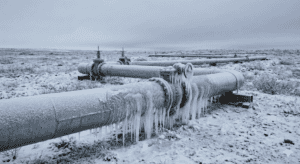 On January 22, Mount Pleasant Township Police (in Washington County, PA) reported that extreme winter temperatures caused an aboveground water pipeline serving Range Resources’ shale gas operations to freeze and rupture near the Yonker Tank Pad. In response to the infrastructure failure, the Township Zoning Officer granted a temporary permit modification, allowing the company to bypass the damaged pipeline by hauling water via dozens of trucks over the next two weeks.