
Dominion East Ohio Gas Bills Fall 40% in 1 Year, Thx to Shale
Utility company Dominion East Ohio says it’s customers are benefiting from the low cost of natural gas, thanks to the Marcellus and Utica Shale. In fact, according to Dominion, the cost of the gas itself is down 53% this year over last–and the savings gets passed on to consumers. That’s really good news for those who heat and cool using natural gas. Just because the commodity itself is only half the price, doesn’t mean rate payers will see their bills go down by the same amount. There are two components to the price consumers pay: the commodity flowing through the pipes, and the pipes/infrastructure itself. Even though Dominion East utility bills won’t go down by 53%, they will go down by about 40%. Not too shabby! Here’s what Dominion East is saying about rate decreases for its customers…
Read More “Dominion East Ohio Gas Bills Fall 40% in 1 Year, Thx to Shale”
 The crazies have done it again. Did you happen to watch Monday Night Football this past Monday? It was the Indianapolis Colts playing the Carolina Panthers at the Bank of America stadium in Charlotte, NC. During the game, protesters of the Dominion Cove Point LNG plant “dramatically” rappelled from an upper deck and unfurled a banner that said “BoA: Dump Dominion”. Note that the teams are from North Carolina and Indiana, nothing to do with Maryland where the Cove Point plant is. The only tie-in is the stadium is named after Bank of America and BoA has some financial/commercial connection to Dominion. In fact, 99.9% of the people in the stadium or watching by television didn’t even know what was meant by the banner! The protesters not only endangered themselves, they endangered the people underneath them. What if the protesters had fallen? No, we’re not concerned for the nutjobs if they had Darwined themselves and dropped like a rock. We’re concerned about the people underneath them. What if the banner had fallen on people? What if a shoe had flown off one of these nutters and hit a baby on the head? The protesters finally came down and were promptly arrested for their crime…
 Yesterday Dominion, a huge utility/pipeline company operating in 13 states and organized into multiple corporations, released their third quarter 2015 update. Frankly, the official press release was pretty boring and short–concentrating on the financials. Our chief interest is on the operations side–tell us about the projects under way. So we went trolling through a transcript of yesterday’s investors conference call and sure enough, came up with gold. Tom Farrell, CEO of Dominion, had quite a bit to say in his prepared remarks about the Atlantic Coast Pipeline, the Cove Point LNG export plant, and even about “farmouts” of Utica acreage. Farrell said that surveying is 85% complete for the Atlantic Coast Pipeline, and engineering is 75% complete with some contracts for pipe already awarded. Farrell said that overall, the Cove Point project is now 47% done and there are 1,300 workers on site now. Exciting! But what’s this business about farmouts?…
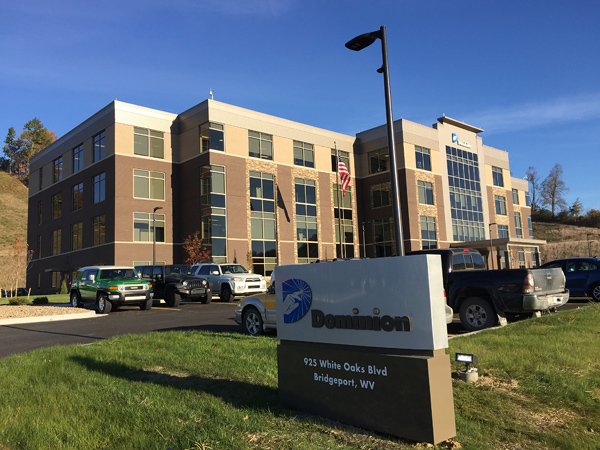
 Good news! The Federal Energy Regulatory Commission (FERC) have approved Dominion’s $165 million New Market Project, a project that expands Dominion’s transmission pipeline from western New York across the state to the Capital Region of the state, near Albany. As with any fossil fuel-related project, radical environmentalists objected (see
  Dominion is a huge utility/pipeline company operating in 13 states and organized into multiple corporations–but all under the broad umbrella known as Dominion. One of the pieces of the company is called Dominion Transmission, Inc. (DTI)–the interstate and gathering pipeline segment of the company, headquartered in Richmond, VA. Dominion has just announced they will strip out the gathering pipeline bits of the business from DTI and put them into a new company (on paper) called Dominion Gathering & Processing, Inc. It also appears that DTI itself will be renamed to Dominion Resources, Inc. The value of the transaction (what Dominion will essentially pay itself) is $434 million for the gathering assets. Why all of the musical chairs and setting up new corporations on paper? This time it doesn’t appear to be about tax advantages, as it so often is. Dominion is making the change because gathering systems are not regulated under FERC (Federal Energy Regulatory Commission) rules the way interstate pipelines are. By unbundling the gathering pipelines/compressor plants/etc. from the company that operates the interstate pipeline, Dominion can better compete with others in the midstream space. That is, right now because the gathering assets are part of the same company as the interstate pipeline, those assets are subject to FERC regulatory hoops and nonsense–so Dominion is removing those assets from that nonsense–sort of untying their hands to be on a level playing field with others…
 One reason why it takes so long to build a pipeline is the litigation necessary to make it happen. In September 2014, Dominion committed full force to building a 550-mile, $5 billion natural gas pipeline that will run from West Virginia, through Virginia and into North Carolina (see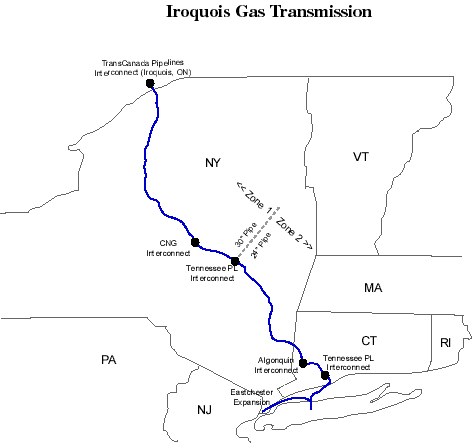
 Dominion, one of the biggest utility companies in the Marcellus/Utica region, is going on a buying spree. The object of their desire? Their very own midstream (pipeline) company subsidiary, Dominion Midstream Partners. Dominion’s board has authorized the company to spend up to $50 million to buy units (think shares of stock) in their midstream subsidiary. Usually companies buy their own stock/units for two reasons: (1) because they believe it to be undervalued/a bargain (i.e. opportunism), or (2) to prop up the share price (i.e. defending their investment). Which one is this?…
 Dominion’s Atlantic Coast Pipeline (ACP) faces some stiff opposition from the anti-drilling, landed gentry class, along with opposition from the usual anti-fossil fuel nutters and even opposition from Obama-controlled agencies including the BLM, FWS and USFS (see our
  Just a few weeks ago Dominion announced they will hand out $1 million in grants for housing, food and health care in the regions in which they operate (see