MPLX Marcellus Utilization Hits 94%, Driving Gathering Expansion
 In 2015, MPLX (i.e., Marathon Petroleum) bought out and merged with the Utica Shale’s premier midstream company, MarkWest Energy, for $15 billion (see MarkWest Energy Investors/Unitholders Approve Merger with Marathon). The “new” MarkWest, aka MPLX, now plays on a much larger stage, owning and operating major assets in the Permian Basin, the Bakken Shale, and the Marcellus/Utica. However, the M-U still plays a starring role for the company. MPLX recently issued its first quarter 2026 update. MPLX is seeing increased natural gas gathering throughput in both Marcellus and Utica, indicating robust upstream activity. Read More “MPLX Marcellus Utilization Hits 94%, Driving Gathering Expansion”
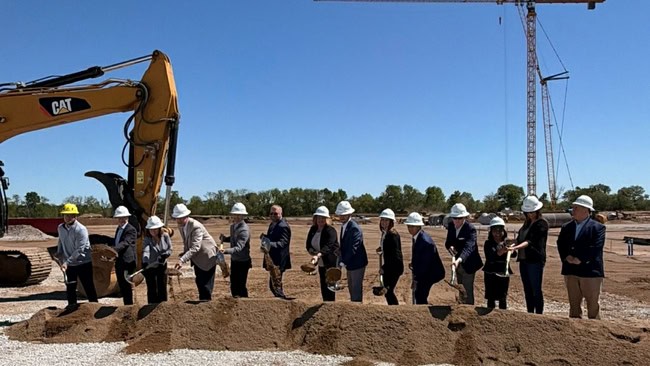
 Good news! The Public Service Commission (PSC) of South Carolina approved a joint application by Dominion Energy and Santee Cooper to build Canadys Station, a natural gas combined-cycle facility in Colleton County. The plant will generate approximately 2,200 megawatts (2.2 GW) — enough to power over one million homes — addressing the state’s growing energy demand. It will be built on the site of a former Dominion Energy coal plant, roughly 40 miles northwest of Charleston (the “Lowcountry” region), eliminating the need for new land clearing.
  It seems that not all of the judges who sit on the U.S. Court of Appeals for the Fourth Circuit (4th Circuit) are clowns, the way the three judges who oversee cases dealing with the Mountain Valley Pipeline (MVP) Southgate project are (see
 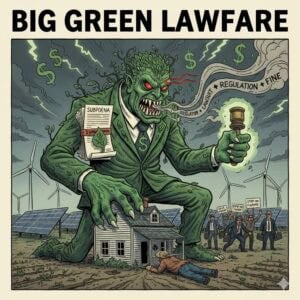 In February 2024, members of the South Carolina Public Service Commission approved a proposed project to build a 2,200-megawatt (MW) gas-fired power plant in the state’s Lowcountry, in Colleton County (see
  Energy Transfer LP (ET) owns and operates one of the largest and most diversified portfolios of energy assets in the U.S., with approximately 140,000 miles of pipeline and associated energy infrastructure. ET’s strategic network spans 44 states and includes assets in all major U.S. production basins, including the Marcellus/Utica. The company issued its first quarter 2026 update last week. ET sees the Marcellus/Utica region as a key source of NGL supplies for its export operations, particularly exports from the Marcus Hook terminal near Philadelphia.
  The Iroquois Gas Transmission’s Enhancement by Compression (ExC) project will increase horsepower at three compression stations — two in New York and one in Connecticut — by an extra 125 MMcf/d, to flow more Marcellus/Utica gas into New York City and New England. The NY Department of Environmental Conservation (DEC) approved the permits for the NY compressors with the condition that Iroquois pays a $1.5 million “contribution” (we call it a bribe) to the “Disadvantaged Community Benefit Program” (see
  National Fuel Gas Company (NFG) is an integrated natural gas company with a regulated utility business, a shale drilling business (Seneca Resources), and a pipeline business (NFG Midstream, Empire Pipeline). The company issued its fiscal second quarter update two weeks ago, which is everyone else’s calendar first quarter update. The good news is that NFG is upgrading its Line N natural gas pipeline to carry an additional 94,000 Dth/d (90 MMcf/d) of Marcellus/Utica shale gas. The bad news is that Seneca produced 102.0 Bcf of natural gas, a decrease of 3.5 Bcf, or 3%, from the prior year, largely due to weather-driven completion delays and “typical natural gas production declines on producing wells.”
  Last week, the combined Marcellus/Utica Baker Hughes rig count remained at 37 active rigs for the seventh week in a row. The M-U’s chief competitor, the Haynesville, remained at 58 active rigs after adding two rigs two weeks ago, some 21 more than the M-U. Clearly, drillers are choosing to put their money into the Haynesville over the M-U. The national count added one rig last week and now operates 548 rigs.
  You have to hand it to Dominion Energy, the company has brass… courage. In June 2023, Dominion announced plans to build four small “peaker” electric generating plants in Chesterfield County near Richmond (see
  Kinder Morgan’s Elba Island LNG, which accepts and liquefies Marcellus/Utica molecules just offshore from Savannah, Georgia, received approval from the Federal Energy Regulatory Commission (FERC) in November 2024 to expand the facility to produce an extra 0.4 million metric tons/year (see
 UGI Corporation’s UGI Energy Services and Prime Data Centers yesterday announced a strategic partnership to develop natural gas supply infrastructure in Pennsylvania’s northern tier for a proposed gas-fired power facility serving future hyperscale data center operations. Under the deal, UGIES will sell Prime some of its property while retaining about 15 billion cubic feet (Bcf) of underground storage capacity and related oil and gas rights. Prime’s gas demand is expected to exceed 100,000 dekatherms per day (100 MMcf/d) within three to five years. A major new customer for PA Marcellus gas!