
FERC Issues DEIS for Boardwalk Pipe to Carry M-U Gas to Southeast
 The Kosciusko Junction Pipeline Project, led by Gulf South Pipeline Company, LLC (a subsidiary of Boardwalk Pipelines), involves the construction of approximately 110 miles of 36-inch natural gas pipeline. The project has an estimated cost of $1 billion and is supported by a 20-year agreement with an anchor customer. It is designed to transport up to 1.16 billion cubic feet per day (Bcf/d) initially, with the potential to expand to 1.58 Bcf/d. The pipeline aims to connect gas supplies from key basins, including the Marcellus/Utica, Haynesville, and Fayetteville, to power markets in the Southeastern United States. In December 2024, Boardwalk pulled the trigger and made a final investment decision (FID) to move forward with the Kosciusko Junction project (see Boardwalk FID on Pipe to Carry M-U, Haynesville Gas to Southeast). Yesterday, the Federal Energy Regulatory Commission (FERC) issued a positive Draft Environmental Impact Statement (DEIS) for the project. Read More “FERC Issues DEIS for Boardwalk Pipe to Carry M-U Gas to Southeast”
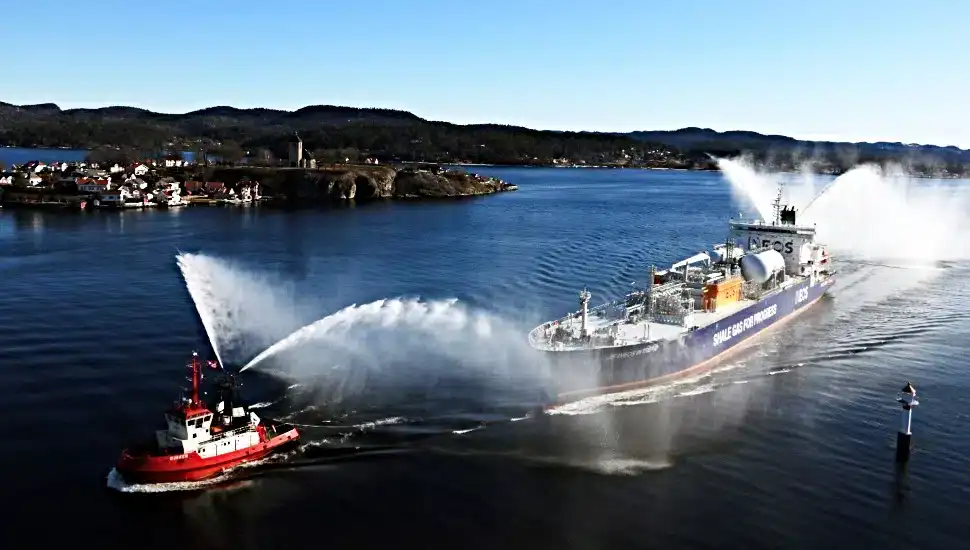
 In January, MDN broke the news that Duke Energy is considering constructing a 1,360-megawatt natural gas power plant on 1,600 acres in Davidson County, North Carolina (see
  Utility company Spire Inc. (based in St. Louis, MO) successfully finalized its $2.48 billion acquisition of Duke Energy’s Piedmont Natural Gas utility business in Tennessee on March 31, 2026. Rebranded as Spire Tennessee, the utility becomes the state’s largest investor-owned natural gas provider, serving over 200,000 customers in the Nashville region via 3,800 miles of pipeline. Approximately 200 former Piedmont employees joined Spire. The natural gas that supplies Tennessee mostly comes from the Marcellus/Utica.
  The ongoing saga of Eureka Resources’ now-closed frack wastewater treatment facilities in Pennsylvania — two in Lycoming County and one in Bradford County — continues to unfold. The PA Department of Environmental Protection (DEP) recently assessed two fines against Eureka for violations of cleanup deadlines at two of its facilities. One facility in Lycoming County was fined, and one in Bradford County. The fines were $60,000 and $40,000.
  Last week was not a good week for the national rig count nor the count in the Marcellus/Utica. The national count dropped by 9 rigs to 543, while Pennsylvania lost 2 rigs and now operates 18, a level it hasn’t seen since January of this year. Both Ohio and West Virginia maintained the same counts last week at 11 and 8, respectively. The combined M-U count was 37 rigs last week, the lowest number since the Nov. 18, 2025, rig count report. Yuck.
  South Carolina regulators have approved Duke Energy’s proposal to build a 1.4-gigawatt (GW) natural gas-fired power plant in Anderson County, marking the utility’s first new generation project in the state in a decade. Scheduled for construction in 2027 and operational by 2031, the facility aims to address surging energy demands driven by population growth and economic expansion, though critics (falsely) attribute the need primarily to AI-driven data centers. Supported by Governor Henry McMaster under the S.C. Energy Security Act, the project is expected to generate an annual $84 million economic impact while ensuring long-term power reliability for the region.
  Nine Energy Service, a Houston-based provider of onshore completion solutions with operations in a number of shale basins, including major operations in the Marcellus/Utica, received court approval for a prepackaged Chapter 11 bankruptcy plan earlier this month (see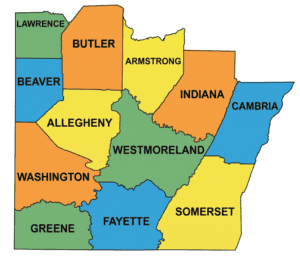


 Here we go again: another rebranding of ESG and another attempt to brand natural gas as low-emissions, clean, and green. Pipeline giant Williams has launched what it calls its NextGen Gas program to offer “verified lower-emissions natural gas from wellhead to market.” NextGen Gas measures methane and carbon dioxide equivalent (CO2e) emissions intensity from wellhead to market, increasing transparency into how natural gas is produced and delivered along a specific gas pathway.
  Just coming to light for us now is that Iroquois Gas Transmission System petitioned the Federal Energy Regulatory Commission (FERC) in February to reissue authorization for the $152 million Wright Interconnect Project in New York State, aiming to revive a critical link for the previously canceled Constitution Pipeline. Originally approved in 2014, the project seeks to establish a new receipt interconnection and compression facilities at the Wright Compressor Station. By creating 650,000 dekatherms per day (650 MMcf/d) of transportation capacity, the initiative intends to alleviate persistent natural gas supply constraints in the Northeast and New England markets. If approved, the project targets a May 2028 in-service date, utilizing existing company-owned infrastructure to minimize environmental impacts.