
Mechanic’s Liens on OH/PA Landowners for Risberg Pipe Finally Lifted

Here’s a story we haven’t revisited in oh, about five years, because there was nothing new to report. In March 2019, MDN brought you the news that Wood Group had been awarded a $34 million contract to build 28 miles of the 60-mile Risberg Pipeline from Crawford County, PA, to Ashtabula County, OH (see Wood Wins $34M Contract to Build PA to OH Risberg Pipeline). The portion Wood built was a new “greenfield” pipeline. The rest of the pipeline (32 miles) already existed and was repurposed. There is an ongoing controversy between Wood and RH energytrans (the owner) concerning payment for services rendered that grew to involve the landowners whose property the pipeline crossed. Read More “Mechanic’s Liens on OH/PA Landowners for Risberg Pipe Finally Lifted”
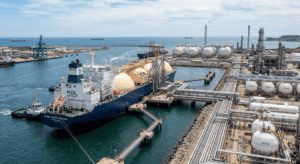 In December, we brought you the sad and unexpected news that Energy Transfer (ET) had suspended development of its Lake Charles LNG project to “focus on allocating capital to its significant backlog of natural gas pipeline infrastructure projects that Energy Transfer believes provide superior risk/return profiles” (see
  Several Big Green groups, including the Sierra Club, Wild Virginia, Appalachian Voices, and the Center for Biological Diversity, have filed a legal challenge against a permit issued by Virginia for the Mountain Valley Pipeline (MVP) Southgate extension. The Virginia Department of Environmental Quality (DEQ) approved a water permit for the project in January 2026. Big Green radicals argue that the pipeline “threatens” 138 streams, wetlands, and regional drinking water supplies. It’s the typical lawfare tactic used by the left to stall work on projects, hoping to delay them long enough that the builder (EQT in this case) gives up. Or if the builder won’t give up, they have to pay double or triple the price to construct it. That’s the game the radicals are playing.
  The far-left Southern Environmental Law Center, representing three radical nonprofits, has appealed the Virginia State Corporation Commission’s (SCC) approval of Dominion Energy’s $1.47 billion natural gas plant in Chesterfield County. The challenge is the first under both the Virginia Environmental Justice Act and the Virginia Clean Economy Act. Antis argue the 1,000-megawatt facility would disproportionately “harm” marginalized communities through increased pollution and significant health risks, including premature deaths. Critics maintain that Dominion failed to prioritize renewable alternatives or demonstrate a genuine threat to grid reliability, potentially placing unnecessary financial and health burdens on the public.
  Enbridge has announced a non-binding open season inviting existing and potential shippers to bid on firm natural gas transportation services. The offer includes up to 300,000 GJ/day (~285 MMcf/d) of capacity for its M12, M12-X, or M17 services. Available paths connect the strategic Dawn Hub to Parkway, Kirkwall, and Dornoch, facilitating efficient gas movement across Ontario to major North American markets. Shippers of Marcellus and Utica molecules will be interested in this open season.
  Enbridge Inc. is a major North American energy infrastructure (primarily pipeline) company based in Calgary, Canada, specializing in the transportation, distribution, and generation of energy. It operates the world’s longest crude oil/liquids pipeline system, transporting 25% of North America’s crude oil, alongside significant natural gas, renewable power, and natural gas utility operations. Enbridge’s fourth quarter 2025 update highlights significant developments impacting the Marcellus/Utica region, primarily driven by surging demand for natural gas to support data centers and power generation, as well as continued infrastructure modernization.
  The environmental left in Rhode Island is all hot and bothered over a plan to replace or add a total of 12.3 miles of pipeline for the Algonquin natural gas pipeline network. Enbridge Inc. is proposing a $300 million expansion of the Algonquin natural gas pipeline (the Algonquin Reliable Affordable Resilient Enhancement project), scheduled for 2029, that involves replacing and extending small segments across Rhode Island and Massachusetts. Radical antis in Rhode Island argue the expansion contradicts Rhode Island’s “Act on Climate” goals and promotes reliance on fossil fuels. They have, in our humble opinion, gone clinically insane over the continued use of fossil energy—including clean-burning natural gas. It’s bizarre.
  On Friday, Baker Hughes reported that the U.S. rig count remained unchanged at 551 active rigs. That’s three weeks in a row at the same number (pretty much unheard of). Two weeks ago, the Pennsylvania Marcellus added another rig, bringing the total to 20 active rigs, the most it has operated in well over a year. PA kept its new/higher total last week. Both Ohio and West Virginia remained at 13 and 7, respectively. The combined M-U count was 40 rigs last week, the most operated rigs in well over a year, now for a second week in a row. The M-U’s primary competitor (for attention and money), the Haynesville, added 2 rigs two weeks ago and kept them last week, operating 52 rigs (12 more than the M-U).
  DT Midstream is an owner, operator, and developer of natural gas interstate and intrastate pipelines, storage and gathering systems, compression, treatment, and surface facilities, including major assets that are in (or flow molecules from) the Marcellus/Utica. Last week, the company issued its fourth quarter and full-year 2025 update. The update showed the Marcellus and Utica (Northeast) regions remain a core growth engine for the company, particularly as a supply source for the Upper Midwest and LNG demand corridors. Driven by a spike in natural gas demand, DTM has expanded its five-year organic project backlog by 50%, bringing the total to $3.4 billion.
  The Texas Eastern Transmission Pipeline (TETCO), operated by Enbridge, is a major 8,580-mile interstate natural gas system connecting Gulf Coast/Texas supplies to the Northeast US. Originally designed for northbound flow, it now heavily supports bidirectional, southbound, and regional supply, including Marcellus/Utica gas. A short 5.3-mile section of TETCO (actually four separate pipelines that make up TETCO) running through Greene County, PA, needs a fix to protect it from coal mining activities set to begin directly underneath the pipeline in that area.
  Energy Transfer LP (ET) owns and operates one of the largest and most diversified portfolios of energy assets in the U.S., with approximately 140,000 miles of pipeline and associated energy infrastructure. ET’s strategic network spans 44 states, with assets in all major U.S. production basins, including the Marcellus/Utica. The company issued its fourth quarter 2025 update yesterday. Based on the 4Q earnings call transcript and presentation, ET continues to view the M-U (Appalachian) region as a “great business” and remains the “dominating player” in natural gas liquids (NGL) in the M-U (and nationwide).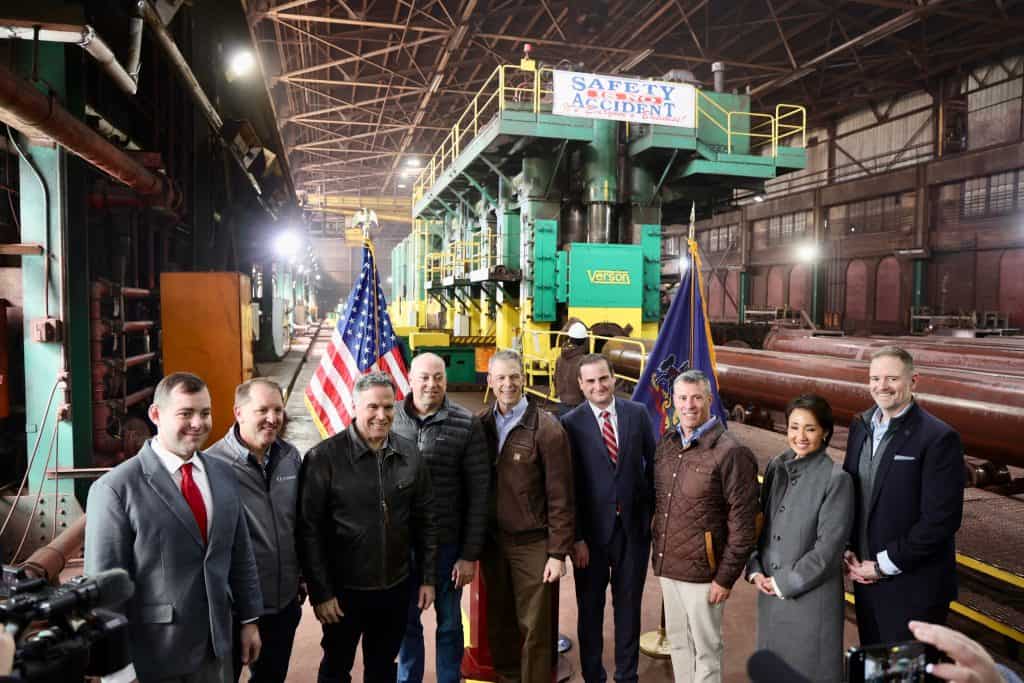
 TC Energy (formerly TransCanada) is a major North American energy infrastructure company based in Calgary, Alberta, specializing in natural gas pipelines, power generation, and storage. The company transports over 30% of the daily natural gas consumed in Canada, the U.S., and Mexico. The company owns major assets in the Marcellus/Utica, including Columbia Gas Transmission and the Millennium Pipeline. The company issued its fourth quarter and full-year update for 2025 last week. Based on the company’s earnings call and associated reports, there is a significant focus on leveraging existing infrastructure to move M-U gas to growing demand centers, particularly in the U.S. Midwest and Mid-Atlantic regions.
  Pipeline giant Williams issued its fourth quarter and full-year 2025 update last week. The company forecasts 2026 profits exceeding analysts’ expectations, driven by surging natural gas demand from AI data centers and crypto mining. Williams is aggressively expanding its footprint, with 7.1 Bcf/d of pipeline projects currently underway and new gas-fired power plants such as the $1.3 billion “Socrates the Younger” project. The company plans to invest up to $6.7 billion in 2026 capital spending to capitalize on the sustained, long-term need for gas infrastructure and power growth.
  In June 2023, Dominion Energy announced plans to build four small “peaker” electric generating plants in Chesterfield County near Richmond (see