
Antero Midstream Plans Marcellus Expansion in 2026
 Antero Midstream (AM) recently detailed its 2026 growth strategy, targeting an adjusted EBITDA of $1.19 billion to $1.24 billion, representing an 8% year-over-year increase. This growth is driven by Marcellus Shale infrastructure expansion and the integration of recently acquired HG Midstream assets. The company plans capital expenditures between $190 million and $220 million, primarily for gathering and compression infrastructure across its Appalachian footprint. Key focuses include high-return rich gas gathering projects and dry gas infrastructure development. With strong projected free cash flow, Antero Midstream aims to maintain capital discipline, reduce leverage to approximately 3.0x, and pursue opportunistic share repurchases. Read More “Antero Midstream Plans Marcellus Expansion in 2026”
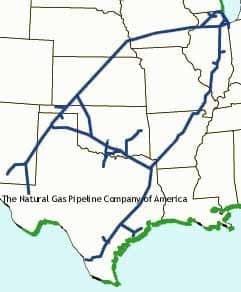 The Natural Gas Pipeline Company of America (NGPL), a Kinder Morgan pipeline subsidiary, flows Marcellus and Utica molecules. While the pipeline’s primary footprint is in the Midcontinent and Gulf Coast, it is a critical takeaway path for Appalachian gas through key interconnections. NGPL’s recent tariff announcement reaffirmed its commitment to offering negotiated rate arrangements for pipeline transportation services, maintaining continuity in its commercial practices. These options allow shippers to develop customized pricing based on factors like contract duration, gas volume, and specific operating needs, providing greater flexibility than standard maximum recourse rates.
  New Fortress Energy (NFE) owns and operates natural gas and liquefied natural gas (LNG) infrastructure, along with an integrated fleet of ships and logistics assets, to rapidly deliver turnkey energy solutions to global markets. At one point, NFE planned to build an LNG liquefaction facility in Wyalusing, PA, to chill locally extracted Marcellus gas, which would be shipped by rail to a port on the Delaware River for export. Never happened. NFE announced yesterday that it has entered into a voluntary UK Restructuring Plan, which is roughly equivalent to a U.S. prepackaged bankruptcy. NFE will split into two companies, diluting existing shareholders’ stock ownership to roughly one-third of its previous value.
  Two weeks ago, the Marcellus/Utica saw a realignment in rig counts, at least in Ohio and West Virginia. Pennsylvania kept the 20 rigs it has had since early February. Ohio lost two rigs, from 13 to 11, the fewest active rigs in the Buckeye State since last September. And West Virginia picked up one rig, from 7 to 8 rigs, for the first time since last May! Overall, the M-U region had a net loss of one rig two weeks ago, going from 40 to 39 active rigs. The same numbers for the M-U held last week—no changes. One thing we didn’t mention last week (we just noticed this week) is that, along with the change in rigs between OH and WV, came a shift in Marcellus-focused and Utica-focused rigs. The Marcellus gained one rig (now runs 27), and the Utica lost two rigs (now runs 12).
  A Connecticut Superior Court judge told a Big Green puppet group, Save the Sound, along with the colluding Town of Brookfield, that their joint lawsuit to block a compressor station expansion was the equivalent of starting the parade before the band had arrived (our words). The two groups are trying to block a permit for a compressor station in the Town of Brookfield proposed by Iroquois Gas Transmission. The CT Department of Energy and Environmental Protection (DEEP) has not yet issued a final permit for the project, so there’s nothing to object to. Yet. After DEEP issues the final permit, they can come back and try again.
  Just coming to light for us is a lawsuit filed in June 2025 seeking to hold DeepRock Disposal Solutions responsible for the $1.28 million cleanup of a 2021 environmental incident in Noble County. The incident involved fracking brine migrating from a DeepRock injection well into the inactive Gant Well, triggering a massive eruption that contaminated local waterways and killed a couple of hundred fish and salamanders (see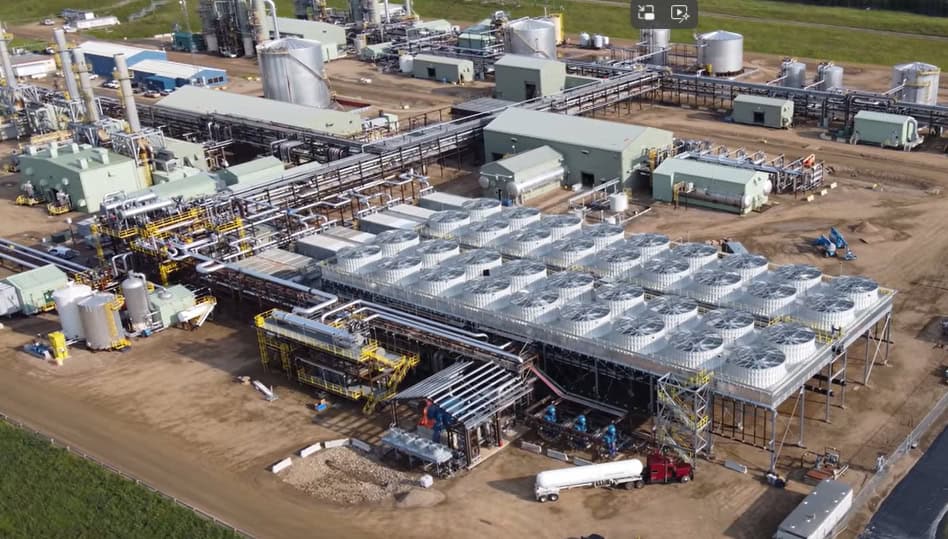
 Patterson-UTI is a leading North American oilfield services company (OFS company) based in Houston, specializing in high-spec land drilling, pressure pumping, and directional drilling. Patterson operates one of the largest fleets of APEX® rigs, focusing on advanced, technology-driven solutions for oil and natural gas exploration. Patterson operates roughly half of the active rigs in the Marcellus/Utica. Patterson CEO Andy Hendricks made a prediction in a recent interview: Rising US natural gas exports and domestic demand from AI data centers will lead to a shortage of fracking equipment later this decade.
  Chesapeake Utilities (CPK) is a diversified energy company with businesses in natural gas distribution, transmission, marketing, electricity distribution, propane distribution, and wholesale marketing (nothing to do with Chesapeake Energy). The company issued its fourth quarter and full-year 2025 update 10 days ago. The company and its subsidiaries move (and use) a lot of Marcellus/Utica molecules. We took the opportunity of this update to analyze what’s happening with CPK as it relates to the use and flow of M-U molecules through its systems.
  If a tree falls in a forest and no one is around to hear it, does it make a sound? Similarly, if a pipeline being drilled loses 28,500 barrels (1.2 million gallons) of nontoxic drilling mud into an abandoned coal mine void, does it matter? The environmental left is attempting to make a big deal out of MarkWest Liberty Midstream’s drilling project in Washington County, PA, in which the company has, over a series of 19 different episodes, lost a cumulative 28,500 barrels of nontoxic bentonite drilling mud into an old coal mine void as it drilled the Chiarelli to Imperial Pipeline Project, between October 2025 and January 2026. Bentonite is the same stuff used to make kitty litter and toothpaste.
  Hope Gas is a Local Distribution Company (LDC, i.e., utility company) that provides gas service to approximately 140,000 residential, industrial, and commercial customers in 39 West Virginia counties. The company monitors and maintains over 7,000 miles of pipelines that safely deliver West Virginia natural gas to many homes and commercial and industrial sites. In September 2023, Hope Gas asked the West Virginia Public Service Commission for permission to build a new 30-mile pipeline in Monongalia County (see
  Nine Energy Service, a Houston-based provider of onshore completion solutions with operations in a number of shale basins, including major operations in the Marcellus/Utica, received court approval for its prepackaged Chapter 11 bankruptcy plan on March 4. The company filed for protection in the Southern District of Texas on February 1, 2026, seeking to address a heavy debt load largely resulting from its 2018 acquisition of Magnum Oil Tools (see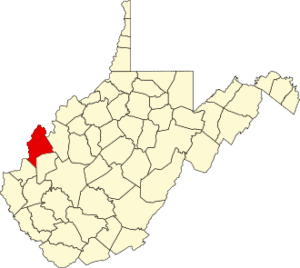
 Last week, RBN Energy held its GasCon 2026 conference in Houston, Texas. Among the heavy hitters who attended and spoke at the event were Sital Mody, President of Natural Gas Pipelines at Kinder Morgan, and Dan Brouillette, the 15th Secretary of the U.S. Department of Energy. Mody had this to say during his talk: “When I take a step back and reflect on the natural gas industry, the one thing that comes to mind for me is all gas, no brakes.”