
EQT Settles Lawsuit Against Former Rice Employee
 In February, prior to the July takover by Toby and Derek Rice, EQT filed lawsuits in both Pennsylvania and federal courts against two former employees it had fired, claiming the employees, before they were fired, had systematically copied confidential information from company computers and took it with them when they left (see EQT Claims 2 Fired Workers Stole Confidential Information). In March, EQT alleged the employees “stole” the information to help the Rice boys in their bid to take over EQT via a proxy war (see EQT Accuses Fired Employees of Colluding with Rice Boys). EQT just settled/dropped one of the two cases.
Read More “EQT Settles Lawsuit Against Former Rice Employee”
 In the American legal system those accused of wrongdoing, including those afraid of being entrapped by so-called law enforcement (like the Chester County, PA District Attorney Tom Hogan) are entitled to legal representation–to protect themselves from the abuses of people like DA Hogan. Yet when they do so, avail themselves of legal representation, Hogan gets bent out of shape. Could it be he *has no case* and wants to bully people into admitting to things they are not guilty of? Or force them to falsely testify to things the prosecutor wants to hear?
 In June MDN told you that the Cambridge (Massachusetts) Retirement System is not happy with their investment in EQT shares of stock, so they’re suing the company (see
 In May, Columbia Gas Transmission was forced to haul the State of Maryland into court over the state’s refusal to grant an easement to drill a tiny 3.5-mile pipeline under the Potomac River (see
  In 2017 a group of Ohio landowners did what others had previously done in Pennsylvania, Texas and elsewhere–they filed a proposed class action lawsuit against Chesapeake Energy claiming Chessy had screwed them and about 1,000 other Ohio landowners out of a collective $30 million in royalty payments (see
  Hoping that lightning strikes twice with the “judges” at the U.S. Court of Appeals for the Fourth Circuit (4th Circus) who read children’s books like The Lorax and use them in their decisions, deep-pocketed Big Green groups have filed a new lawsuit with the quirky judges asking that they overturn federal approvals issued to Mountain Valley Pipeline (MVP) under the Endangered Species Act (ESA). Big Green hopes the clown judges will overturn approvals for MVP the same way they did for Dominion Energy’s Atlantic Coast Pipeline (ACP) project.
 Chester County, PA District Attorney Tom Hogan has sunk to a new low. We told you back in January Hogan and his highly-paid staff, motivated by politics, were investigating Energy Transfer, their Sunoco Logistics division and anyone/anything to do with ET’s Mariner East pipeline projects, looking for “crimes.” All he found were minor violations by two off-duty PA constables (see
  In March 2017, radical green groups, including the Sierra Club, Lancaster Against Pipelines, Lebanon Pipeline Awareness, Allegheny Defense Project, Clean Air Council, Concerned Citizens of Lebanon County, and Heartwood, filed a lawsuit in the U.S. Court of Appeals for the District of Columbia in an attempt to block construction of the $3 billion Atlantic Sunrise Pipeline project in Pennsylvania (see
  A small group of New York landowners in Tioga County, NY continue to pressure the New York Dept. of Environmental Conservation (DEC) to allow them to drill and frack a single Utica well using LPG, or liquefied petroleum gas (i.e. propane). The DEC under the direction of Andrew Cuomo continues to purposely drag its feet in approving the project. The landowners are not giving up and hope to prove that fracking in NY can happen. They’re keepin’ the dream alive.
 A new group has formed in New York State with the aim of using a recent U.S. Supreme Court decision as ammunition to sue NY over its ban on hydraulic fracturing. The new group, called Landowner Advocates of New York (LANY), was started by MDN friend Vic Furman. Could this finally be the solution to force Andrew Cuomo to allow fracking?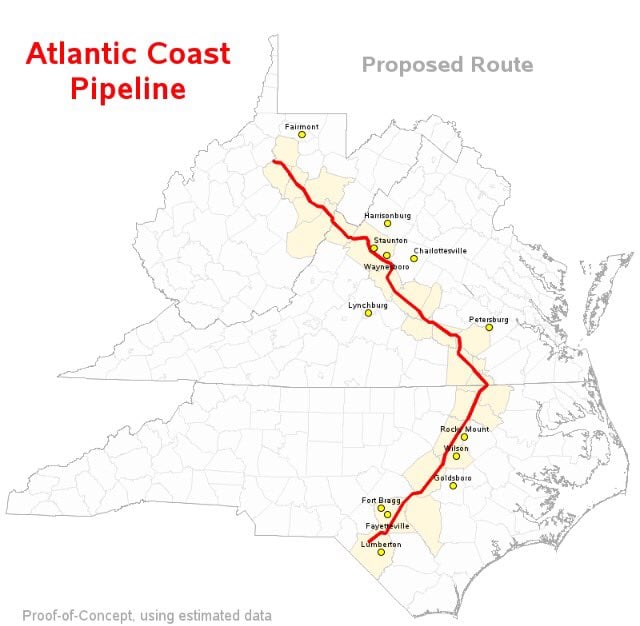
 How much “due diligence” must a landowner engage in when it comes to locating a long lost mineral rights owner in Ohio? According to Ohio’s Dormant Mineral Act (ODMA), the landowner who wants to reclaim mineral rights that were severed must (a) send a certified letter to the last known address of the rights owner, and (b) if that doesn’t work, publish a notice in local newspapers to try and find the long lost rights owner. After that, the landowner can reclaim the mineral rights (an oversimplification, but you get the idea).
 The actions of one man seeking access to confidential risk assessments and plans for the Mariner East pipelines in the Philadelphia area will, if successful, put information into the public domain that terrorists can potentially use. Note we don’t believe it is the intent of this man to grant access to sensitive information to terrorists. But that is the consequence, the outcome, the result of his actions–if a court now reviewing the case grants his request.