
Anti-Drilling/Fossil Fuel | Beaver County | Energy Companies | Ethane | Industrywide Issues | Pennsylvania | Processing Plants | Shell
Leftist Groups Present List of Demands to Shell re PA Cracker Plant

Wacko leftists, who are driven nearly to insanity because the mighty Shell ethane cracker actually began full operations last week, are still agitating to close it down. They are self-deluded. More than a dozen local and national radicalized environmental groups launched a “to-do list” campaign to “force” Shell to address what the activists say are critical issues surrounding the opening of the cracker plant in Beaver County, PA. The effort is being led by one of the worst of the worst lefty groups: Earthworks.
Read More “Leftist Groups Present List of Demands to Shell re PA Cracker Plant”
 Here in the real world (not the pretend world of leftist radicals who seek to shut down all fossil energy), the Shell ethane cracker finally went online, officially, last week (see
  MDN previously reported that in October, Joe Nolan, the CEO of New England’s largest utility company, Eversource, sent a letter to President Biden urging him to assemble a panel and figure out how to ensure natgas flows to New England (via LNG) this winter–because if it doesn’t, this IS the year rolling blackouts become reality (see
  In his first two days in office, Joe Biden declared war on the oil and gas industry. One of the first things he did was to revive an interagency working group on the “social cost” of greenhouse gas emissions and directed the issuance of an “interim” cost (see
  The country of Japan is perenially either the #1 or #2 top LNG importer in the world. The country has virtually no domestic supplies of oil and gas and, therefore, must import what it uses. It’s no secret that Japan and its traders are some of the best in the world. So when Japan says supplies of LNG are getting tighter and that “Procurement [of LNG] can also be said to be in a state of war,” that’s alarming. And sobering. Japan says not enough money is being invested in LNG export projects, and although this year most countries can muddle through, beginning next year, it’s going to be a problem.
 On Friday, MDN reported that one of the ten natural gas storage wells at the Equitrans Rager Mountain Gas Storage Area in Jackson Township, Cambria County (in Pennsylvania) that was leaking roughly 100 MMcf/d of gas had finally been plugged (see
  In April of this year, Tennessee Gas Pipeline’s (TGP) plan to flow more Marcellus gas to Westchester County, NY, and to New York City, called the East 300 Upgrade Project, took a giant leap forward when the Federal Energy Regulatory Commission (FERC) issued permits that allow TGP to upgrade two existing compressor stations (in PA), and build a brand new compressor station in West Milford (Passaic County, NJ), just across the border and not far from Westchester County (see
  The Freeport LNG facility, which has been out of commission since early June, has once again changed the target date it will restart. According to Freeport officials, the export facility will restart incoming gas flows to the plant in mid-December. That is, provided Freeport gains permission from the U.S. Dept. of Transportation’s Pipeline and Hazardous Materials Safety Administration (PHMSA) to do so. In an announcement issued Friday, Freeport said full production of 2 Bcf/d (billion cubic feet per day) of incoming gas won’t happen until January 2023, and using both docks for cargo vessels won’t happen until March 2023. Net net: Freeport won’t return to full, 100% service until next spring.
 House Republican leaders said last Thursday the party is preparing an energy and environment package that will likely emerge in January as one of the first pieces of major legislation passed by the Republican-controlled chamber. The Republican leaders of the House energy committees said they have an interest in tackling permitting reform (proposed by Joe Manchin) in the next Congress as well. They say it’s doubtful a permitting reform bill can move in the next month before the current Congress adjourns.
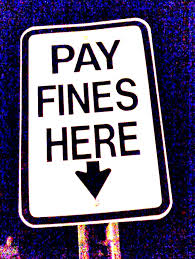 The Pennsylvania Dept. of Environmental Protection (DEP) announced that CNX Resources has paid two civil penalty assessments totaling $200,000 for violations at two different well sites in Richhill Township, Greene County. According to the civil penalty assessment paperwork, CNX spilled “production fluids” (wastewater, drilling mud, etc.) and didn’t clean it up quickly enough. Tallying all of the spills, CNX inadvertently spilled 2,170 gallons of production fluid at two sites, and ended up removing roughly 3,400 tons of “contaminated” soil.
 Yesterday the Pennsylvania Independent Regulatory Review Commission (IRRC) voted to approve the Pennsylvania Dept. of Environmental Protection (DEP) and its Environmental Quality Board’s (EQB) rammed-through (in a rush) regulation to control volatile organic compounds (VOCs), and by extension methane, for conventional drilling sites throughout the state (see
  Earlier this week, Shell announced its mighty ethane cracker plant in Beaver County, PA (near Pittsburgh) is finally, ten years after first announcing, fully operational and producing plastic pellets (see
  In March of this year, the three Democrats who occupy and control the Federal Energy Regulatory Commission (FERC) sent a loud and clear signal they don’t like the Commonwealth LNG plan to erect a new LNG export plant in Cameron Parish, La. due to concerns over so-called environmental justice (see