
CNG/LNG | Commodity Price | Energy Companies | Expand Energy | Exporting | Industrywide Issues | Pipelines
Shale Insight: Lack of Pipes Leaves Appalachia Out of LNG Boom
 Expand Energy, the country’s largest natural gas producer, opened Shale Insight 2026 with a price forecast and a warning. Marcel Teunissen, Expand’s Chief Financial Officer, predicted gas prices of $3.50 to $4.00 through 2030 and $4.00 to $4.50 from 2030 to 2035, with plenty of volatility along the way. The warning was that most of the new gas needed to meet Gulf Coast LNG demand won’t come from Appalachia, because there aren’t enough pipelines to get it there. The Haynesville will fill the gap instead. Read More “Shale Insight: Lack of Pipes Leaves Appalachia Out of LNG Boom”
 Remember that July morning when 4,000 megawatts (MW) of Northern Virginia data centers yanked themselves off the PJM grid because of a routine, properly cleared fault on a single transmission line (see
  A year and a day after the Farnsworth #4 orphan well blew out and burned six people inside Ohio’s Wayne National Forest, one of the survivors went to court. Chazz Bates — a 20-year-old rig hand at the time — filed suit Aug. 21 in Washington County Common Pleas Court against his own employer, Monroe Drilling Operations LLC, and the cementing subcontractor on the job, Zanesville-based Formation Cementing Inc. The complaint, which also names 10 unidentified “John Doe” defendants, alleges the two companies skipped basic well control before pumping cement into a well nobody had pressure-tested — and that an ODNR inspector had flagged Monroe Drilling’s homemade wellhead as leaking and inadequate two months before the explosion.
  The front-month October NYMEX natural gas futures contract settled Friday (Sept. 25) at $3.196 per MMBtu, up 28.4 cents, or 9.75%, for the week. That’s a nice week to be long gas. Most of the fireworks came on Thursday, when a leak on TC Energy’s Mountaineer XPress (MXP) pipeline in West Virginia knocked roughly 1.8 Bcf/d of Appalachian takeaway offline and sent futures up 9.06% in a single day, the biggest one-day gain since January (see
  Back in April, we told you the PA Department of Environmental Protection (DEP) had once again extended the three “temporary” air permits for Shell’s ethane cracker plant in Monaca (Beaver County) while the agency slogs through Shell’s full Title V permit application (see
 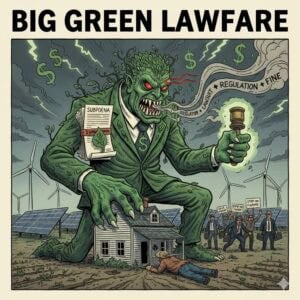 Chatham County, North Carolina’s Board of Commissioners last week unanimously passed a resolution opposing Enbridge Gas North Carolina’s proposed 28-mile natural gas pipeline from Siler City to Moncure. This isn’t a garden-variety “we don’t like it” resolution. It authorizes the county to actively fight the project by challenging environmental permits, teaming up with like-minded groups, working the media, organizing residents, and coaching landowners on how to resist condemnation. In other words, a county government just signed itself up as a Big Green activist group, with taxpayers picking up the tab.
 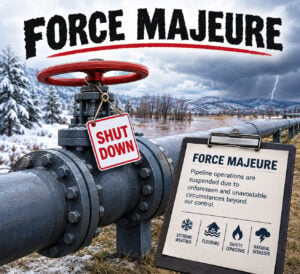 On Thursday morning, a natural gas leak at the Saunders Creek Regulator Station near Milton, WV (Cabell County) forced TC Energy’s Columbia Gas Transmission (TCO) to declare “force majeure” on the Mountaineer XPress (MXP) pipeline, one of the biggest Marcellus/Utica takeaway pipes in the region. Starting with today’s gas day (Friday, Sept. 25), the affected segment of MXP is cut to zero capacity until further notice. TCO estimates the hit to firm customers at 1.8 million dekatherms (MMDth) per day, which is roughly 1.8 billion cubic feet per day (Bcf/d) of Appalachian gas that suddenly needs somewhere else to go. Traders noticed. The October NYMEX futures contract settled up 27.4 cents (+9.06%) at $3.297 per MMBtu, the highest in about three months and the biggest one-day gain since January.
  Boardwalk Pipelines’ Kosciusko Junction Pipeline Project, a 111-mile, 36-inch pipe across Mississippi that will carry Marcellus/Utica gas (and gas from other plays) to Southeast markets, now has all the federal permits it needs. FERC voted to approve the project at its Sept. 10 open meeting. On Sept. 23, the Federal Permitting Council announced that all federal permitting was finished. What’s next? Shovels. Boardwalk’s plan on file with FERC calls for construction to begin in December, about 10 weeks from now, with first gas flowing as early as April 2028.
 Kinder Morgan has a new pipeline project in the works, one MDN has not told you about before, because until yesterday nobody outside the company had heard of it. It’s called the Southeast Connector, and it would run north to south across Middle Tennessee through 10 counties, stitching together two of Kinder’s biggest interstate systems: Tennessee Gas Pipeline (TGP) and Southern Natural Gas (SNG). Kinder VP Allen Fore made the rounds in DeKalb County on Thursday, meeting the county mayor, the Chamber of Commerce, and local media. Land agents may start knocking on doors as early as next week. Target in-service: 2029.
  The Pennsylvania Farm Bureau (PFB) is one of the good guys. Probably 99% of the time, MDN is right there cheering PFB on — for private property rights, for sensible regulation, for keeping Harrisburg off the farmer’s back. But yesterday PFB released a 23-page paper making the case for a “temporary, limited moratorium” on large-scale data center development in Pennsylvania. This is the other 1%. We think PFB is wrong on this one, and we’ll tell you why. Politely. Friends are allowed to disagree.
  When Appalachian gas prices fall into the basement, EQT turns down the valves, and CEO Toby Rice says the strategy is paying off. In an interview with Reuters on Tuesday, Rice put a dollar figure on it for the first time: a little over $200 million a year in benefit from selling less gas when prices are low and more when they’re high. He also said EQT, the country’s No. 2 gas producer, will pump more gas in 2026 than last year while spending less to do it. Rice talked up the company’s proposed POWER Pipeline to Ohio, its Mountain Valley Pipeline expansions, and a new 10-year LNG supply deal with Lithuania. His outlook for global gas demand is, let’s say, very bullish.
  A power company from Thailand just bought a big chunk of a natural gas-fired power plant sitting in Queens, New York — about two miles from LaGuardia Airport. Why should you care? Because the reason that plant is worth so much money is the very thing New York politicians keep telling us is a dead end. The Empire State has spent a decade banning fracking, killing pipelines, and lecturing the rest of us about the evils of methane. And yet: the single most valuable thing about Astoria Energy II is that nobody will ever be allowed to build another one like it. Scarcity, it turns out, pays very well. Somebody in Bangkok did the math.
  New York’s so-called leaders banned natural gas hookups in new homes (see