MVP Delivers $27.1M Property Tax Windfall to 11 WV Counties
 Remember all those years of protesters chaining themselves to equipment, lawsuits by the dozen, and court-ordered work stoppages trying to kill the Mountain Valley Pipeline (MVP)? Here’s what West Virginians got for finally building it: a fat new check. A new report from West Virginia State Treasurer Larry Pack’s office finds that MVP drove a 62% jump in the value of rural utility property in the 11 counties it crosses, generating nearly $27.1 million in new property tax revenue in a single year—about $9.1 million for county commissions and nearly $18 million for local schools. MVP-related utility property accounted for more than 86% of ALL the growth in property tax revenue in those counties. One pipeline. Eighty-six percent. Read More “MVP Delivers $27.1M Property Tax Windfall to 11 WV Counties”
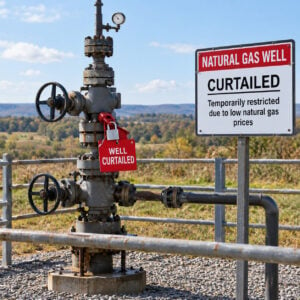 The pipeline got fixed. The price didn’t. In midday trading on Monday, Eastern Gas South (the M-U pricing point formerly known as Dominion South) sold for $1.005 per MMBtu, while Henry Hub in Louisiana sat at $2.960. That’s a $1.955 haircut. Gas sold in our backyard fetched about one-third of the national benchmark price. And M-U drillers are doing what smart business people do: leaving gas in the ground until someone offers a fair price for it.
 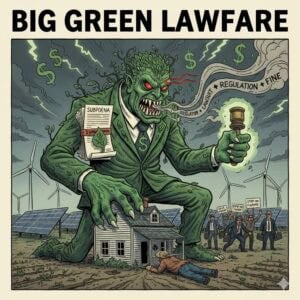 Yesterday was the first Monday in October, which means the U.S. Supreme Court opened a new term. The very first case the justices heard may be the most important case for the oil and gas industry, including Marcellus/Utica drillers, in a generation. The case is Suncor Energy v. County Commissioners of Boulder County. It asks whether a city or county can haul energy companies into its own state court and make them pay for the costs of climate change. If the answer is yes, Chief Justice John Roberts predicted a copycat lawsuit from “a municipality in every single state.” That’s not a scare tactic. It’s a business plan for trial lawyers.

 On Sept. 22, Alpha Compute Corp. (Nasdaq: ALP) said it was buying an old Pennsylvania oil field (county not named) for $5.5 million and planned to put a second 200 MW data center on it (see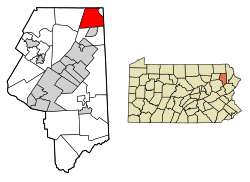
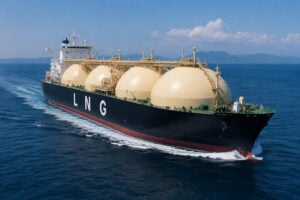 Well, well, well. Venture Global (VG) has asked the Federal Energy Regulatory Commission (FERC) for permission to place Phase 1 of its Plaquemines LNG export plant in Louisiana “in service.” In plain English, VG says the plant is finally ready to start shipping LNG to the customers who signed long-term contracts with it, beginning October 31. Never mind that the plant has already shipped at least 417 full cargoes since December 2024 (and probably closer to 500 by now). VG made a killing selling those cargoes on the spot market at sky-high prices. Its contract customers, the folks whose signatures got the plant financed, have been waiting. We’ve called this practice disgusting before, and we haven’t changed our minds.
  Back in August, we told you Amazon Web Services (AWS) was “in discussions” to land data centers at the massive Homer City Energy Campus in Indiana County, PA (see
  The first domino has fallen. Last Thursday, National Fuel Gas Company (NFG) closed its purchase of CenterPoint Energy’s Ohio natural gas utility, the Dayton-area company formerly known as Vectren Energy Delivery of Ohio. Why should Marcellus/Utica folks care about a utility deal in the Miami Valley? Because NFG’s CEO told us several weeks ago that this closing clears the way to split off Seneca Resources, NFG’s drilling arm, into its own separate company (see
  Four U.S. senators—two Republicans, two Democrats—released the final text last Wednesday of a major bipartisan permitting reform bill called the Bipartisan American Affordability and Jobs Act of 2026. It’s 417 pages long, and buried in it are some of the most pipeline-friendly provisions we’ve seen come out of Congress in years: a 150-day deadline to file lawsuits, a nine-month cap on state water permit reviews for interstate gas pipelines, and a free pass from NEPA review for compressor stations and looping built inside existing pipeline rights-of-way. The catch? It has to clear the Senate (60 votes) AND the House during the lame-duck session after the Nov. 3 elections. The clock is ticking.
  A federal judge in Williamsport has thrown out two 10-year-old lawsuits filed by northeastern Pennsylvania landowners who claimed Anadarko, Mitsui, and Williams (the old Access Midstream) were running a mob-style racket to shrink royalty checks. If that sounds familiar, it should. The same lawyers made the same argument in a sister case we first told you about in 2015, and the same judge tossed that one too. The landowners’ “Chesapeake/Access conspiracy” theory is now zero for three.
  Back in July, we told you Tennessee Gas Pipeline (TGP), a Kinder Morgan subsidiary, had launched a non-binding open season for its 219 South Project (see
  Back in 2022, then-Massachusetts Attorney General (now Governor) Maura Healey hit the campaign trail and bragged, “I stopped two gas pipelines from coming into this state” (see