
Algonquin Gas Pipeline to Cape Cod Needs $301M Relocation
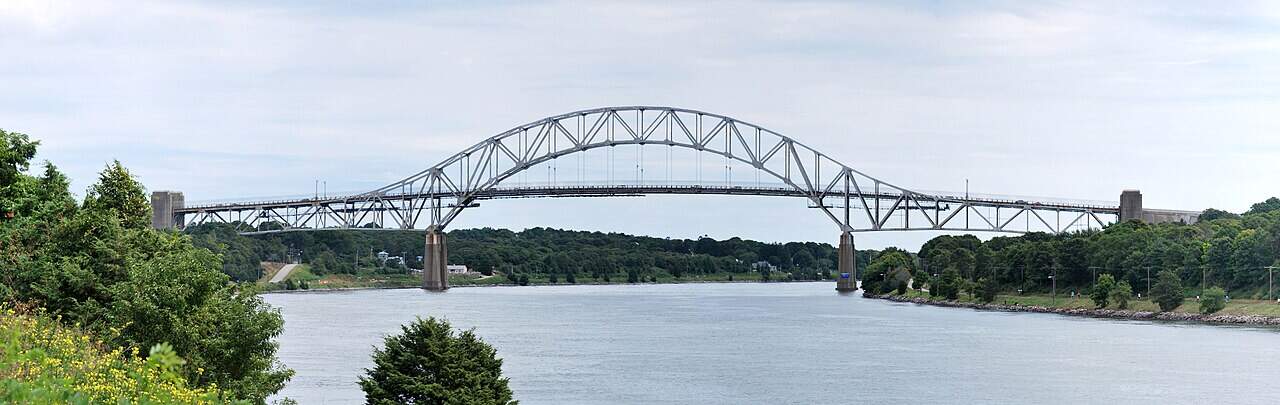
Enbridge’s Algonquin Gas Transmission (AGT) subsidiary is undertaking a $301 million natural gas pipeline relocation under the Cape Cod Canal to accommodate Massachusetts’ $4.5 billion bridge replacement project. Fully reimbursed by MassDOT, the 6.3-mile infrastructure overhaul involves removing three miles of existing bridge-attached gas lines and using horizontal directional drilling (HDD) to install a new pipeline beneath the canal bed. This approach minimizes local disruption and consolidates the crossing. Read More “Algonquin Gas Pipeline to Cape Cod Needs $301M Relocation”
 In Antero Resources Corp. v. Stonewall Gas Gathering LLC, the Texas Business Court resolved a contract dispute over a 2014 gas gathering agreement following a bench trial. The court denied Antero’s claims for $200 million in past and future monetary damages. However, it granted Antero “declaratory relief” and specific performance, ordering Stonewall to reduce Antero’s service fees in accordance with the affiliate agreements and to produce the requested contract documents. The court awarded Antero $1 in nominal damages for discovery breaches, while a ruling on attorney’s fees was deferred pending further proceedings.
 The Mountain Valley Pipeline (MVP), which began operations in 2024 through West Virginia and Virginia, is now slated for an extension, the MVP Southgate, into North Carolina. This expansion faces opposition from some residents and environmental groups who raise concerns about safety, environmental impact, eminent domain issues, and the need for increased natural gas infrastructure (they believe cataclysmic global warming comes from burning natural gas). Despite court challenges and past environmental violations, the project has received government approvals and is forging ahead. On March 23, the Federal Energy Regulatory Commission (FERC) issued a notice to proceed with construction in Virginia.
  National Grid New York is upgrading its 50-year-old Grasmere Gate Station on Staten Island, a critical piece of natural gas infrastructure serving approximately 80,000 customers. This two-phase project, which began in March 2025 and is expected to finish by June 2026, involves a complete rebuild of mechanical equipment and components to enhance safety, strengthen physical structure, and improve efficiency. The work was crucial during a winter with record-breaking natural gas demand and is part of National Grid’s ongoing investment in modernizing infrastructure across Brooklyn, Queens, and Staten Island to meet current and future energy needs. Here’s our question: How in the world did lunatic anti-fossil fuel fanatics not notice this upgrade was happening and protest to stop it?
  Anti-fossil fuel fanatics haven’t given up on trying to block construction of the Williams Northeast Supply Enhancement (NESE) pipeline, a $1 billion+ project designed to increase Transco pipeline capacity and flows of Marcellus gas heading into New York City and other northeastern markets. Last November, the states of New York and New Jersey issued federal Clean Water Act permits for their respective states, allowing NESE to be built (see
  On Tuesday, seven radicalized Big Green groups filed a court challenge to the Federal Energy Regulatory Commission’s (FERC) authorization for Mountain Valley Pipeline, LLC, to construct the MVP Southgate gas pipeline. The petition for review, filed by the Southern Environmental Law Center (SELC), Appalachian Mountain Advocates, and Sierra Club in the United States Court of Appeals for the District of Columbia Circuit (DC Circuit), asks the court to vacate the amended certificate of convenience and public necessity issued by FERC in December 2025.
  The Abu Dhabi (United Arab Emirates) investment group 2PointZero, via its subsidiary ePointZero, has agreed to acquire U.S. natural gas infrastructure firm Traverse Midstream Partners for $2.25 billion. This acquisition includes stakes in the Rover Pipeline and Ohio River System, which connect the productive Utica/Marcellus shale region to major demand centers and export hubs. Despite escalating Middle East geopolitical tensions and global energy disruptions, the deal underscores the UAE’s commitment to commercial partnerships with the United States.
  The Rockwood Area School District in Somerset County, Pennsylvania, has been awarded a $570,084 state grant to extend natural gas service to its facilities. The project will install around 15,100 feet of natural gas pipeline. Announced by State Representative Carl Walker Metzgar and Senator Pat Stefano (both Republicans), the funding comes from the Pipeline Investment Program (PIPE). The project is designed to replace the district’s current heating system (an old coal-fired boiler), effectively resolving the environmental issues caused by coal burning.
 Connecticut’s Department of Energy and Environmental Protection (DEEP) has determined that Eversource Energy’s plan to install a natural gas pipeline through Hurd State Park and the Connecticut Valley Railroad State Park Trail requires a formal Environmental Impact Evaluation, unnecessarily delaying a tiny portion (1.1 miles) of a critically-important reliability project (34.5 miles long). This 16-inch pipeline, a segment of the Southeast Resiliency Project, is designed to provide energy redundancy and security for the region.
  Just coming to light for us now is that Iroquois Gas Transmission System petitioned the Federal Energy Regulatory Commission (FERC) in February to reissue authorization for the $152 million Wright Interconnect Project in New York State, aiming to revive a critical link for the previously canceled Constitution Pipeline. Originally approved in 2014, the project seeks to establish a new receipt interconnection and compression facilities at the Wright Compressor Station. By creating 650,000 dekatherms per day (650 MMcf/d) of transportation capacity, the initiative intends to alleviate persistent natural gas supply constraints in the Northeast and New England markets. If approved, the project targets a May 2028 in-service date, utilizing existing company-owned infrastructure to minimize environmental impacts.
 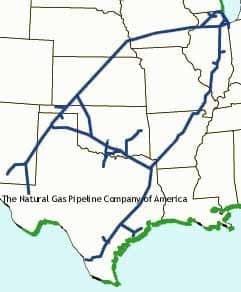 The Natural Gas Pipeline Company of America (NGPL), a Kinder Morgan pipeline subsidiary, flows Marcellus and Utica molecules. While the pipeline’s primary footprint is in the Midcontinent and Gulf Coast, it is a critical takeaway path for Appalachian gas through key interconnections. NGPL’s recent tariff announcement reaffirmed its commitment to offering negotiated rate arrangements for pipeline transportation services, maintaining continuity in its commercial practices. These options allow shippers to develop customized pricing based on factors like contract duration, gas volume, and specific operating needs, providing greater flexibility than standard maximum recourse rates.