
Enbridge Briefed Trump Admin on Plan to Expand Pipe into New England
 Enbridge is exploring a major expansion of its Algonquin Gas Transmission pipeline into New England, a move sure to inflame environmental extremists. According to super-secret sources blabbing to E&E News, the company briefed the Trump administration’s National Energy Dominance Council and potential buyers about the project. Details remain preliminary and undisclosed. The proposal comes as Democratic governors in Connecticut, Massachusetts, and Rhode Island face pressure over high energy costs while pursuing nutty climate goals. Read More “Enbridge Briefed Trump Admin on Plan to Expand Pipe into New England”
 National Fuel Gas Company (NFG) is an integrated natural gas company with a regulated utility business, a shale drilling business (Seneca Resources), and a pipeline business (NFG Midstream, Empire Pipeline). The company issued its fiscal second quarter update two weeks ago, which is everyone else’s calendar first quarter update. The good news is that NFG is upgrading its Line N natural gas pipeline to carry an additional 94,000 Dth/d (90 MMcf/d) of Marcellus/Utica shale gas. The bad news is that Seneca produced 102.0 Bcf of natural gas, a decrease of 3.5 Bcf, or 3%, from the prior year, largely due to weather-driven completion delays and “typical natural gas production declines on producing wells.”
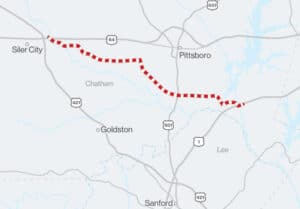
 In April, MDN reported that anti-fossil fuel fanatics had not yet given up on trying to block construction of the Williams Northeast Supply Enhancement (NESE) pipeline, a $1 billion+ project designed to increase Transco pipeline capacity and flows of Marcellus gas heading into New York City and other northeastern markets. Even though there was an official groundbreaking ceremony at Brooklyn’s Floyd Bennett Field in New York City in April, antis are still doing their best to block this project. They pinned one of their last hopes on a relatively obscure state agency in New Jersey, pressuring it to refuse to issue a license for the project (see
 DT Midstream (DTM) is an owner, operator, and developer of natural gas interstate and intrastate pipelines, storage and gathering systems, compression, treatment, and surface facilities, including major assets that are in (or flow molecules from) the Marcellus/Utica. Last week, the company issued its first quarter 2026 update. CEO David Slater announced two new projects to expand pipelines that carry Marcellus/Utica molecules. He also announced a project to build a new lateral to an Indiana power plant and a new interconnect that flows more M-U molecules into the NEXUS pipeline. Great things are happening at DTM!
 Last Friday, TC Energy reported a robust first quarter in 2026, highlighted by a 14% increase in comparable EBITDA to $3.1 billion and record delivery volumes across its North American pipeline network. For the Marcellus and Utica shale region, the standout development is the newly announced $1.5 billion Appalachia Supply Project on the Columbia Gas system. Slated for 2030, this expansion will add 0.8 Bcf/d of takeaway capacity to meet surging electricity and data center demand. Appalachia is explicitly identified as a major contributor to the growth in U.S. natural gas production, and is expected to account for over 55% of the growth by 2035.
 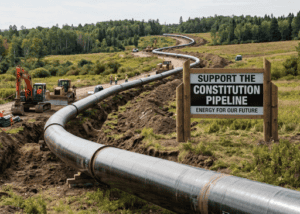 This is a critical moment for reliable, affordable energy in the Northeast, and your voice can make a difference. The Federal Energy Regulatory Commission (FERC) is currently accepting public comments on the Constitution Pipeline, representing an important step toward finally advancing this long-delayed project and a key opportunity for supporters to be heard. If you support building the Constitution Pipeline, please take a few minutes to submit a brief comment to FERC by May 4, 2026, because your input truly matters. We have instructions below on how to file a comment (it takes just a couple of minutes).
  The Rover Pipeline is a 711-mile, $6.3 billion natural gas transmission pipeline operated by Energy Transfer, transporting up to 3.25 billion cubic feet per day (Bcf/d) of Marcellus and Utica Shale gas. It connects supply areas in West Virginia, Pennsylvania, and Ohio to markets in the Midwest, Great Lakes, and Canada. As of April 29, 2026, Blackstone (via its Energy Transition Partners funds) has sold its entire 32.4% ownership stake in Rover to Ares Management. Blackstone originally acquired its ownership stake in 2017 to fund the construction of the pipeline.
  Just yesterday, MDN told you that three left-wing judges from the 4th Circuit (“Circus”) who hate the Mountain Valley Pipeline (MVP) were back at it, badmouthing an extension of MVP into North Carolina, called Southgate (see
 The Pennsylvania Department of Environmental Protection (DEP) is seeking public comment on an Individual Stormwater Permit for a 5.8-mile natural gas pipeline in Indiana County. Serving the proposed Homer City Generation LP 4.5 GW power plant and data center, the 30-inch pipeline will traverse Black Lick, Burrell, and Center Townships, involving several stream and wetland crossings. The DEP will host a public hearing on May 12 from 5 to 7 PM at the Indiana Theater regarding Homer City Generation’s proposed 5.8-mile natural gas pipeline in Center Township. In response to this new project, local anti-fossil fuel groups are actively mobilizing. So-called “Concerned Residents of Western PA” (CROW) is holding a preparation meeting this afternoon to help “citizens” draft their public comments and build speaking confidence.