Boardwalk Offers Temporary Capacity Along Pipeline to Southeast
 In early April, the Federal Energy Regulatory Commission (FERC) issued a Draft Environmental Impact Statement (DEIS) for the Kosciusko Junction Pipeline Project in Mississippi (see FERC Issues DEIS for Boardwalk Pipe to Carry M-U Gas to Southeast). The project belongs to the Gulf South Pipeline Company, LLC (a subsidiary of Boardwalk Pipelines) and involves constructing approximately 110 miles of 36-inch natural gas pipeline. It will carry molecules from several shale plays, including the Marcellus/Utica, to markets in the Southeast. The original in-service date was supposed to be April 28, 2028. That date has been somewhat modified. Read More “Boardwalk Offers Temporary Capacity Along Pipeline to Southeast”
 A new report from UConn’s Connecticut Center for Economic Analysis, bought and paid for by the anti-fossil fuel Connecticut League of Conservation Voters (meaning it’s useless propaganda), argues that the state’s past expansion of natural gas saddled customers with costly infrastructure upgrades without lowering fuel prices. The so-called report says most of the increased gas demand went to power plants—including three new or expanded facilities—rather than heating homes. The propagandists claim that Connecticut, a net electricity exporter, supposedly “absorbed pollution costs,” while benefiting neighboring states.
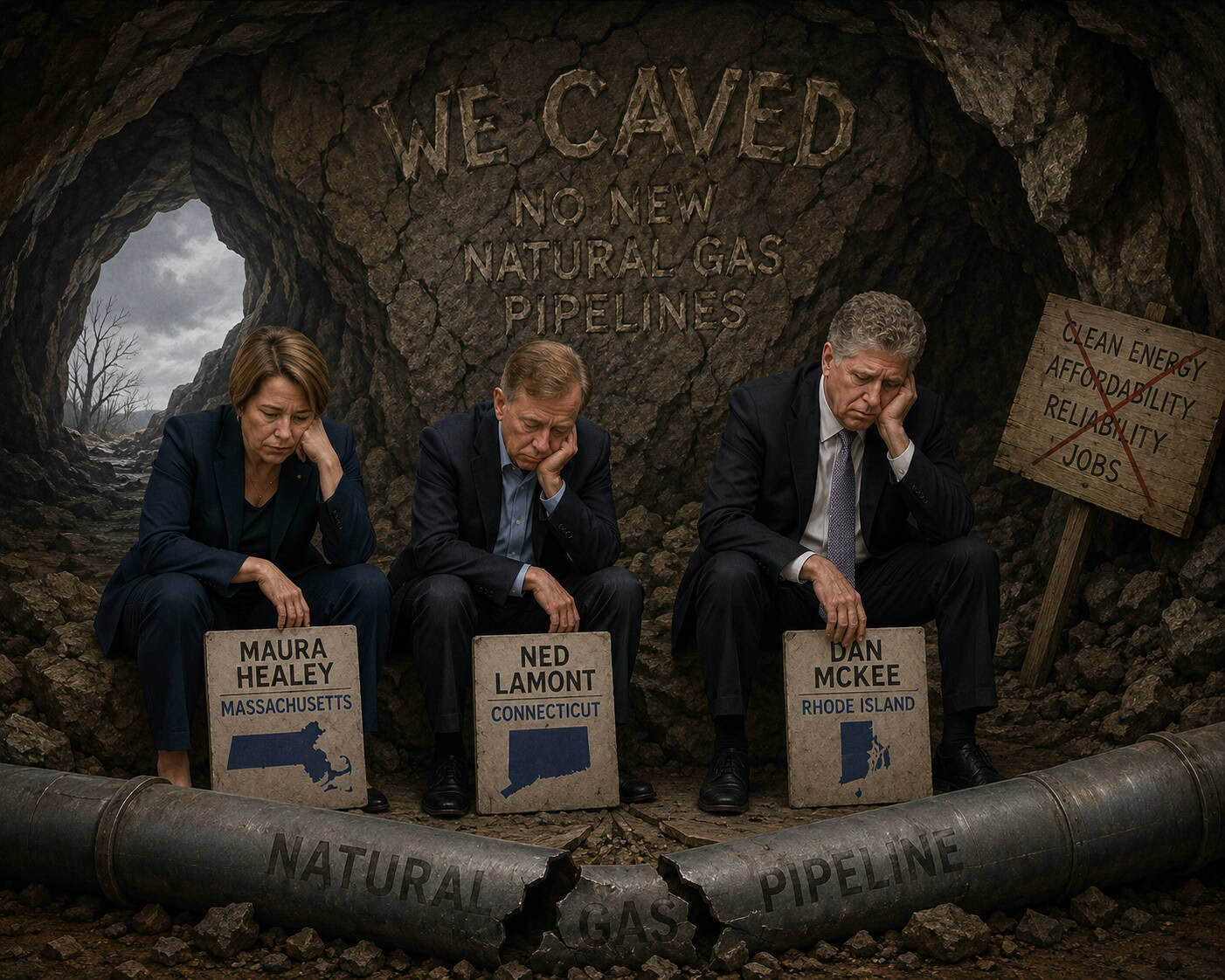
  This is one of those “man bites dog” (or in this case, “woman” bites dog) stories. Rebecca Tepper has, for years, worked for Maura Healey—first when Healey was Attorney General of Massachusetts, and later (now) in Healey’s role as Governor of the state. Tepper is Healey’s Secretary of Energy and Environmental Affairs. Healey is her boss and directs the policies that Tepper executes. So it was a complete shock for us to receive an email from Tepper’s office with a letter attached (see it below) that Tepper sent to Dan Dolan, President of the New England Power Generators Association. The letter encourages (we’d call it demands) New England’s power generators to sign up to receive natural gas during Enbridge’s open season for the recently announced Project Beacon.
  Rising natural gas demand across the U.S. Northeast and adjacent southern and western regions is driving a wave of pipeline projects that will let Marcellus/Utica producers boost output into the 2030s. A fourth installment of RBN’s series about gas market dynamics in the Northeast groups the planned expansions into five buckets: Pennsylvania projects, regionwide enhancements, MVP/Transco-tied projects, expanded Ohio capacity, and more distant related efforts. Highlights include National Fuel Gas’s Pennsylvania builds, Enbridge’s TETCO “Appalachia to Market II” upgrades that add compression and looping, and the MVP Boost Project, which expands Mountain Valley Pipeline from 2 Bcf/d to 2.6 Bcf/d by mid-2028 (via additional West Virginia and Virginia compression).
 In early May, MDN brought you details about a proposed NSCALE data center project in Mason County, WV (see
  The same three judges from the U.S. Court of Appeals for the Fourth Circuit who blocked the 303-mile Mountain Valley Pipeline (MVP) for *years* suddenly changed course in late April, ruling on an extension of MVP into North Carolina called Southgate. Big Green, represented by the Sierra Club and Appalachian Voices, sued to block a permit issued by North Carolina regulators for the Southgate project. While the three judges grumbled and complained about Southgate during oral arguments (see
  Big Green groups rallied Tuesday in Peekskill (Westchester County, NY) against Enbridge’s proposed Project Beacon, a natural gas pipeline expansion that would increase capacity on the Algonquin Gas Transmission line. Radicals lied by saying the project would “burden ratepayers” already facing high living costs. How do you figure? Algonquin is a transmission pipeline, and its expansion will be paid for by Enbridge (and its shareholders), not by increasing local utility rates. Yet these liars are never called out for their false statements by the media.
  Sempra Infrastructure announced that its Port Arthur Pipeline Louisiana Connector has entered service, marking progress on U.S. energy infrastructure aimed at supplying global natural gas markets. CEO Justin Bird said the project was completed ahead of schedule and under budget. The pipeline will transport up to 2 billion cubic feet per day (Bcf/d) of U.S. natural gas, including Marcellus/Utica gas, to Port Arthur LNG Phase 1, which is now under construction with a nameplate capacity of about 13 million tonnes per annum (MTPA). The project links with the Gillis Hub Pipeline and the LA Storage facility under construction. It includes 72 miles of 42-inch pipeline and a compressor station.
  Yesterday, President Trump accused New York Governor Kathy Hochul of reneging on her pledge to allow the 125-mile Constitution Pipeline project to be built in the Empire State. The project was canceled in 2020 after New York repeatedly rejected the necessary permits. President Trump brokered a deal with New York Governor Kathy Hochul to resurrect the project last year (see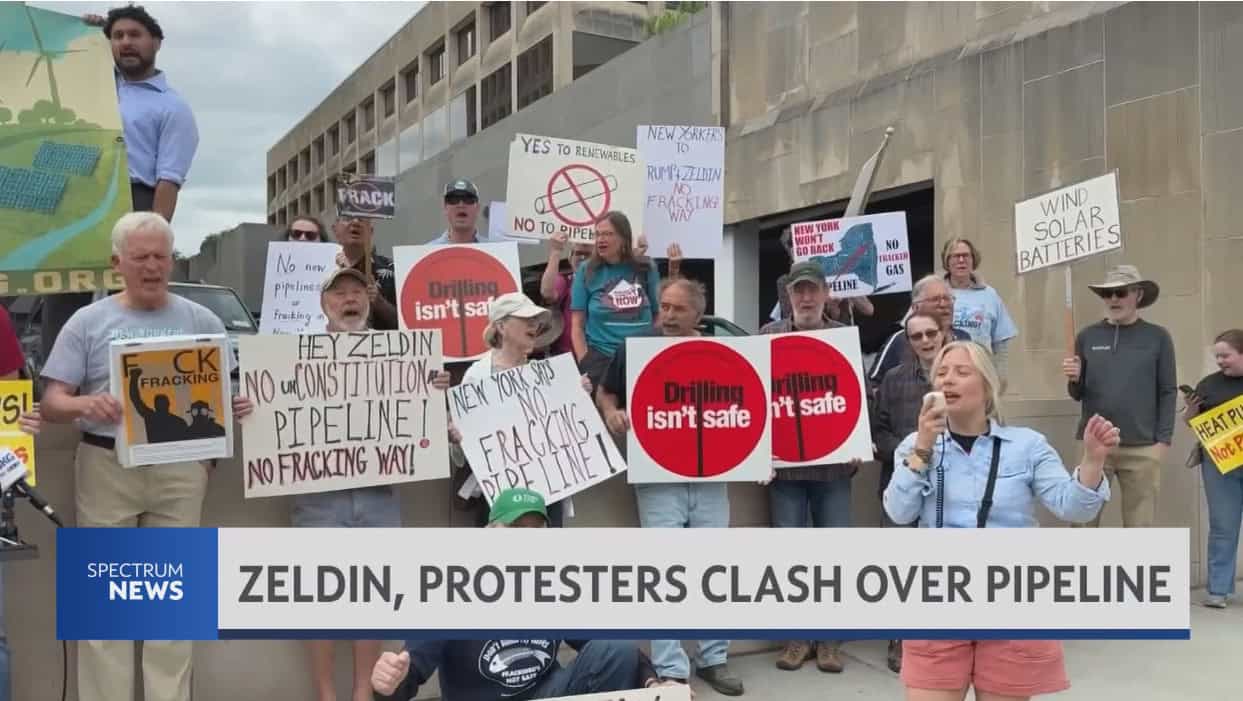
 Here’s a story that may, at first glance, seem to have nothing to do with the Marcellus/Utica. Au contraire! The story of what’s happening with Permian drillers has a great deal to do with the M-U region. Although MDN frequently refers to the Haynesville Shale as the #1 competitor to the M-U because both plays target natural gas as the primary hydrocarbon, would it surprise you to learn that the Permian basin is the #2 producer of natural gas behind the M-U? And it’s catching up. Permian Basin drillers are experiencing starkly contrasting fortunes, reaping historic profits from war-driven oil price rallies while facing negative regional natural gas prices due to severe pipeline bottlenecks. To curb financial losses from associated gas, major producers like Permian Resources and Devon Energy are shutting in wells, while others resort to flaring to maintain more profitable crude production.
  Back in March, MDN alerted you to a potential new water pipeline coming in Lycoming County, PA, for EQT shale drilling (see
  ISO New England’s Internal Market Monitor reported that total wholesale electricity costs in New England reached $15 billion in 2025, up 48% from 2024. The increase was driven by higher natural gas prices, tighter supply, changes in the resource mix, and shifts in market design. Day-ahead energy prices averaged $71.81/MWh, up 73%, while real-time prices rose 67% to $65.89/MWh. Natural gas prices more than doubled to $6.27/MMBtu. Carbon taxes added $1.1 billion to energy costs. Boiling it all down, aside from carbon taxes, high natgas prices are the main culprit. The report (full copy below) has some thoughts about why natgas prices are so high in New England.