
24-Mile Pipeline in Licking County, OH Planned to Feed Data Center
 The Energy Cooperative (TEC) has proposed a 24-mile-long, 24-inch natural gas pipeline across Licking County, Ohio, stretching from Bennington Township to the New Albany International Business Park. Estimated at $150 million, the project is designed to supply energy to a specific, unnamed data center, which will fully fund the construction. (We think we’ve identified the “unnamed” data center, which we’ll do below.) While TEC maintains the pipeline will enhance system reliability and stabilize pressure for its 58,000 members, the project faces scrutiny from local landowners. Concerns involve the potential use of eminent domain and the environmental impact on agricultural land. Read More “24-Mile Pipeline in Licking County, OH Planned to Feed Data Center”
 The INGAA Foundation’s 2025 North American Midstream Infrastructure Report highlights the critical need for over $1 trillion in natural gas pipeline and related infrastructure investments through 2052 to meet rising energy demands in the United States and Canada. Driven by increased electricity demand from data centers and growing LNG exports, the study projects a need for 37,000 miles of new transmission pipelines and 103,000 miles of gathering lines. Even under a low-carbon scenario, natural gas remains foundational.
  A Connecticut Superior Court judge told a Big Green puppet group, Save the Sound, along with the colluding Town of Brookfield, that their joint lawsuit to block a compressor station expansion was the equivalent of starting the parade before the band had arrived (our words). The two groups are trying to block a permit for a compressor station in the Town of Brookfield proposed by Iroquois Gas Transmission. The CT Department of Energy and Environmental Protection (DEEP) has not yet issued a final permit for the project, so there’s nothing to object to. Yet. After DEEP issues the final permit, they can come back and try again.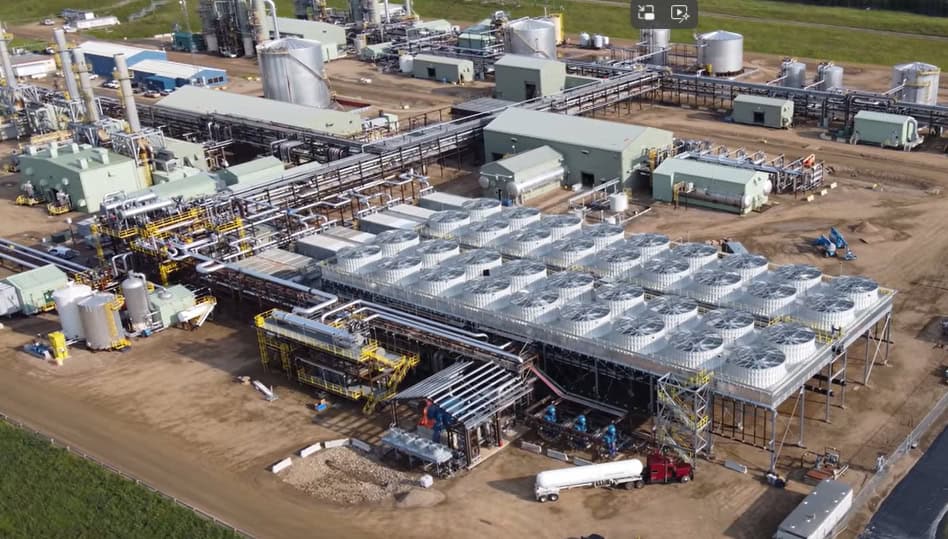
 White House officials, including the legislative affairs team and the National Energy Dominance Council, are ramping up engagement in bipartisan congressional talks to reform energy permitting processes (“permitting reform”). Although negotiations recently stalled when Senate Democrats boycotted over a halt on offshore wind projects, formal discussions have, according to super secret sources, resumed following the administration’s progress on onshore wind and solar permits. The White House seeks legislative action to streamline environmental reviews, bolster domestic production, and lower energy costs amid rising electricity demands.
  We’ve recently begun to highlight flow restrictions along pipelines that carry Marcellus/Utica molecules. When flows slow or stop (because they can’t reach other markets), the price typically falls because local supply exceeds local demand. In the middle of Winter Storm Fern in January, outages and freeze-offs led to significant stress with production dropping 10-12% due to pipeline and well issues (see
  Hope Gas is a Local Distribution Company (LDC, i.e., utility company) that provides gas service to approximately 140,000 residential, industrial, and commercial customers in 39 West Virginia counties. The company monitors and maintains over 7,000 miles of pipelines that safely deliver West Virginia natural gas to many homes and commercial and industrial sites. In September 2023, Hope Gas asked the West Virginia Public Service Commission for permission to build a new 30-mile pipeline in Monongalia County (see
  Despite a “public outcry” (of 13 people), the Chesapeake City (Virginia) Council voted 6-3 last July to approve a compressor station for Virginia Natural Gas (see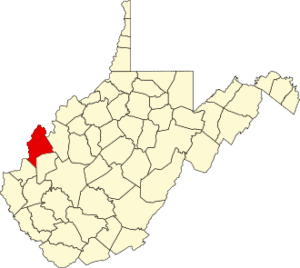
 Last week, RBN Energy held its GasCon 2026 conference in Houston, Texas. Among the heavy hitters who attended and spoke at the event were Sital Mody, President of Natural Gas Pipelines at Kinder Morgan, and Dan Brouillette, the 15th Secretary of the U.S. Department of Energy. Mody had this to say during his talk: “When I take a step back and reflect on the natural gas industry, the one thing that comes to mind for me is all gas, no brakes.”
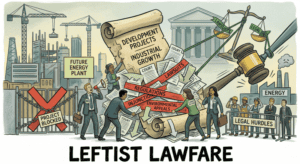 Several Big Green groups, including the Sierra Club, Wild Virginia, Appalachian Voices, and the Center for Biological Diversity, have filed a legal challenge against a permit issued by Virginia for the Mountain Valley Pipeline (MVP) Southgate extension. The Virginia Department of Environmental Quality (DEQ) approved a water permit for the project in January 2026. Big Green radicals argue that the pipeline “threatens” 138 streams, wetlands, and regional drinking water supplies. It’s the typical lawfare tactic used by the left to stall work on projects, hoping to delay them long enough that the builder (EQT in this case) gives up. Or if the builder won’t give up, they have to pay double or triple the price to construct it. That’s the game the radicals are playing.
  Enbridge has announced a non-binding open season inviting existing and potential shippers to bid on firm natural gas transportation services. The offer includes up to 300,000 GJ/day (~285 MMcf/d) of capacity for its M12, M12-X, or M17 services. Available paths connect the strategic Dawn Hub to Parkway, Kirkwall, and Dornoch, facilitating efficient gas movement across Ontario to major North American markets. Shippers of Marcellus and Utica molecules will be interested in this open season.
  Enbridge Inc. is a major North American energy infrastructure (primarily pipeline) company based in Calgary, Canada, specializing in the transportation, distribution, and generation of energy. It operates the world’s longest crude oil/liquids pipeline system, transporting 25% of North America’s crude oil, alongside significant natural gas, renewable power, and natural gas utility operations. Enbridge’s fourth quarter 2025 update highlights significant developments impacting the Marcellus/Utica region, primarily driven by surging demand for natural gas to support data centers and power generation, as well as continued infrastructure modernization.
  The environmental left in Rhode Island is all hot and bothered over a plan to replace or add a total of 12.3 miles of pipeline for the Algonquin natural gas pipeline network. Enbridge Inc. is proposing a $300 million expansion of the Algonquin natural gas pipeline (the Algonquin Reliable Affordable Resilient Enhancement project), scheduled for 2029, that involves replacing and extending small segments across Rhode Island and Massachusetts. Radical antis in Rhode Island argue the expansion contradicts Rhode Island’s “Act on Climate” goals and promotes reliance on fossil fuels. They have, in our humble opinion, gone clinically insane over the continued use of fossil energy—including clean-burning natural gas. It’s bizarre.
  DT Midstream is an owner, operator, and developer of natural gas interstate and intrastate pipelines, storage and gathering systems, compression, treatment, and surface facilities, including major assets that are in (or flow molecules from) the Marcellus/Utica. Last week, the company issued its fourth quarter and full-year 2025 update. The update showed the Marcellus and Utica (Northeast) regions remain a core growth engine for the company, particularly as a supply source for the Upper Midwest and LNG demand corridors. Driven by a spike in natural gas demand, DTM has expanded its five-year organic project backlog by 50%, bringing the total to $3.4 billion.