
3 TETCO Pipelines in KY Closed Indefinitely, Feds Order Repairs
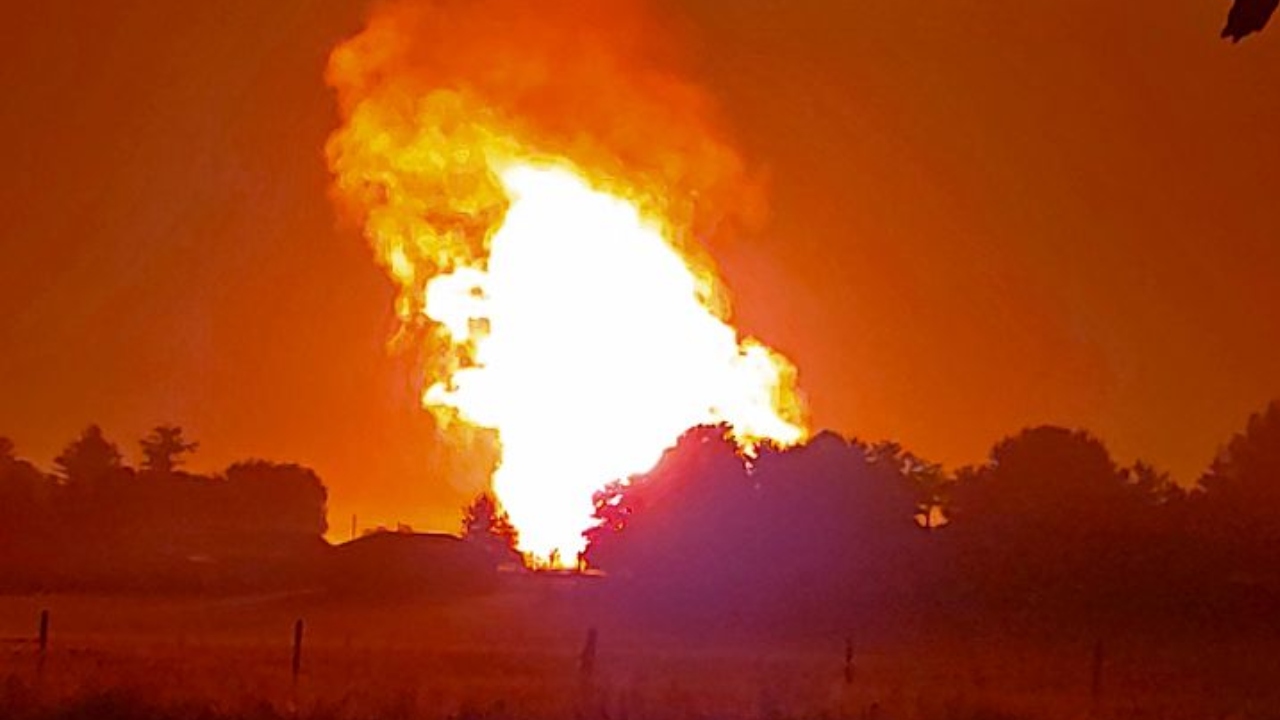
Last Friday the Pipeline and Hazardous Materials Safety Administration (PHMSA) issued their preliminary findings (full copy below) on the explosion of the Texas Eastern Pipeline Company (TETCO) pipeline explosion in Lincoln County, Kentucky–an explosion that killed one and sent six to the hospital (see TETCO Pipe Explodes in Kentucky Killing 1; Southbound M-U Gas Stops). PHMSA also issued a “corrective action order” on Friday that requires TETCO to keep Line 15, where the explosion occurred, and Lines 10 and 25 (located next to Line 15), offline until further notice. Indefinitely.
Read More “3 TETCO Pipelines in KY Closed Indefinitely, Feds Order Repairs”
 Once again the New York Dept. of Environmental Conservation (DEC), a corrupt political tool in the hands of an autocratic governor, Andrew Cuomo, has issued a denial of a federal Clean Water Act Section 401 water crossing permit for the National Fuel Gas Company’s Northern Access Pipeline project. Fortunately, DEC’s rejection doesn’t mean a hill of beans since the Federal Energy Regulatory Commission (FERC) overruled the DEC last year.
 In April President Trump signed an Executive Order (EO) instructing the Environmental Protection Agency to review Section 401 of the Clean Water Act–the section that grants states (and tribes) the right to have a say in pipeline projects (see
 Andrew Cuomo, governor of New York, is a vicious politician. He operates much like a mafia boss. Case in point: Cuomo refuses to allow a new pipeline to be built to the New York City (and Long Island) region, called the Northeast Supply Enhancement (NESE) project (see
  Chester County, PA District Attorney Tom Hogan has sunk to a new low. We told you back in January Hogan and his highly-paid staff, motivated by politics, were investigating Energy Transfer, their Sunoco Logistics division and anyone/anything to do with ET’s Mariner East pipeline projects, looking for “crimes.” All he found were minor violations by two off-duty PA constables (see
 Monday evening the Mariner East 2 pipeline was down for routine maintenance at a pump station in Chester County, PA (near Philadelphia). When workers relit a pilot in a flare used to burn off excess gases, there apparently was some accumulated gas in the flare stack and it ignited, creating a loud boom. Nobody was injured, there was no danger. Yet that incident is now being labeled an “explosion” by anti-fossil fuel activists and their sycophants in the press.
 We have a proud tradition in America of vigorous debate and free speech. We have protests. We still, for now, have a free press where we can express our ideas–whether others agree with us or not. But some on the environmental left go too far. They don’t just protest, they break the law. Some even become violent. Take the Mountain Valley Pipeline (MVP) project, as an example.
 Last Thursday the Texas Eastern Transmission Company (TETCO) pipeline exploded near a trailer park in Lincoln County, Kentucky (see
  Marcellus/Utica gas hitches a ride to the Gulf Coast to feed several LNG export facilities. We previously outlined how some gas flows to Cheniere’s Sabine Pass LNG plant via Williams’ Transco system (see
  PennEast Pipeline is a $1 billion (or $1.2 billion, depending on the source) new greenfield pipeline project from Luzerne County, PA to Mercer County, NJ. PennEast will flow PA Marcellus gas to markets in NJ. The project has faced numerous lawsuits and regulatory blockades, much of it in NJ. We won’t recount all of the ins and outs. What we will tell you is that PennEast is about to overcome another such government blockade by submitting a new Freshwater Wetlands Permit application to the NJ Dept. of Environmental Protection (DEP).
 It appears the Virginia Dept. of Environmental Quality (DEQ) has become politicized. Why is it that leftists (like Va. Gov. Ralph Northam) politicize what are supposed to be impartial government agencies? The DEQ has issued a “stop work” order to Mountain Valley Pipeline (MVP) for construction activities along a tiny two-mile stretch in Montgomery County. Fine, if there are issues, stop the work. It’s the highly politicized and inappropriate press release the DEQ issued that accompanied the stop work order we object to.
 In March 2017, radical green groups, including the Sierra Club, Lancaster Against Pipelines, Lebanon Pipeline Awareness, Allegheny Defense Project, Clean Air Council, Concerned Citizens of Lebanon County, and Heartwood, filed a lawsuit in the U.S. Court of Appeals for the District of Columbia in an attempt to block construction of the $3 billion Atlantic Sunrise Pipeline project in Pennsylvania (see
 A month ago MDN told you that UGI, a big utility and midstream company headquartered in Pennsylvania, had cut a deal to buy certain pipeline assets in the Marcellus/Utica from Columbia Midstream (see