Look! Up in the air! It’s a bird…it’s a plane…it’s a,a,a,a…energy drone? Yep. Drones used to inspect pipelines, keep an eye on refineries, processing plants and compressor stations–drones used for just about anything related to the oil and gas industry–have just been approved by Congress. The oil and gas industry is delighted… Read More “Congress Approves Unmanned Drone Use in O&G Industry”
The Obamadroids are once again ganging up on the semi-independent Federal Energy Regulatory Commission (FERC). Last week the Obama Environmental Protection Agency (EPA) filed comments with FERC critical of the Williams/Transco Atlantic Sunrise pipeline project (see Federal EPA Continues to Fuss over Atlantic Sunrise Route in PA). This week it’s the Obama Dept. of Interior (DOI). The DOI has filed comments with FERC saying Atlantic Sunrise maybe/may/might cause a 2.5 second eyesore for people paddling down the Susquehanna River–they might see a nice grassy knoll where the pipeline runs instead of overgrown, spindly, dying trees instead. Because it’s an official “historic” stretch of river that Captain John Smith may have once traveled, that apparently means not a single tree branch can ever be pruned along the river bank. What a load… Read More “Interior Dept Chides FERC re Atlantic Sunrise Pipe, Bogus Concerns”
One of the opponents of new pipelines to New England has been LNG importers in the region–specifically GDF Suez importing gas at the Everett, MA LNG import terminal, near Boston (see New England Importer Received 59% of All LNG Ship Imports 1H15). LNG imports are one of the primary sources of natgas for New England. The antis holler and scream, “Forget the pipelines. If you must use gas, use LNG. There’s more than enough LNG to supply New England.” In a macro sense that may be true–the world is awash in LNG. But arranging shipments and sources for it takes months, even years. Right now most of the LNG GDF Suez imports comes from Trinidad. The problem with that is, Trinidad’s natgas is drying up and the country is falling behind and not meeting their LNG commitments (see Is New England Heading for Huge NatGas Price Spike this Winter?). It’s not a stretch to imagine that even an average New England winter, coupled with fewer imports from Trinidad, means trouble ahead for New England. We spotted yet another story by mainstream media, this time Bloomberg, quoting the self-serving GDF Suez repeating the same, old hackneyed lies: “It doesn’t make sense to build a pipeline to satisfy demand for 30 to 40 days a year.” Horse manure… Read More “Boston LNG Import Terminal Continues to Demagogue Pipelines”
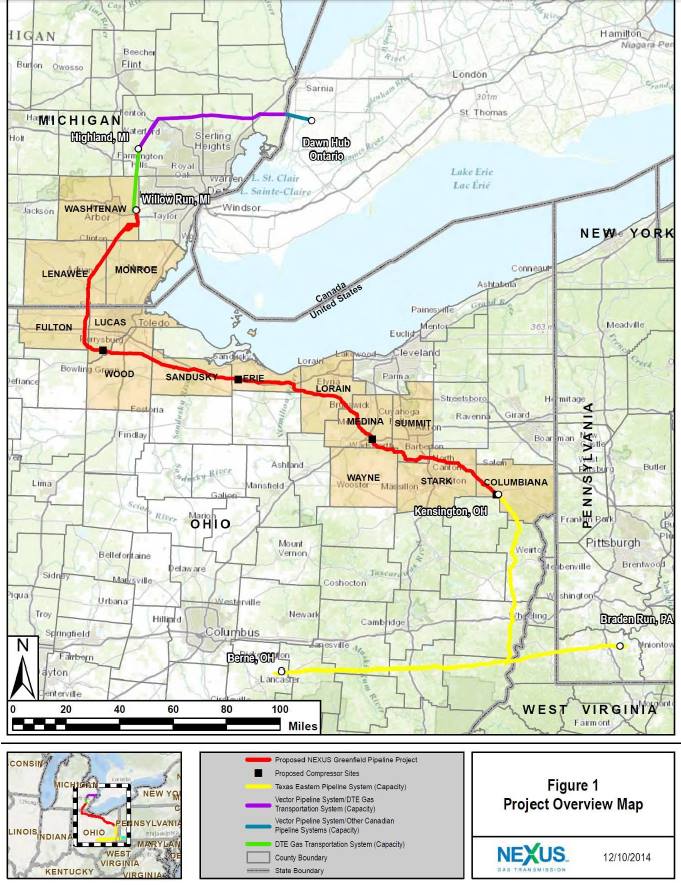
On Monday MDN brought you the great news that the Federal Energy Regulatory Commission (FERC) has given the $2 billion, 255-mile interstate NEXUS pipeline a glowing draft environmental impact statement (see Spectra’s NEXUS Pipeline Gets Favorable Draft EIS from FERC). NEXUS is a critically needed pipeline to move Utica and Marcellus Shale gas from an over-saturated market in the northeast to markets in the Midwest and Canada, via a pipeline that traverses the state of Ohio. We have now what we didn’t have on Monday–a copy of the FERC draft EIS (see a full copy below). You can’t read it and not see the meticulous detail and work that has gone into researching such a project. To falsely claim, as do anti-fossil fuel nutters, that FERC is simply a “rubber stamp” for Big Oil & Gas is not supported by documents like this one. Although the review is glowing, there is one teeny, tiny criticism/suggestion from FERC recommending an alternative route near Green, Ohio. The anti-drilling group CORNballs (our name for CORN, or COalition to Reroute Nexus), is glomming on to that tiny crack of the door and plans to drive a Mack truck through it… Read More “FERC’s Glowing Draft Review of NEXUS Pipeline; Antis Respond”
This pipeline project has been, until now, completely off our radar screen. As pipeline projects go, it’s pretty small. But building even a single square inch of new pipeline, or expanding a compressor station, is anathema to anti-fossil fuel nutters. So we expect this project will be in the headlines starting this week, with a pair open house meetings in the Philadelphia area (and one in Delaware) where the project will get built. The project is being built by Eastern Shore Natural Gas and is called the 2017 System Expansion project. In March 2015, Eastern Shore ran a non-binding open season to see if customers want more natural gas in the Delmarva Peninsula area (includes most of Delaware and portions of Maryland and Virginia). It looks like Eastern Shore’s customers expressed enough interest that they plan to move forward with an expansion project that will bring new sources of natgas from an interconnection Eastern Shore has with the mighty TETCo (Texas Eastern Company) pipeline near Philadelphia. Below we have details on the expansion project, and details for the open house meetings scheduled for this week in PA and DE… Read More “PA/MD/DE Pipeline Project Heats Up with Open House Mtgs This Week”
Seems like we’ve been talking about the Mariner East 2 pipeline proposed by Sunoco Logistics Partners, well, forever (see our list of ME2 stories here). Sunoco proposes to build a 350-mile natural gas liquids pipeline that will stretch from eastern Ohio to the Philadelphia area, bringing NGLs from Ohio and western Pennsylvania to the Marcus Hook refinery where those NGLs will get sent to both domestic and international customers. The project has faced stiff opposition and a number of lawsuits. Sunoco LP has had to file numerous eminent domain cases (some of which are still pending). Even though the project is opposed by radicals like THE Delaware Riverkeeper, it will get built–everyone knows it. And so the state Dept. of Environmental Protection (DEP) has launched a review of the project and will hold a series of public meetings in August for the project. Below is the DEP’s announcement about their review and details for the meetings–meetings where supporters need to show up and make their voices heard to drown out the naysayers… Read More “PA DEP Begins Review of Mariner East 2 Pipe; August Hearings”
The NEXUS Pipeline is a $2 billion, 255-mile interstate pipeline that will run from Ohio through Michigan and eventually to the Dawn Hub in Ontario, Canada (see Spectra Energy Files Formal FERC Application for NEXUS Pipeline). It is a critically needed pipeline to move Utica and Marcellus Shale gas from an over-saturated market in the northeast to markets in the Midwest and Canada. One of the first and key parts of getting a pipeline approved by the Federal Energy Regulatory Commission (FERC) is to submit the project for an environmental impact statement (EIS), performed by FERC. Good news. NEXUS received word late last week that FERC has granted the project a favorable draft EIS. That means FERC is of the opinion that the project will not unduly harm the local environment where it is to get built. A favorable EIS is an indication that FERC will grant its full approval for the project (in due time)… Read More “Spectra’s NEXUS Pipeline Gets Favorable Draft EIS from FERC”
It’s not all doom and gloom in the Marcellus/Utica. Seems like for the best part of a year we’ve only heard about layoffs and companies filing for bankruptcy, due to the major slowdown in drilling in our neck of the woods. But that’s not an accurate picture. Take an old steel plant in the Wheeling, WV area that had been closed for 30 years. A new business now occupies the old Wheeling-Pittsburgh Steel Corp. plant in Benwood, WV. JLE Industries has set up shop in the old plant with (so far) 25 full-time workers to inspect and repair metal tubes used in shale drilling. Chris Harris, the owner/operator, believes the company will continue to grow… Read More “Long-Dead Wheeling Steel Plant Roars Back to Life Thx to Marcellus”
In May MDN told you about a sham lawsuit brought by two radical environmental groups–Homeowners Against Land Taking – PennEast Inc. (HALT PennEast) and the New Jersey Conservation Foundation–against the PennEast Pipeline (see PennEast Responds to Sham NJ Lawsuit Re Surveying w/o Permission). The lawsuit falsely claimed PennEast was surveying on New Jersey landowners’ property without permission. PennEast has responded that the claims of trespassing to survey are (our words) horse manure. PennEast checks carefully before entering a property to survey. So the company mounted a “vigorous defense.” A New Jersey State Superior Court judge yesterday tossed the HALT lawsuit… Read More “NJ Judge Dismisses Trespassing Lawsuit Against PennEast Pipeline”
The federal Environmental Protection Agency (EPA) filed a lengthy comment with the Federal Energy Regulatory Commission (FERC) last week regarding the Williams Atlantic Sunrise Pipeline project (full copy below). The EPA said, in a nutshell, that more studies should be done. The EPA said the pipeline could have “significant adverse environmental impacts.” They also said alternate routes should be considered. A few things to know about the EPA’s filing: First and foremost, the EPA is treated like any other individual or organization who files comments on a project with FERC. That is, the EPA’s comments will receive no special treatment or consideration. Second, the only value in EPA’s comments is publicity for anti-pipeline nutters. Third, the “alternate routes” the EPA professes to prefer have already been considered, thoroughly, and discarded by FERC. So this is a lot of smoke and noise and mirrors–and nothing else… Read More “Federal EPA Continues to Fuss over Atlantic Sunrise Route in PA”
Barbara Lifton is a dangerously stupid person. Dangerous because she happens to be an elected member of the New York State Assembly–representing the ultra-liberal bastion of Ithaca, NY. Lifton has long opposed shale drilling in the state, but her hatred of shale drilling has now spilled over and metastasized into a full-blown, irrational hatred of all fossil fuels. Lifton and 21 other energy no-nothings in the NY state legislature sent a signed letter to Gov. Andrew “man-child” Cuomo asking him to halt all state approvals of pipelines, compressor stations, power plants, and gas storage facilities. Essentially–stop any more development of energy that comes from fossil fuels. Even though, as we reported Wednesday, last year 81.5% of all energy used in this country (and in New York State) came from fossil fuels (see Last Year Fossil Fuels Provided 81.5% of All Energy Used in U.S.). That’s the stupid part. Lifton and her cronies are advocating that we dump the source of 81.5% of our energy. Let’s play a “what if?” game. If such a thing were done, if we stopped using fossil fuels in New York State, we would be instantly transported back to the Stone Ages, complete with mass death and disease. Ninety percent or more of the population would either have to move, or die. Here’s the humorous part: The letter Lifton signed requesting an energy holocaust was produced on a computer made from plastics (i.e. fossil fuels) and powered with electricity from fossil fuels. The clothes she wore at a rally in Binghamton to announce this lunacy were made from plastic fibers (i.e. fossil fuels), and she got to the rally from Ithaca in a vehicle powered by fossil fuels, riding in a vehicle and on tires made from fossil fuels. You get our drift. Pure insanity. Here’s a report about the letter, the rally, and the dangerously stupid Barbara Lifton… Read More “NY Lawmakers Ask Gov. Cuomo to Ban New Fossil Fuel Infrastructure”
Another day, another attack on natural gas by the radicals of the Sierra Club. In this case, the Virginia chapter of the Sierra Club found a retired geologist they could buy, er, a, hire to write a report slamming the Mountain Valley Pipeline, a $3.5 billion, 301-mile pipeline that will run from Wetzel County, WV to the Transco Pipeline in Pittsylvania County, VA. The pipeline is due to be built by EQT, NextEra Energy and several other partners. The geologist who sold himself out to the Sierra Club says the pipeline would run through a “karst” area–an area of sinkholes and caves–and building the pipeline could potentially damage the water aquifer in that area. Below is a news report and a copy of the sham report released by the Virginia Sierra Clubbers… Read More “Sierra Club Attacks Mountain Valley Pipeline with Sham Report”
This is how it works with adults, those who wear “big boy pants.” A few weeks ago the Federal Energy Regulatory Commission (FERC) told Energy Transfer that their Rover pipeline, a $3.7 billion, 711-mile Marcellus/Utica natural gas pipeline that will run from PA, WV and eastern OH through OH into Michigan and eventually into Canada, and Columbia Pipeline that their Leach XPress pipeline, running from Marshall County, WV through Ohio to Leach, KY, that a small section where the pipelines cross must be reworked or it’s a “no go” for both projects (see FERC Tells Rover, Leach XPress Pipes to Redesign Routes in SE OH). Faced with the prospect of not getting an approval, both companies got together in a conference room and figured out how to work together–fast. Both companies have just filed a detailed plan with FERC that says the two pipelines will co-locate their pipelines in the same trench for a 13-mile span in Monroe County, OH to avoid the problems outlined by FERC… Read More “Rover, Leach XPress Pipelines Become BFFs to Fix FERC Objection”
A poll recently conducted for Consumer Energy Alliance (CEA) shows that Massachusetts voters believe that energy issues are important, and that Massachusetts voters STRONGLY support the use of natural gas for electricity generation, AND the expansion of existing natural gas infrastructure. Some 73% of Mass. voters want to use natural gas to generate electricity. That is an astonishing majority in a very liberal state. Some 68% of those voters say energy issues will affect how they vote in November. Here’s the results… Read More “73% of Mass. Residents Support Using NatGas to Generate Electric”
In 2008 Dominion approached oil and gas producers in West Virginia, before the Marcellus Shale was a household word, looking to build a pipeline for “several hundred million dollars” (ended up costing $750 million). Dominion held several meetings and told West Virginia’s independent natural gas producers that the producers would need to commit to firm transportation if they wanted to sell their natural gas. At those meetings Dominion handed out forms asking producers to write down how much production they might have for firm commitment. Following the meetings, producers received contracts in the mail “out of the blue” with a very short deadline and a not-so-subtle threat that if they wanted to sell their gas, they would sign on the dotted line. The producers say they were pressured into signing a 10-year deal. Dominion’s Appalachian Gateway Project, with 110 miles of new pipeline and upgrades to several compressor stations, went online in September 2012 (see Dominion Turns On Appalachian Gateway Project Pipeline). Now some 37 of the producers that signed that deal are suing Dominion looking to break the contract and receive “compensatory and punitive damages”… Read More “WV Drillers Sue Dominion over Long-Term Pipeline Contract”
Once again a group of so-called religious leaders, including a serial criminal, were arrested in Boston blocking work on a very short, 5-mile pipeline (West Roxbury Lateral) that will bring cheap, abundant, clean-burning Marcellus Shale gas to local residents in the Boston area. Some 26 were arrested, some of the same nutters were arrested in May (see Boston “Religious” Leaders Arrested for Blocking Pipeline Work). Of the 26 arrested at Wednesday’s protest, eight people laid down in a trench and had to be hauled out on stretchers by police. (We personally wouldn’t have been so kind.) Among the arrested was Tim DeChristopher, a criminal who previously served 15 months in prison and six months at a halfway house after that for committing fraud against the Bureau of Land Management in 2008. DeChristopher moved to Boston to attend Harvard Divinity School. Guess that says it all… Read More “Religious Radicals Arrested for Stopping Work on Boston Pipeline”

 Look! Up in the air! It’s a bird…it’s a plane…it’s a,a,a,a…energy drone? Yep. Drones used to inspect pipelines, keep an eye on refineries, processing plants and compressor stations–drones used for just about anything related to the oil and gas industry–have just been approved by Congress. The oil and gas industry is delighted…
 The Obamadroids are once again ganging up on the semi-independent Federal Energy Regulatory Commission (FERC). Last week the Obama Environmental Protection Agency (EPA) filed comments with FERC critical of the Williams/Transco Atlantic Sunrise pipeline project (see
  One of the opponents of new pipelines to New England has been LNG importers in the region–specifically GDF Suez importing gas at the Everett, MA LNG import terminal, near Boston (see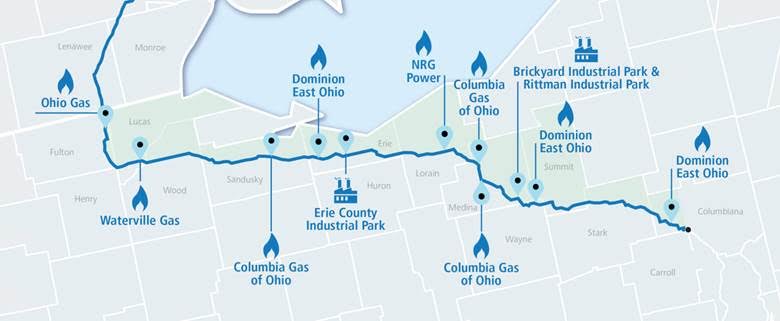
 This pipeline project has been, until now, completely off our radar screen. As pipeline projects go, it’s pretty small. But building even a single square inch of new pipeline, or expanding a compressor station, is anathema to anti-fossil fuel nutters. So we expect this project will be in the headlines starting this week, with a pair open house meetings in the Philadelphia area (and one in Delaware) where the project will get built. The project is being built by Eastern Shore Natural Gas and is called the 2017 System Expansion project. In March 2015, Eastern Shore ran a non-binding open season to see if customers want more natural gas in the Delmarva Peninsula area (includes most of Delaware and portions of Maryland and Virginia). It looks like Eastern Shore’s customers expressed enough interest that they plan to move forward with an expansion project that will bring new sources of natgas from an interconnection Eastern Shore has with the mighty TETCo (Texas Eastern Company) pipeline near Philadelphia. Below we have details on the expansion project, and details for the open house meetings scheduled for this week in PA and DE…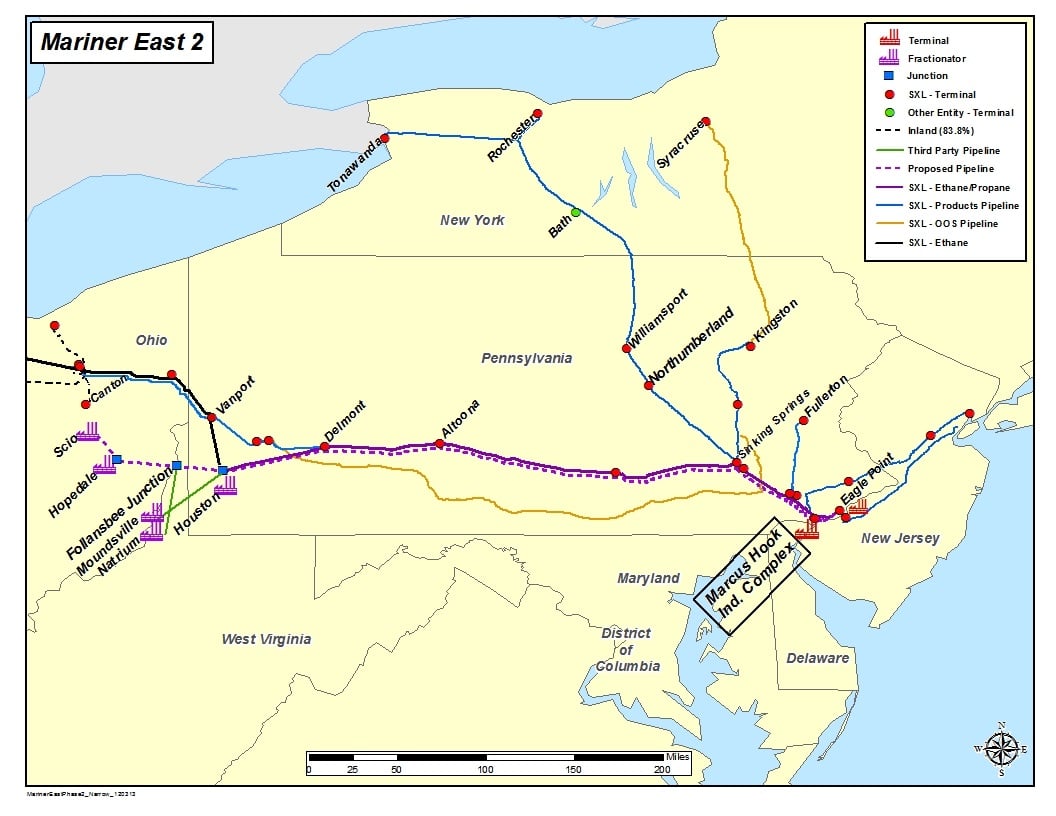
 It’s not all doom and gloom in the Marcellus/Utica. Seems like for the best part of a year we’ve only heard about layoffs and companies filing for bankruptcy, due to the major slowdown in drilling in our neck of the woods. But that’s not an accurate picture. Take an old steel plant in the Wheeling, WV area that had been closed for 30 years. A new business now occupies the old Wheeling-Pittsburgh Steel Corp. plant in Benwood, WV. JLE Industries has set up shop in the old plant with (so far) 25 full-time workers to inspect and repair metal tubes used in shale drilling. Chris Harris, the owner/operator, believes the company will continue to grow…
 In May MDN told you about a sham lawsuit brought by two radical environmental groups–Homeowners Against Land Taking – PennEast Inc. (HALT PennEast) and the New Jersey Conservation Foundation–against the PennEast Pipeline (see
  The federal Environmental Protection Agency (EPA) filed a lengthy comment with the Federal Energy Regulatory Commission (FERC) last week regarding the Williams Atlantic Sunrise Pipeline project (full copy below). The EPA said, in a nutshell, that more studies should be done. The EPA said the pipeline could have “significant adverse environmental impacts.” They also said alternate routes should be considered. A few things to know about the EPA’s filing: First and foremost, the EPA is treated like any other individual or organization who files comments on a project with FERC. That is, the EPA’s comments will receive no special treatment or consideration. Second, the only value in EPA’s comments is publicity for anti-pipeline nutters. Third, the “alternate routes” the EPA professes to prefer have already been considered, thoroughly, and discarded by FERC. So this is a lot of smoke and noise and mirrors–and nothing else…
 Another day, another attack on natural gas by the radicals of the Sierra Club. In this case, the Virginia chapter of the Sierra Club found a retired geologist they could buy, er, a, hire to write a report slamming the Mountain Valley Pipeline, a $3.5 billion, 301-mile pipeline that will run from Wetzel County, WV to the Transco Pipeline in Pittsylvania County, VA. The pipeline is due to be built by EQT, NextEra Energy and several other partners. The geologist who sold himself out to the Sierra Club says the pipeline would run through a “karst” area–an area of sinkholes and caves–and building the pipeline could potentially damage the water aquifer in that area. Below is a news report and a copy of the sham report released by the Virginia Sierra Clubbers…
 This is how it works with adults, those who wear “big boy pants.” A few weeks ago the Federal Energy Regulatory Commission (FERC) told Energy Transfer that their Rover pipeline, a $3.7 billion, 711-mile Marcellus/Utica natural gas pipeline that will run from PA, WV and eastern OH through OH into Michigan and eventually into Canada, and Columbia Pipeline that their Leach XPress pipeline, running from Marshall County, WV through Ohio to Leach, KY, that a small section where the pipelines cross must be reworked or it’s a “no go” for both projects (see
  A poll recently conducted for Consumer Energy Alliance (CEA) shows that Massachusetts voters believe that energy issues are important, and that Massachusetts voters STRONGLY support the use of natural gas for electricity generation, AND the expansion of existing natural gas infrastructure. Some 73% of Mass. voters want to use natural gas to generate electricity. That is an astonishing majority in a very liberal state. Some 68% of those voters say energy issues will affect how they vote in November. Here’s the results…
 In 2008 Dominion approached oil and gas producers in West Virginia, before the Marcellus Shale was a household word, looking to build a pipeline for “several hundred million dollars” (ended up costing $750 million). Dominion held several meetings and told West Virginia’s independent natural gas producers that the producers would need to commit to firm transportation if they wanted to sell their natural gas. At those meetings Dominion handed out forms asking producers to write down how much production they might have for firm commitment. Following the meetings, producers received contracts in the mail “out of the blue” with a very short deadline and a not-so-subtle threat that if they wanted to sell their gas, they would sign on the dotted line. The producers say they were pressured into signing a 10-year deal. Dominion’s Appalachian Gateway Project, with 110 miles of new pipeline and upgrades to several compressor stations, went online in September 2012 (see
  Once again a group of so-called religious leaders, including a serial criminal, were arrested in Boston blocking work on a very short, 5-mile pipeline (West Roxbury Lateral) that will bring cheap, abundant, clean-burning Marcellus Shale gas to local residents in the Boston area. Some 26 were arrested, some of the same nutters were arrested in May (see