
Energy Services | Industrywide Issues | PennEast Pipeline | Pennsylvania | Pipelines | Regulation | Statewide PA
FERC Finally Approves PennEast Pipe Split into 2 Phases
 The Federal Energy Regulatory Commission (FERC) finally got its butt in gear and issued a favorable environmental assessment (EA) for an amended request by PennEast Pipeline to break the project into two phases–building the pipeline through Pennsylvania in Phase One, and through New Jersey in Phase Two. FERC was supposed to issue its findings on or by July 10. Finally, after two weeks with no report, no explanation, and no communication, PennEast goosed FERC on July 24 (see PennEast Pipe Gooses FERC to Release Updated Enviro Review). The squeaky wheel…
Read More “FERC Finally Approves PennEast Pipe Split into 2 Phases”
 Last year, in an effort to flow more natural gas to a starving New York City, Kinder Morgan cut a deal with utility company Consolidated Edison to provide more gas by beefing up capacity along its Tennessee Gas Pipeline (TGP) that feeds NYC, allowing Con Ed to avoid cutting customers off from natgas hookups (see
  Over a year ago, in March 2019, MDN told you about a new Williams plan to beef up the Transco pipeline in Pennsylvania and New Jersey to deliver an extra 760 MMcf/d (originally 1 billion cubic feet per day) of Marcellus gas to PA, NJ, and Maryland (see
  President Trump visited the Permian Basin yesterday to announce export authorizations for LNG will now go through 2050, to sign four permits for pipeline and rail transport of fossil fuels, and to get the truth out about his administration’s efforts to make America secure by making our country “energy dominant.” The liberal media spin machine was in overdrive trying to cover up the great news about U.S. fossil fuels–but they could not. Trump was on his “A” game yesterday and it showed.
 Radical environmentalists (far outside the mainstream) are making one final push to pressure the Pennsylvania Dept. of Environmental Protection (DEP) to expand an already onerous new regulation it is planning to implement. Last December the DEP’s Environmental Quality Board (EQB) approved new regulations that supposedly will capture every last molecule of stray methane that leaks from shale drilling operations (see
  FirstEnergy is in the middle of an excrement storm. The company’s former subsidiary FirstEnergy Solutions (now called Energy Harbor) allegedly paid $60 million in bribes to Ohio House Speaker Larry Householder and several of his associates to gain their assistance passing the hugely unpopular House Bill 6 (see
 PennEast Pipeline is a $1.2 billion, 118-mile brand new (greenfield) pipeline project planned between the Wilkes-Barre, PA area and the Trenton, NJ area. The project has faced stiff opposition from nutty Big Green groups and from the Democrats who have seized control of NJ. Because of NJ’s opposition (
 Wow, that was fast! Yesterday Kinder Morgan filed a request with the Federal Energy Regulatory Commission (FERC) asking for permission to start up train #9 at the Elba Island, George LNG export facility. And yesterday FERC turned around and issued that permission. Same day! How many trains (of the 10 total) are left to go online?
 Yesterday the White House announced its intent to nominate the final two members needed to comprise a full five-member Federal Energy Regulatory Commission. One of them, Mark Christie, is the Chairman of the Virginia State Corporation Commission. He is one of the country’s longest-serving state utility regulators, having served for 16 years. Great credentials. Smart guy. The other nominee, Allison Clements, spent 10 years as a rabid radical working for the National Resources Defense Council (NRDC). She is uniquely UNQUALIFIED for the job. A lemon.
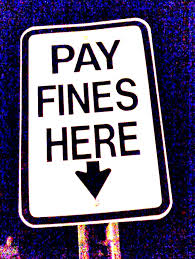 On Friday the Pennsylvania Dept. of Environmental Protection (DEP) announced it has fined CNX Resources and its subsidiary CNX Midstream $310,000 for two incidents in which 65 barrels (2,730 gallons) of non-toxic brine (salty water) leaked into the ground and 43 gallons of non-toxic drilling mud leaked into a creek. The DEP says CNX did “not adequately maintain erosion and sedimentation best management practices.”
 In May the Delaware River Basin Commission (DRBC) held a virtual public hearing on the issue of the DRBC’s prior decision to approve construction of a dock in the Delaware River that will allow New Fortress Energy to load LNG tanker ships with LNG transported to the dock from a new liquefaction plant being built in northeastern Pennsylvania (see
  The Pennsylvania Dept. of Environmental Protection (DEP) has a number of committees under its umbrella. Volunteers from business, non-profit groups and other sectors sit on these committees in an effort to provide helpful feedback to the department from the people who must live under the regulations (sometimes onerous) the DEP cooks up. The Small Business Compliance Advisory Committee (SBCAC) is one such committee. SBCAC has just voted against Gov. Wolf’s cockamamie plan to tax “carbon” from gas-fired electric plants.
 It’s time for a victory lap. Pennsylvania Republicans, with the help of some brave Democrats (and former Democrats), passed and convinced Gov. Wolf to sign a bill into law that will grant tax breaks to companies willing to build brand new petrochemical plants in the Keystone State–plants that use huge quantities of Marcellus Shale gas. Wolf signed the bill yesterday, after vetoing a similar bill earlier this year. The normally chatty Wolf press operation barely mentioned his signature on the bill.
 We’re pretty certain Ohio Gov. Mike DeWine (RINO) doesn’t read MDN, but we’re glad to see he took our advice from yesterday when we said he’s “stupid if he vetoes the bill to repeal House Bill (HB) 6. Does he not realize he will be given the political equivalent of an anal exam to see if his palms were greased by FirstEnergy too?! The only reason the bill passed was bribery. It’s poisoned. It must be overturned.” A day after DeWine expressed support for the bribe-ridden HB 6 that became law when he signed it last year, DeWine reversed course and now says he supports repeal of that terrible law.
 New Fortress Energy, which likes to build and own as much of the LNG supply chain as possible, built and recently finished an LNG import terminal in San Juan, Puerto Rico. The Federal Energy Regulatory Commission (FERC) recently dinged the company, asking for an explanation as to why they built it without FERC permission (see