
Analyst: “Nearly Impossible” for Rover to Get Done on Schedule
 Rover Pipeline, Energy Transfer’s $3.7 billion, 711-mile Marcellus/Utica natural gas pipeline that will run from PA, WV and eastern OH through OH into Michigan and eventually into Canada, will almost certainly not go online in July as originally planned–at least according to an article on The Street evaluating the project and its builder, Energy Transfer. At the heart of the delay is a series of spills that have occurred while drilling underground, horizontally, under rivers and creeks (and other structures) in which drilling mud has spilled. The largest such spill, to date, happened on April 13 when around 2 million gallons of drilling mud spilled close to the Tuscarawas River (see Rover Pipeline Accident Spills ~2M Gal. Drilling Mud in OH Swamp). That spill, plus the others, set off a chain reaction and ongoing fight with the Ohio Environmental Protection Agency (OEPA), who lobbied the Federal Energy Regulatory Commission (FERC) to investigate. Which is now happening (see OH EPA Says Diesel Fuel Found in Rover 2M Gal Drilling Mud Spill). The FERC investigation has stalled forward progress in some (not all) areas. According to an analyst from Genscape quoted in the article, Energy Transfer “seems to have an approach where they stick to the minimum requirements instead of exceeding them” when it comes to drilling and laying pipelines. Energy Transfer strongly disagrees that statement. Regardless, the company’s stock has taken a hit and the article (below) raises concerns about the future of the company’s stock for shareholders…
Read More “Analyst: “Nearly Impossible” for Rover to Get Done on Schedule”

 Senate Minority Leader Chuck Schumer (extreme partisan) has recommended to the White House that Richard Glick, current a Senate staffer and former lobbyist for the wind industry, should succeed Democrat FERC Commissioner Colette Honorable. That’s according to “three industry sources with knowledge of the decision.” So far the White House is mum and refuses to “get ahead of an official announcement.” Our advice to President Trump: Don’t do ANYTHING recommended by Chucky Schumer…
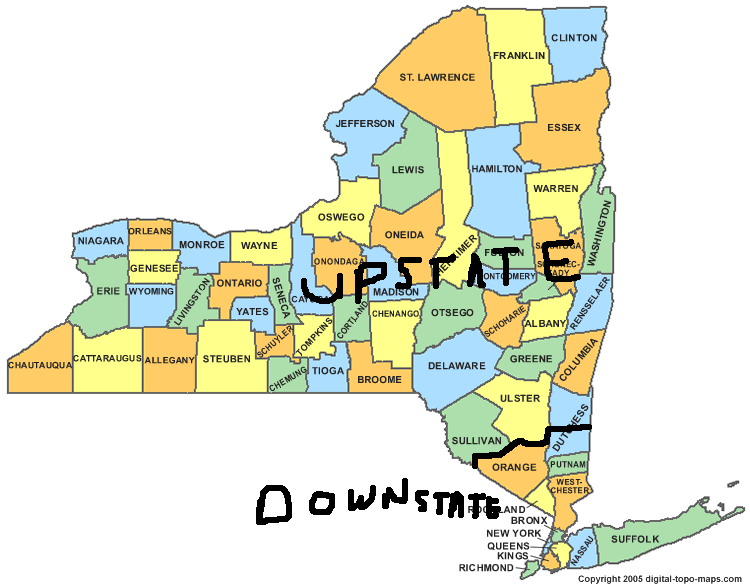 Every now and again anti-fossil fuel nutters in New York will pop up from whatever hole they live in to claim that the couple of NY landfills accepting drill cuttings (leftover rock and dirt) from PA shale drilling will result in an environmental apocalypse. One landfill in particular, in Chemung County, seems to be the focus of their ire (see
 Duke Energy needs to replace an aging pipeline, built in the 1950s, near Cincinnati, OH–or some people in Cincy will have to go without natural gas (see
  As we reported yesterday, the first two (of four) public hearings were held on Monday by the Pennsylvania Dept. of Environmental Protection (DEP) to elicit comments on the proposed $3 billion, 198-mile Atlantic Sunrise Pipeline, an expansion of Williams’ Transco Pipeline system (see
  Yesterday saw the first two (of four) public hearings being hosted this week by the Pennsylvania Dept. of Environmental Protection (DEP) to elicit comments on the proposed $3 billion, 198-mile Atlantic Sunrise Pipeline, an expansion of Williams’ Transco Pipeline system. One of yesterday’s meetings was held in Lancaster (Lancaster County), and the other in Tunkhannock (Wyoming County). The striking thing about both meetings is that they were not the usual circus freak shows by anti-fossil fuelers we’ve come to expect. Indeed, in both venues, an overwhelming majority of those speaking were there to speak IN FAVOR of the projects. Oh, there were detractors, to be sure. Nonsensical statements made by people like Malinda Clatterbuck, one of the locals in Lancaster who is attempting to turn Lancaster into another North Dakota fiasco. Clatterbuck said “angst over the pipeline has caused premature births, divorces and heart attacks” among people she knows. Complete rubbish. Anyone can say (or do) anything at these hearings. Mark Clatterbuck (Malinda’s husband) also spoke. Mark was a protester in North Dakota against the Dakota Access Pipeline. He warned (threatened?) DEP representatives of a coming “community uprising” against the Atlantic Sunrise pipeline. Even though there was some opposition like the clattering Clatterbucks at last night’s hearings, the big news is that their opposition was drowned out by supporters of the pipeline project. And that’s good news for all Pennsylvanians…
 In delicious irony, Robinson Township (Washington County), PA, one of the original seven selfish towns that sued Pennsylvania and eventually won at the PA Supreme Court, overturning a portion of the state’s 2012 Act 13 shale drilling law (granting towns the right to self-regulate some aspects of oil and gas drilling by using onerous zoning ordinances), is about to get a new Marcellus gas-fired electric plant. That is, a plant that burns the stuff they don’t like drilled. In April, MDN shared a list of five new Marcellus gas-fired plants coming in Southwestern PA (see
  In April MDN provided an update on the Sabal Train Transmission pipeline project (see
  A group of profoundly radical “environmental” organizations filed a lawsuit in the U.S. Court of Appeals for the Fourth Circuit last Friday against the West Virginia Dept. of Environmental Protection–for doing their job. Sierra Club, West Virginia Rivers Coalition, Indian Creek Watershed Association, Appalachian Voices and Chesapeake Climate Action Network has sued the DEP because the department had the audacity to conduct a very thorough review, and then issue a stream and water-crossing permit (demanded under federal law) for the Mountain Valley Pipeline (MVP). MVP is a $3.5 billion, 301-mile pipeline that will run from Wetzel County, WV to the Transco Pipeline in Pittsylvania County, VA. The project, which filed an official application with the Federal Energy Regulatory Commission in October 2015, is being built by EQT, NextEra Energy and several other partners. This is now SOP–standard operating procedure–for Big Green groups with deep pockets. Sue and keep suing in an attempt to slow and eventually kill off any project that remotely involves fossil fuels. Yes, they are RADICAL, they are EXTREME, waaaaaay outside the mainstream of American society. And they MUST BE STOPPED. When will someone launch weekly lawsuits against these Big Green organizations? Here’s the latest maddening development…
 In December 2016, the Pennsylvania Dept. of Environmental Protection (DEP) unveiled new regulations to clamp down on methane emissions and other other air pollution that allegedly comes from shale drilling sites (see
  Just a quick reminder that the Pennsylvania Dept. of Environmental Protection is conducting four public hearings, beginning today and running through Wednesday, for the Williams Atlantic Sunrise Pipeline project. If there is any way you can make it to one of the hearings to show your support for the project, do it! Below is the DEP announcement sharing the locations for the hearings. Today are two hearings, both from 6-9p, one in Tunkhannock and the other in Lancaster. Tomorrow the hearing is in Bloomsburg, and Wednesday in Annville. Come out to support this critical pipeline project…
 NEXUS is a $2 billion, 255-mile interstate natural gas pipeline that will run from Ohio through Michigan and eventually to the Dawn Hub in Ontario, Canada. Its purpose is to move Utica and Marcellus Shale gas from an over-saturated market in the northeast to markets in the Midwest and Canada. It is a joint venture between DTE Energy and Spectra Energy. Last December, the Federal Energy Regulatory Commission issued a positive final Environmental Impact Statement for the project (see
  Tuesday night in Clarksburg, WV, the state Public Service Commission heard public comments about a non-utility utility–the Energy Solutions Consortium Harrison County Power plant project. The project is a Marcellus-gas fired electric generating plant that will produce 580 megawatts of electricity to sell to the PJM power grid serving 13 states. Hence our label of a “non-utility utility” project. Technically, the project is not a utility because it’s not regulated with strict price controls, like “traditional” utilities. However, it will sell electricity to regulated utilities. ESC was founded by father and son team Andrew and Matthew Dorn, based in Buffalo, NY. The Dorns are behind a series of WV natgas-fired electric plants, the first of which will get built in Marshall County (see